 comparison
Are Rare Vegetable Seeds Worth It? A 2026 Guide
Table of Contents
- Heirloom vs Hybrid Seeds Explained: What You're Actually Buying
- Best Practices for Container Gardening Vegetables with Rare Seeds
- How to Save Seeds from Heirloom Tomatoes
- Frequently Asked Questions
Last Updated: September 16, 2026
Heirloom vs Hybrid Seeds Explained: What You're Actually Buying
Short answer: yes, rare vegetable seeds are worth it when you know what you're buying.
Heirloom seeds are open-pollinated varieties passed down through generations that breed true, so saved seed grows the same plant next season. Hybrid seeds are first-generation crosses that don't reproduce reliably.
That distinction drives the value of rare vegetable seeds: open-pollinated is the only choice for saving seed, while hybrids earn their place for uniform fruit and predictable timing.
Mississippi State University Extension vegetable gardening publications
| Trait | Heirloom / Open-Pollinated | Hybrid |
|---|---|---|
| Seed saving | Reliable, breeds true | Not reliable |
| Flavor | Often richer, variable | Consistent, often milder |
| Uniformity | Varies plant to plant | Very uniform |
Best Practices for Container Gardening Vegetables with Rare Seeds
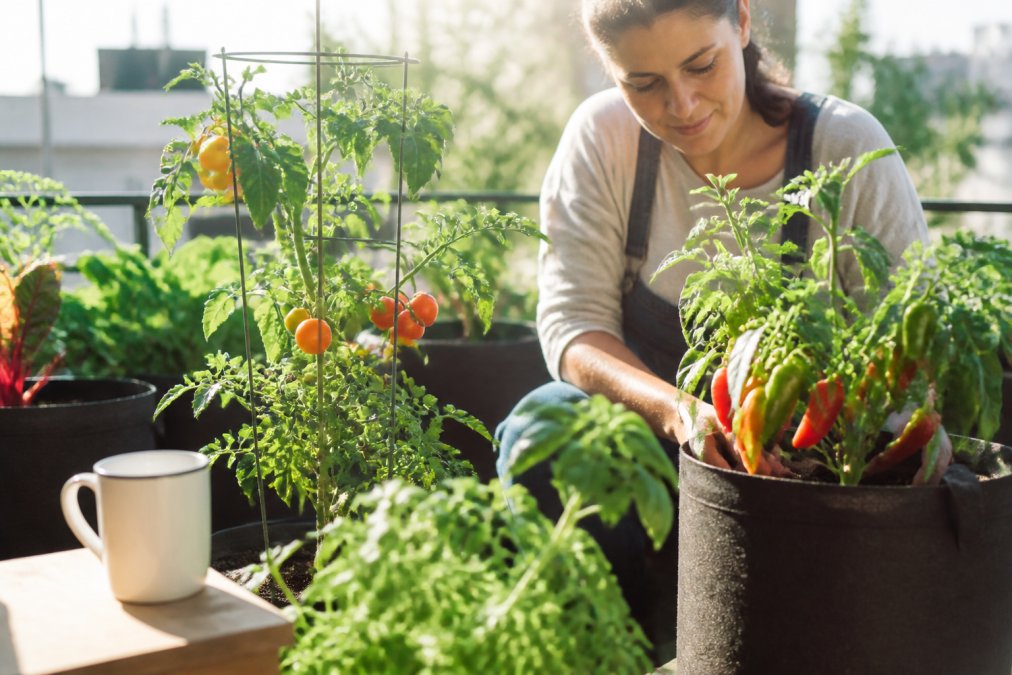
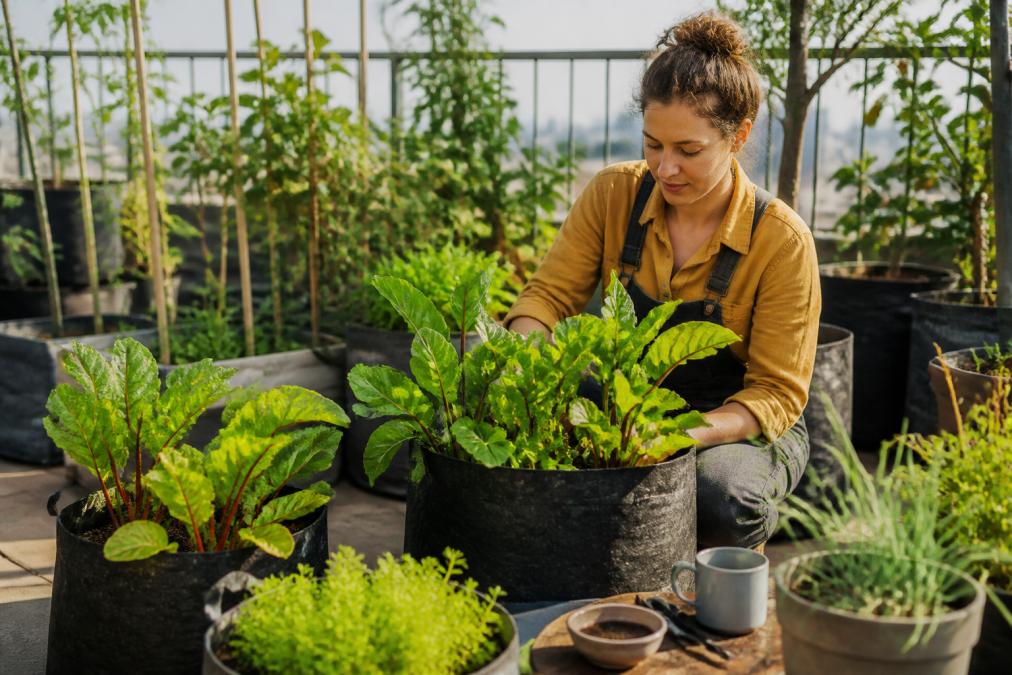
Container growing is where rare varieties earn their keep, especially with limited space or intense Southern heat. A compact determinate tomato in a large pot outperforms a sprawling one every time.
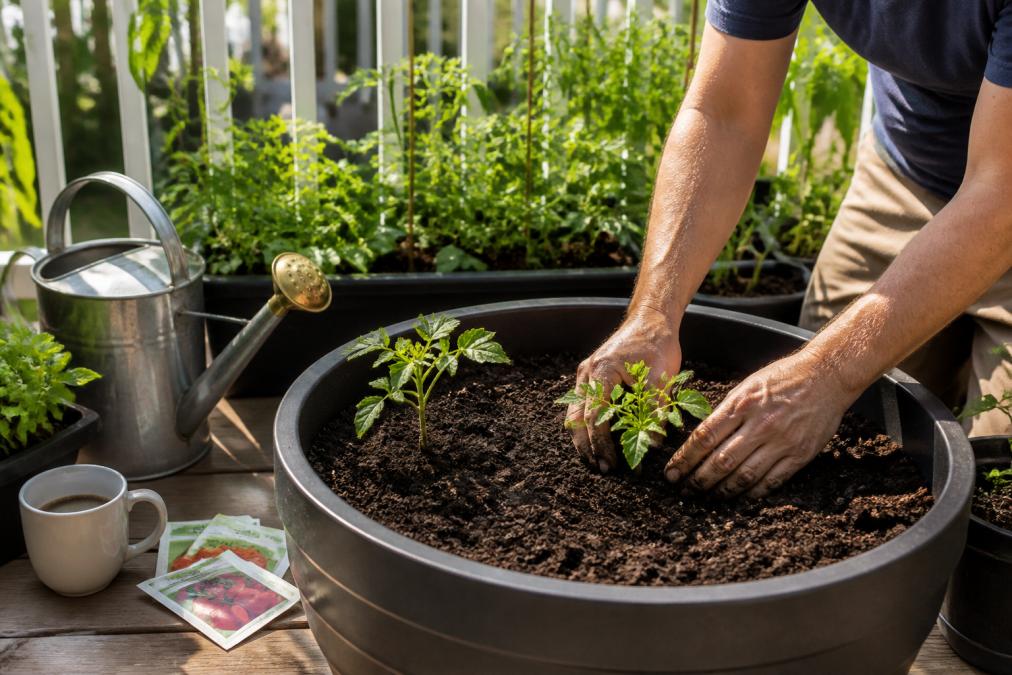
Start with the right container size: a tomato wants at least a five-gallon pot, and bigger is better in the South, where afternoon heat dries soil fast. Use quality potting mix, and water deeply and less often so roots grow down. Consistent moisture management ensures your harvest remains healthy and productive, much like understanding why organic food costs what it does when you transition from home gardening to the grocery aisle.
Compact determinate types stay tidy without staking, while micro-dwarf types fruit on a windowsill.
- Choose determinate or dwarf varieties for pots
- Match container size to mature plant size
- Mulch to slow moisture loss
- Move pots to afternoon shade in peak heat
For beginners, micro-dwarf types are the safest bet: they finish fast, stay small, and forgive a missed watering.
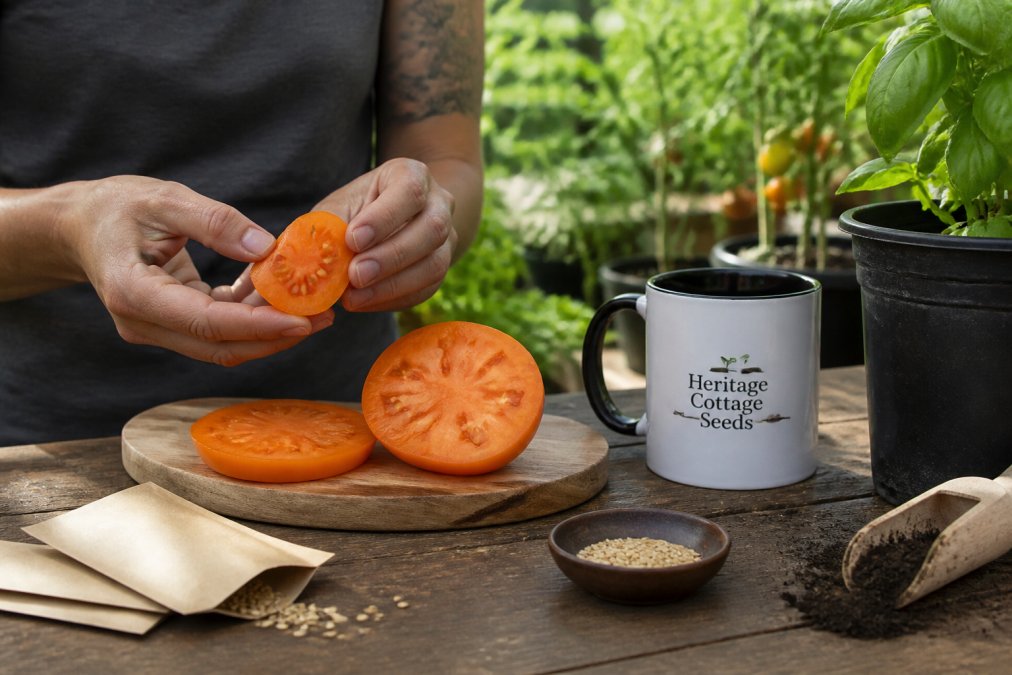
Tomato - Heritage Cottage Orange →
How to Save Seeds from Heirloom Tomatoes
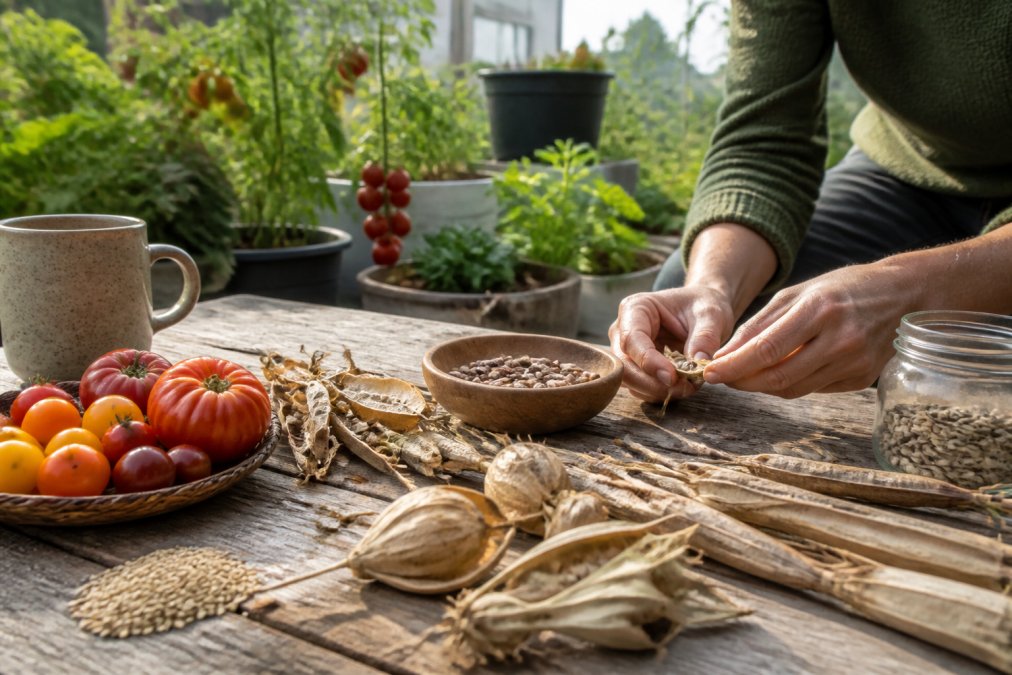
Saving tomato seed is simple once you know the trick: the gel around each seed must ferment off before it will dry and store properly.
Pick fruit from your healthiest, best-tasting plant, fully ripe and slightly past eating stage. Scoop seeds and gel into a jar, add water, and let it sit warm for a few days until mold forms. Add water, stir, and good seeds sink while pulp and hollow ones float off. Rinse, spread on a coffee filter or paper plate, dry out of direct sun, then store cool and dark.
Label everything. A saved seed without a name is a mystery next spring.
Rare seeds ask for a little more attention and pay it back in flavor you can't buy at the store. Heritage Cottage Seeds exists for exactly this kind of gardener, with a curated collection of unusual tomato and pepper varieties that are tested performers rather than curiosities. The Heritage Cottage Orange tomato, a determinate slicer that stays tidy at three to four feet and ripens a concentrated crop of sweet-tangy six-to-eight-ounce fruit, is a good place to start, and the micro-dwarf Hahm's Gelbe and Orange Hat will fruit on a patio or windowsill. Search the catalog and plant something you've never grown before.

Frequently Asked Questions
Is it worth buying rare seeds for a home garden?
It depends on what you want from your garden. Rare vegetable seeds often deliver flavors and colors you will not find at the grocery store, and open-pollinated types let you save seeds year after year. If you enjoy trying unusual varieties and want a more self-sufficient garden, the extra cost is usually justified. If you just want the cheapest possible harvest, common hybrids may serve you fine.
Do rare vegetable seeds require more maintenance than common varieties?
Not necessarily. Many rare and heirloom varieties are just as easy to grow as common ones, especially compact types suited to containers. The main difference is that some heirlooms have less uniform ripening or thinner skins. Choose varieties bred for your region, like cold-tolerant or heat-tolerant types, and follow Mississippi State University Extension recommendations for container growing in the Southeast to keep maintenance low.
Can you save seeds from rare vegetable varieties?
Yes, if the variety is open-pollinated rather than a hybrid. Open-pollinated heirlooms like many rare tomatoes will produce seeds that grow true to type next season. To save seeds from heirloom tomatoes, ferment the seeds in their gel for a few days, rinse, and dry them thoroughly before storing in a cool, dark place. Avoid saving seeds from hybrids, as the next generation will not match the parent plant.