 how-to
Grow Unique Striped Tomatoes in Pots: A Step-by-Step Guide
Table of Contents
- Why Striped Tomatoes Thrive in Containers
- Choosing the Right Container and Pot Size
- Best Heirloom Tomato Varieties for Containers
- Potting Soil Requirements for Tomatoes
- Watering, Sunlight, and Air Circulation
- Container Gardening Tomato Fertilizer Schedule
- How to Support Indeterminate Tomatoes in Pots
- Harvesting and Caring for Striped Tomato Plants
- Frequently Asked Questions
Last Updated: September 20, 2026
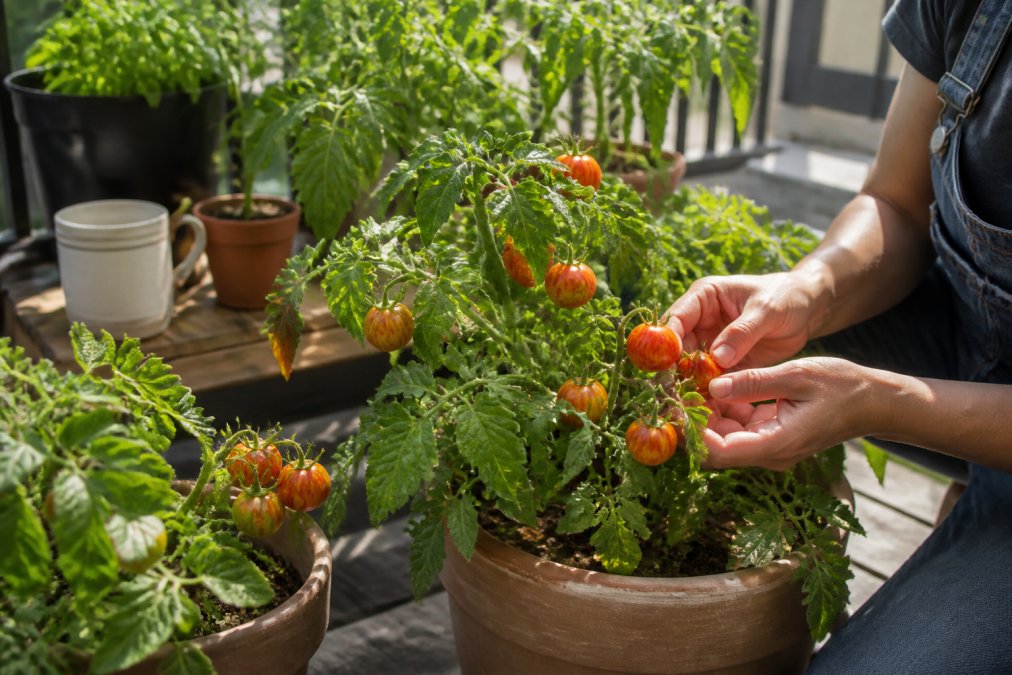
Growing striped tomatoes in pots brings flavors and colors you won't find at the grocery store. These distinctive heirloom tomatoes thrive in containers on a patio, balcony, or small space when you give them what they need.
Growing striped tomatoes in containers is absolutely doable, even if you're new to gardening. You just need the right setup, the right variety, and consistent care.
Why Striped Tomatoes Thrive in Containers
Striped tomato varieties offer distinctive coloring and complex, rich flavors that taste nothing like supermarket tomatoes.
Container gardening works well for striped heirlooms because you control soil quality, drainage, and moisture. Striped tomatoes are sensitive to inconsistent watering and poor drainage, both easily managed in pots.
Containers warm up faster than garden soil, giving you earlier harvests and letting you grow multiple varieties in small spaces.
Choosing the Right Container and Pot Size
Pot size matters: too small restricts root development, too large causes waterlogging and root rot.
Use 5-gallon containers for determinate varieties and at least 10-15 gallons for indeterminate varieties. Larger containers hold more soil, moisture, and nutrients.
Drainage holes are essential, without them, roots suffocate. Fabric, terracotta, and plastic all work; fabric pots naturally air-prune roots for stronger development.
Here's what to look for when choosing a container:
- At least 5 gallons for determinate varieties
- At least 10-15 gallons for indeterminate varieties
- Multiple drainage holes in the bottom
- Sturdy enough to hold wet soil (heavy) without tipping
- Light-colored pots if you're in a very hot climate (dark pots absorb heat)
Best Heirloom Tomato Varieties for Containers
Variety selection is critical. Choose striped heirlooms with manageable growth and proven disease tolerance.
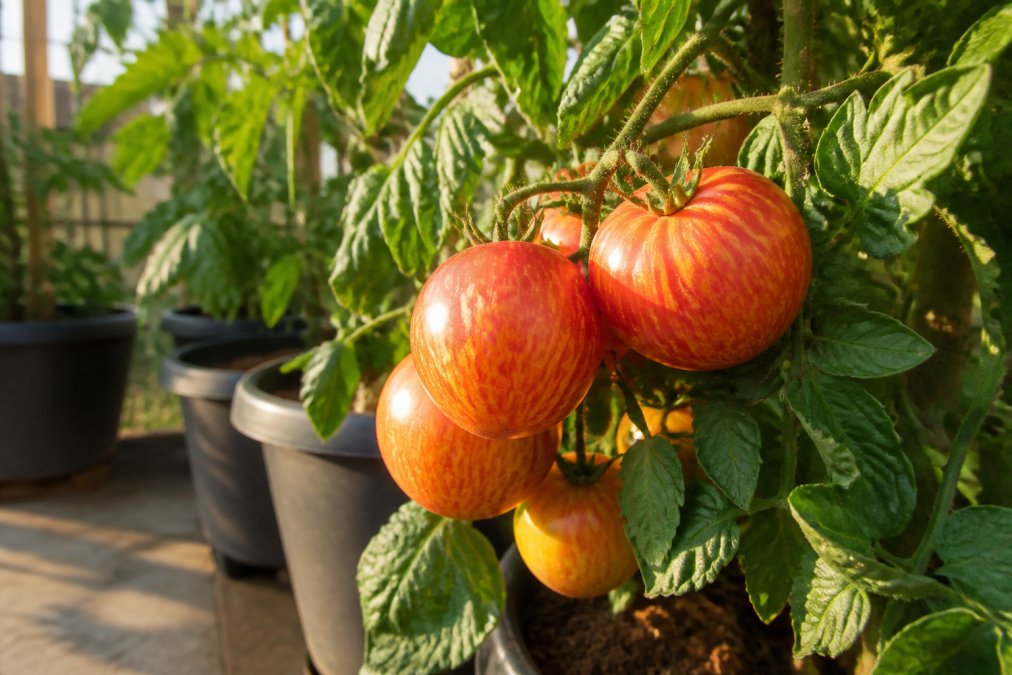
Tigerella grows 4-5 feet tall and produces 2-3 inch fruits with bold red and yellow stripes and complex tangy flavor. Matures in 70 days; use a 12-gallon container.
Zebra produces 3-4 inch beefsteak fruits with red and yellow stripes and rich flavor. Plants reach 5-6 feet and mature in 75-80 days. Use a 15-gallon container and sturdy support.
Green Zebra produces 2-3 inch fruits with green skin and yellow stripes, tart herbaceous flavor, and good disease tolerance. Grows 5 feet tall, matures in 75-85 days.
Opalka, a Polish heirloom, produces elongated paste-type fruits with red and orange striping. Indeterminate (5-6 feet), prolific, and disease-resistant; works in 12-gallon containers and is useful for sauce-making.
According to Mississippi State University Extension, the key to success with striped heirlooms in containers is matching variety growth habit to pot size and choosing varieties with proven performance in limited root space. Indeterminate striped varieties need at least 10 to 15 gallons; determinate or semi-determinate striped varieties can work in 8 to 10 gallons. Consistent moisture and good air circulation are non-negotiable. Maintaining soil structure with volcanic minerals provides a robust defense against pathogens, effectively preventing root rot while ensuring your container-grown heirlooms remain vigorous throughout the season.
Potting Soil Requirements for Tomatoes
Container soil must drain well, hold nutrients, and provide aeration. Garden soil compacts in pots and causes waterlogging.
Use a high-quality vegetable potting mix with peat moss or coconut coir, perlite or vermiculite for drainage, and compost for nutrients.
Add 25-30% compost by volume to boost nutrients and moisture retention, plus a handful of slow-release organic fertilizer when filling the pot.
Here's a simple potting mix recipe that works well:
- 50% quality potting mix base
- 25% compost or aged bark
- 25% perlite or coconut coir for drainage
Fill your container about three-quarters full with this mix, then plant your seedling. The soil should be moist but not soggy when you plant.
Watering, Sunlight, and Air Circulation
Striped tomatoes need consistent moisture. Stick your finger an inch into the soil; water when it feels dry. In hot weather, this may be daily; in cooler periods, every other day.
Water at the base, not on foliage, to prevent fungal disease. Early morning watering lets accidental leaf wetness dry before nightfall.
Tomatoes need 8-10 hours of direct sun daily (Tomates). Position containers for morning sun, which dries dew quickly and reduces disease pressure.
Space containers to allow air circulation and reduce fungal disease risk. Leave space between pots and walls.
In hot climates, afternoon dappled shade prevents heat stress and blossom end rot.
Container Gardening Tomato Fertilizer Schedule
Container plants need regular feeding because nutrients leach out with watering.
Mix slow-release fertilizer into potting soil at planting. Once flowering begins, apply liquid fertilizer every 7-10 days using a balanced formula or tomato-specific blend.
Water-soluble fertilizers work best for containers. Follow package directions; overfertilizing causes excessive foliage at the expense of fruit.
Here's a simple schedule:
- At planting: Mix slow-release fertilizer into potting soil
- When flowering begins: Start liquid fertilizer every 7-10 days
- Throughout the season: Continue weekly or every-10-day feeding until frost
Organic options like fish emulsion or compost tea feed soil biology as well as plants.
How to Support Indeterminate Tomatoes in Pots
Indeterminate varieties need support; determinate types need minimal support.
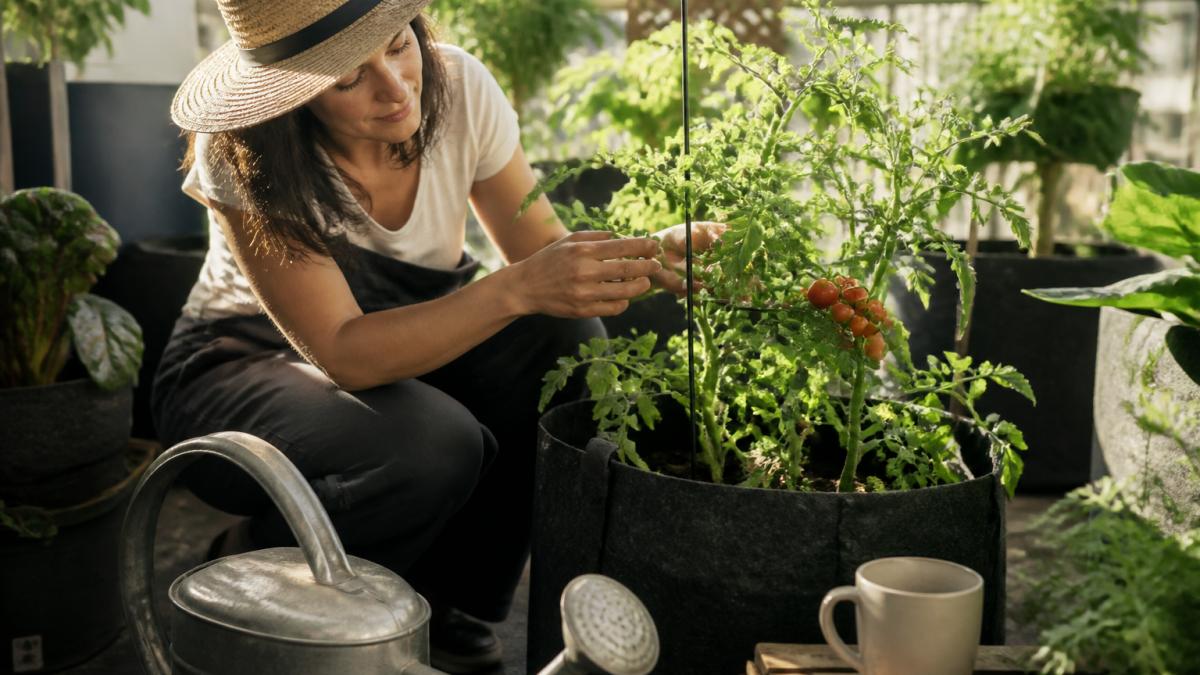
Use a 4-6 foot stake and soft ties for indeterminate varieties. Tie the main stem loosely and check ties weekly to prevent stem damage.
Remove suckers (shoots between main stem and branches) on indeterminate varieties to direct energy into fruit and improve air circulation.
Support systems matter because heavy fruit-laden branches can break under their own weight, especially after rain. Good support prevents damage and keeps fruit off the ground where it might rot or attract pests.
Harvesting and Caring for Striped Tomato Plants
Striped heirloom tomatoes are ready to pick when they're fully colored and slightly soft to the touch. Unlike some commercial varieties, these don't ripen much after picking, so wait until they're truly ripe on the vine. The color should be vibrant and uniform across the stripes, if you see any green shoulders (the area around the stem), leave the fruit on the plant a few more days.
Harvest regularly. Picking ripe fruit encourages the plant to produce more flowers and more tomatoes. Leave fruit on the plant for a few extra days if you're not sure it's ripe; the flavor improves as it ripens. Striped varieties often develop better flavor complexity when left on the vine longer than commercial hybrids.
Managing Blossom End Rot and Fruit Cracking in Containers
One of the biggest challenges with striped heirlooms in pots is blossom end rot, a dark, sunken spot that appears on the bottom (blossom end) of the fruit. This isn't a disease; it's a calcium deficiency caused by inconsistent watering. When soil dries out and then gets soaked, the plant can't move calcium to the developing fruit fast enough.
Prevent blossom end rot by maintaining consistent soil moisture. Water deeply when the top inch of soil feels dry, but don't let the pot sit in standing water. In hot weather, this might mean watering daily. Mulch the top of the soil with 2 inches of straw or wood chips to help retain moisture and moderate soil temperature. Avoid letting the pot dry out completely between waterings, this is the #1 cause of blossom end rot in container tomatoes.
Fruit cracking and skin splitting are also common with striped varieties in pots, especially after heavy rain or overwatering. Again, consistent moisture is the answer. Don't alternate between dry and wet; aim for steady, even moisture. If you live in an area with frequent heavy rains, position your containers under an eave or move them to shelter during rainy periods.
According to Mississippi State University Extension, container gardeners in the Southeast should pay special attention to moisture management during the hottest months (July and August) and during any period of heavy rainfall.
Foliage and Disease Management
Pest Management for Striped Varieties
End-of-Season Care
Frequently Asked Questions
What are the best striped tomato varieties for container gardening?
Striped tomatoes like Hahm's Gelbe, Orange Hat, Rosy Fitch, and Hardin's Miniature are excellent for containers because they're bred for compact, determinate growth. These dwarf varieties stay 6-14 inches tall, produce abundant fruit, and mature quickly. Choose varieties based on your space: micro-dwarfs for windowsills and tight patios, or slightly larger determinate types if you have room for a 5-gallon pot.
How do I support tall indeterminate tomatoes in pots?
Indeterminate striped tomatoes need sturdy support from the start. Use a cage, stake, or trellis system secured directly into the potting mix before planting. For containers, a 4-6 foot cage or stake works best; tie the main stem loosely with soft twine every 8-12 inches as it grows. Pruning suckers (shoots between the main stem and branches) on indeterminate types helps direct energy to fruit and keeps plants manageable in pots. Check ties monthly to prevent girdling as the stem thickens.
What potting mix works best for striped tomatoes in containers?
Use a nutrient-rich, well-draining potting mix designed for vegetables or containers, not garden soil. Look for mixes containing peat moss or coco coir for moisture retention, perlite or vermiculite for drainage, and organic matter like compost. Add a handful of slow-release fertilizer to the mix at planting time. Striped tomatoes need consistent moisture without waterlogging, so drainage holes are essential. Mississippi State University Extension recommends mixing in aged compost (about 25% by volume) to boost nutrient availability and soil structure.
How often should I fertilize container tomatoes?
Start fertilizing once flowers appear, then feed every 2-3 weeks throughout the season. Use a balanced, water-soluble fertilizer (like 10-10-10) or a tomato-specific formula. Container tomatoes deplete nutrients faster than in-ground plants because frequent watering leaches nutrients from the limited soil. Consistent feeding supports fruit development and helps prevent blossom end rot, a common issue when calcium and moisture are uneven. Watch for signs of nutrient deficiency like yellowing leaves or slow growth, and adjust frequency if needed.