 How-to
7 Steps to Grow Peppers From Seed at Home
Last Updated: November 20, 2026
Quick Summary
To grow peppers from seed at home, start with a light, sterile seed-starting mix, plant seeds about one-quarter inch deep, and keep them warm and evenly moist. Begin 10 to 12 weeks before your last spring frost for hot and large sweet varieties. Once seedlings have true leaves, give them 14 to 16 hours of light daily.
- Use a light, sterile seed-starting mix, not garden soil, which can carry diseases.
- Keep containers warm, ideally around 75 to 85 degrees Fahrenheit, to speed germination.
- Build your start calendar backward from your last spring frost date.
- Harden off seedlings over seven to ten days before planting them outdoors.
- Transplant outdoors once nights stay reliably warm, generally above 55 degrees Fahrenheit.
Table of Contents
- Starting Pepper Seeds Indoors: What You Need Before You Begin
- Choosing Pepper Varieties and Timing Your Indoor Start
- How to Germinate Pepper Seeds Fast
- How Long Does It Take to Grow Peppers From Seed Indoors?
- Caring for Seedlings Under Lights and Transplanting Day
- How to Grow Peppers in Pots: A Container Planting Guide
- Planting Your First Pepper Seeds This Season
- Frequently Asked Questions
Starting Pepper Seeds Indoors: What You Need Before You Begin
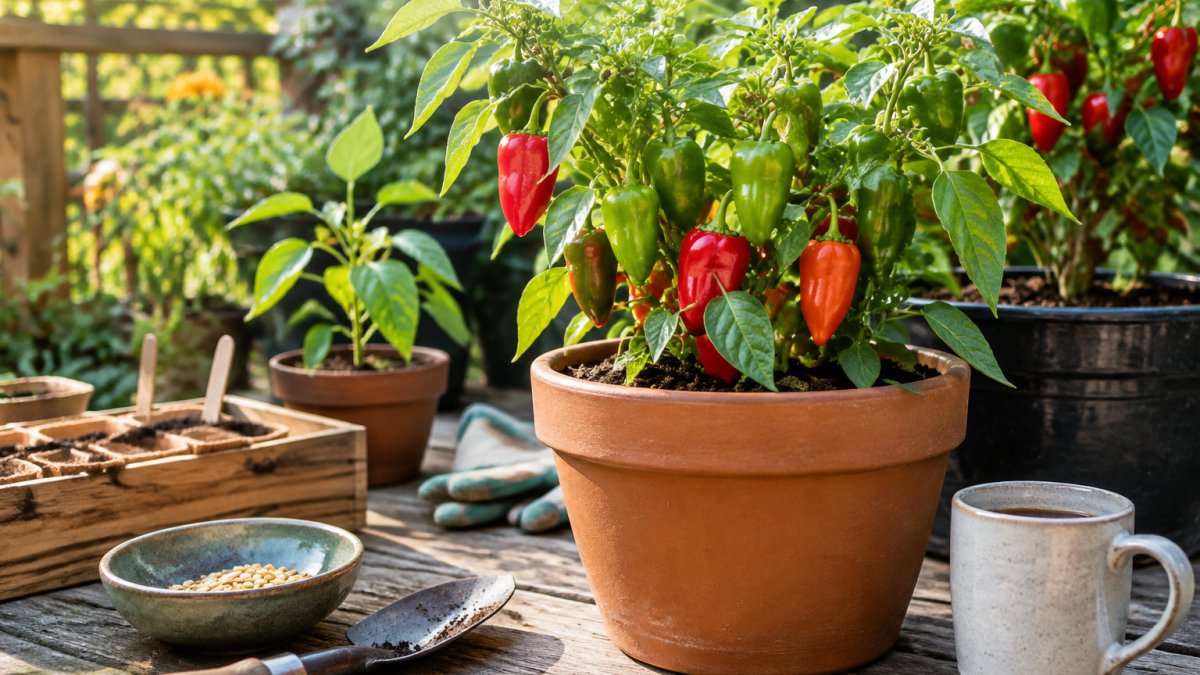
Growing peppers from seed at home starts with a few simple supplies. You don't need a greenhouse or fancy equipment. A sunny windowsill, a handful of small pots or cell trays, and some seed-starting mix will get you going. For a full step-by-step walkthrough, see How to Start Pepper Seeds Indoors.
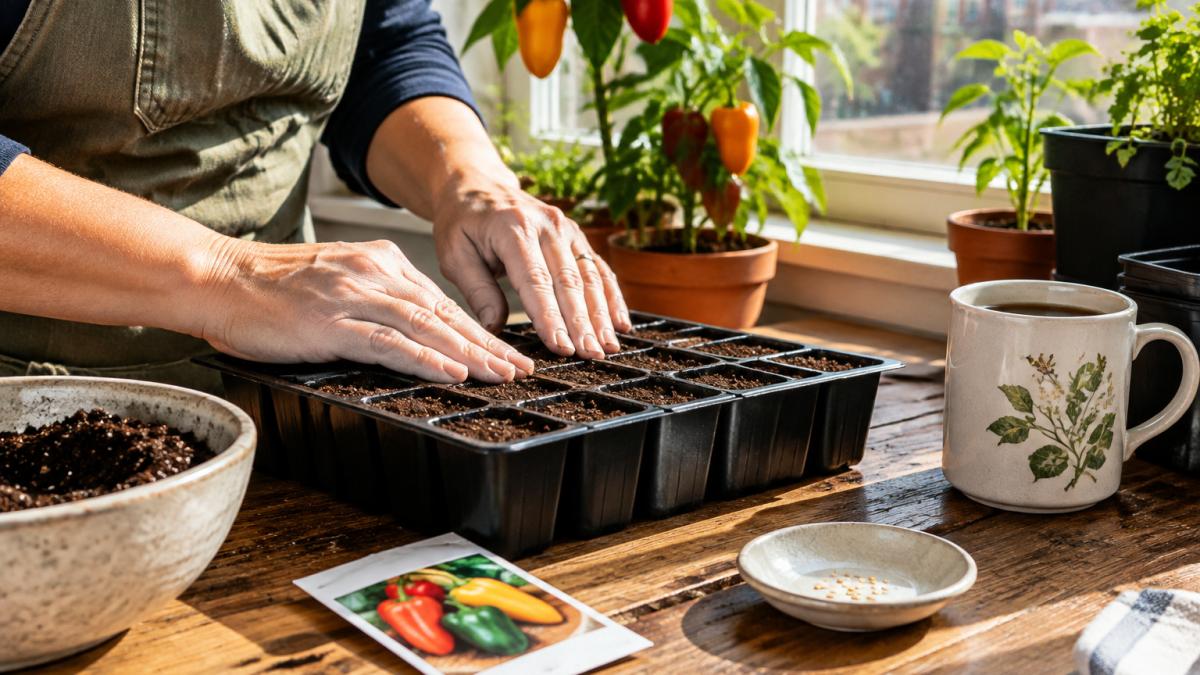
Gather these basics before you open your seed packets:
- Seed-starting mix: Use a light, sterile mix made for seeds, not garden soil, which can carry diseases and packs down too tightly.
- Containers: Small cells, peat pots, or recycled yogurt cups with drainage holes work well.
- Heat: Peppers germinate best in warm conditions, so a heat mat helps, especially in cooler spring weather.
- Light: Once seedlings emerge, they need strong light. A simple LED grow light placed a few inches above the tops of the seedlings works better than a dim windowsill.
Pepper seeds can take a while to sprout, so patience matters. Set up your space first, then plant. Getting organized ahead of time can help keep the whole process stress-free.
Choosing Pepper Varieties and Timing Your Indoor Start
Your variety choice matters, and so does the calendar you build around it. Some peppers are fast and forgiving, while others need a long season to mature. For beginners, start with an easy-growing type like an early jalapeño, which matures quickly and handles container life well. Our beginner-friendly pick list of easy-growing peppers shows other reliable choices. For something with unique flavor, our Aleppo and Calabrian varieties are rewarding choices. Hot peppers generally germinate a bit slower than sweet types, and large-fruited sweet peppers often need an extra week or two of indoor time before they're ready to go outside.
Timing is the other big decision. Peppers are slow growers and need a long season, so starting seeds indoors is usually necessary in the Southeast. Rather than relying on a fixed number of weeks, build your schedule backward from your last spring frost date. Check the Mississippi State University Extension website for local frost dates and planting guidance, since timing varies across the region.
Here's a practical calendar you can adapt to your own last frost date:
- 10 to 12 weeks before last frost: Start hot peppers and large-fruited sweet varieties indoors. These are the slowest to germinate and the slowest to size up.
- 8 to 10 weeks before last frost: Start early jalapeños, shishitos, and other quick-maturing types.
- 6 to 8 weeks before last frost: A good window for container-grown peppers you plan to keep on a patio, since pots warm faster than garden beds and plants can go out a touch earlier.
- 2 weeks before last frost: Begin hardening off seedlings that are already well-leafed.
- After last frost: Transplant outdoors once nights stay reliably warm, generally above 55 degrees Fahrenheit.
If you're growing in containers, you can often start a week or two later than garden-bed growers because pots warm up faster in spring and you can move them in and out as weather shifts. That flexibility is one of the quiet advantages of container growing in the Southeast.
Watch out: starting too early is just as risky as starting too late. Seedlings that outgrow their pots before the weather cooperates become leggy and stressed, so match your start date to your actual frost date rather than the earliest date on the seed packet.
Here's a quick snapshot of the timing windows covered above, measured back from your last spring frost date.
| Start window | What to start | Why |
|---|---|---|
| 10 to 12 weeks before last frost | Hot peppers and large-fruited sweet varieties | Slowest to germinate and size up |
| 8 to 10 weeks before last frost | Early jalapeños, shishitos | Quick-maturing types |
| 6 to 8 weeks before last frost | Container peppers for patio use | Pots warm faster than beds |
| 2 weeks before last frost | Begin hardening off well-leafed seedlings | Prepares plants for outdoors |
| After last frost | Transplant outdoors | Nights reliably above 55°F |
Recommended seed-start window before last frost (weeks)
How to Germinate Pepper Seeds Fast
Peppers are notoriously slow to sprout. Helping them along with a few simple steps can shorten the wait and improve your success rate. Our guide on getting rare pepper seeds to sprout successfully covers the details.
Follow these steps for faster germination:
- Keep the seed-starting mix evenly moist, never soggy.
- Plant seeds about one-quarter inch deep.
- Cover the containers with a clear dome or plastic wrap to hold in humidity.
- Place the containers somewhere warm, ideally around 75 to 85 degrees Fahrenheit.
- Remove the cover once seedlings appear to prevent damping off.
Soaking and Warmth for Faster Sprouting
Some gardeners soak pepper seeds in warm water for several hours before planting. This softens the seed coat and can speed up sprouting. Don't soak them for more than a day, or the seeds may rot.
Warmth does most of the work. A heat mat set under your seed trays can cut germination time noticeably compared to room temperature alone.
Germination Troubleshooting by Symptom
If your seeds aren't coming up, check these common problems:
- No sprouts after several weeks: The soil may be too cold. Move the tray to a warmer spot.
- Mold on the soil surface: Too much moisture and not enough airflow. Remove the cover for a few hours each day.
- Seedlings that flop over at the soil line: This is damping off, usually caused by overwatering or dirty containers. Use fresh mix and clean containers next time.
- Seeds that look swollen but never sprout: The seeds may be old. Pepper seed viability drops over time, so buy fresh seed when possible.
How Long Does It Take to Grow Peppers From Seed Indoors?
Pepper seeds typically take about one to three weeks to germinate, though some varieties take longer. Once seedlings emerge, expect another eight to ten weeks of indoor growing before they're ready to transplant outdoors. The full timeline from seed to transplant is often around ten to twelve weeks, and the plants will need several months more to produce fruit.
Caring for Seedlings Under Lights and Transplanting Day
Once your seedlings have their first true leaves, the care routine shifts from germination to growth. Give them plenty of light and water only when the top of the mix feels dry. Keep grow lights a few inches above the plants and raise them as the seedlings grow. Weak, leggy seedlings usually mean they need more light, not more water.
A few concrete targets make this easier to manage:
- Light: Aim for 14 to 16 hours of light per day from an LED grow light placed 2 to 4 inches above the canopy. A sunny windowsill alone often isn't enough in the Southeast, where spring cloud cover can stretch for days.
- Water: Water when the surface of the mix is dry to the touch, usually every two to three days in small cells. Bottom-watering by setting trays in a shallow pan helps keep foliage dry and reduces damping-off.
- Airflow: A small fan on low, pointed near but not at the seedlings, strengthens stems and discourages mold.
- Feeding: Seed-starting mix has little nutrition, so begin a diluted balanced fertilizer about two weeks after the first true leaves appear, then feed every week or two until transplant.
Common seedling problems and what they usually mean:
- Tall, spindly stems with wide gaps between leaves: Not enough light. Lower the fixture or increase hours.
- Seedlings that collapse at the soil line: Damping-off, a fungal issue favored by cool, wet conditions and poor airflow. Remove affected cells, improve airflow, and water less.
- Pale yellow leaves on otherwise sturdy plants: Often a sign the seedlings need a light feeding.
- Uneven growth across a tray: Normal with peppers, since germination is staggered. Group the strongest seedlings together under the light and give the laggards more warmth.
Before moving plants outdoors, harden them off over seven to ten days. Start with an hour or two in a sheltered spot and gradually increase their time outside. Plant them out only after nights stay reliably warm. Container-grown peppers can be moved in and out during this period, which makes hardening off easier to manage than it is for garden beds. As you plan when to move peppers outdoors, simple garden planning steps can help you coordinate their gradual transition with the rest of the garden.
Watch out: don't fertilize seedlings that are still in their first set of leaves or that look stressed, feeding too early can burn tender roots. Wait until plants are actively growing and have at least one set of true leaves.
How to Grow Peppers in Pots: A Container Planting Guide
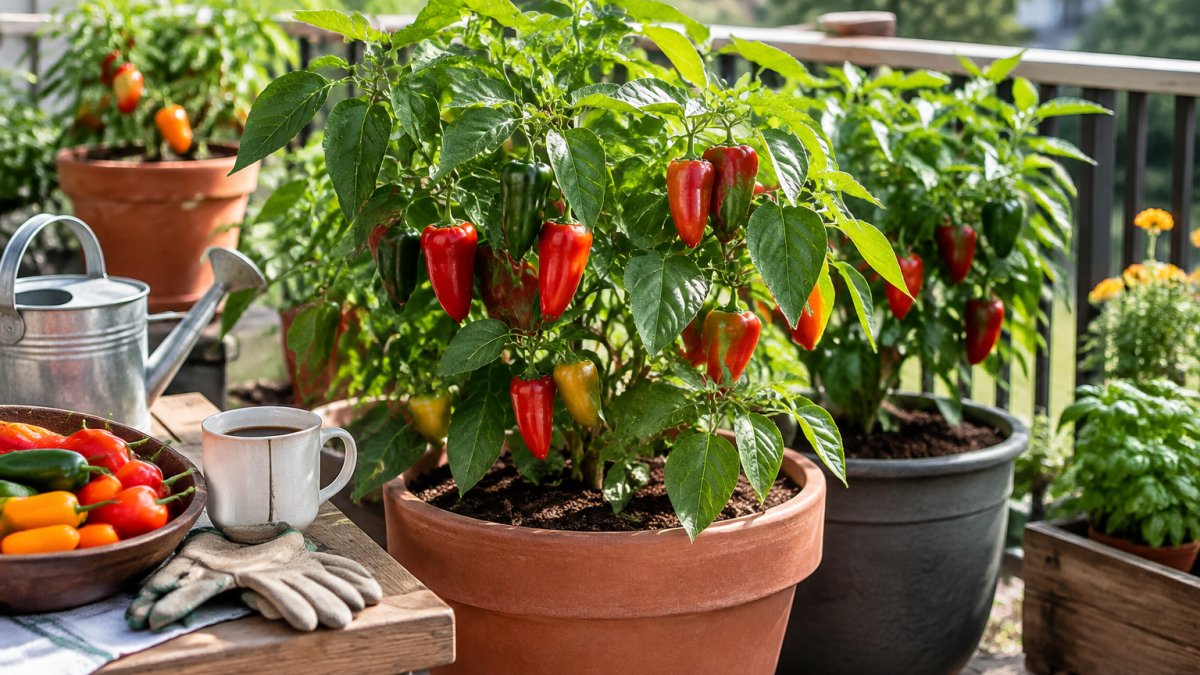
Containers are a great fit for pepper growing, especially on a patio or small yard. Our guide to heat-tolerant peppers that perform well in pots shows which varieties to choose. Choose a pot at least 5 gallons in size, with good drainage holes. Use a quality potting mix, not garden soil, and place the pot where it gets at least six to eight hours of direct sun daily.
Water containers more often than garden beds, since pots dry out faster in Southern heat. Feed plants with a balanced fertilizer every few weeks once they start flowering. Our Early Jalapeño variety is a dependable choice for pots, and our Shishito peppers do well in containers too, giving you a mild, flavorful harvest.
Planting Your First Pepper Seeds This Season
You now have everything you need to get started. Set up your supplies, pick a variety that suits your space, plant your seeds at the right depth, and keep them warm and moist. Take it one step at a time, and don't be discouraged by slow sprouts. Peppers reward patience.
Ready to get your seeds started? Browse our Calabrian, Aleppo, Early Jalapeño, and Shishito pepper seeds at Heritage Cottage Seeds and find the variety that fits your garden.
Frequently Asked Questions
How long does it take pepper seeds to sprout?
Pepper seeds are slow starters. Most sprout in roughly one to three weeks when kept warm and evenly moist, and some varieties take longer. Warmth matters more than anything else here. Keep the seed tray in a consistently warm spot, and check it daily. If nothing has emerged after three weeks, the seeds may be old or the temperature may be too low. Starting with fresh seed from a reputable source improves your odds.
Can I grow peppers in pots instead of a garden bed?
Yes, peppers grow very well in containers, which is great news for apartment gardeners and anyone short on yard space. Choose a pot at least 5 gallons in size with drainage holes, use a quality potting mix, and place it where it gets at least six to eight hours of direct sun. Mississippi State University Extension offers guidance on growing vegetables in containers for home gardeners in the Southeast. Water when the top inch of soil feels dry.
What is the fastest way to germinate pepper seeds?
Soak seeds in warm water for about 12 to 24 hours before planting, then sow them about one-quarter inch deep in moist seed-starting mix. Keep the tray at a steady warm temperature, ideally around 80 to 85 degrees Fahrenheit, using a heat mat if your home runs cool. Cover the tray to hold humidity, and remove the cover once seedlings emerge. These steps can shorten the wait noticeably compared with planting dry seed in cool soil.
When should I start pepper seeds indoors in the Southeast?
In the Southeast, most home gardeners start pepper seeds indoors about eight to ten weeks before the last spring frost date for their area. Mississippi State University Extension publishes local frost date information that can help you pin this down for your county. Starting in late winter gives peppers enough time to mature before the heat of summer, and seedlings should be hardened off for about a week before moving outdoors.