 How-to
How to Save Heirloom Tomato Seeds at Home
Table of Contents
- Why Saving Heirloom Tomato Seeds Is Worth Your Time
- Choosing the Right Tomato Variety: Open-Pollinated vs. Hybrid
- How to Harvest Cherry Tomato Seeds for Next Year
- How to Ferment Tomato Seeds Step by Step
- How to Save Tomato Seeds Without Fermenting
- Drying Seeds Properly So They Stay Viable
- How to Store Tomato Seeds for Long-Term Use
- Planning Your Next Season With Your Saved Seeds
- Frequently Asked Questions
How to Save Heirloom Tomato Seeds at Home
Last Updated: November 10, 2026
Why Saving Heirloom Tomato Seeds Is Worth Your Time
Saving your own heirloom tomato seeds is one of the most rewarding things a home gardener can do. Growing and saving seed from your own garden is a rewarding habit, and there is a little thrill each time a fruit you picked the seed from comes up strong in the spring. Knowing how to save heirloom tomato seeds at home means you keep a variety going year after year, without buying a new packet.
Heirloom tomatoes are open-pollinated, so the seeds you save will grow into plants that look and taste like the parent. That is the big difference from hybrids, which often do not come true from seed.
Here is what you gain by saving your own seed:
- Money back in your pocket. Each saved packet is a packet you did not buy.
- Plants adapted to your garden. Seed saved from your best plants learns your soil, sun, and weather.
- A living family tree. Some varieties have been passed along for generations.
The process takes a little patience, but it is simple enough for beginners.
Choosing the Right Tomato Variety: Open-Pollinated vs. Hybrid
Before you save any seed, pick the right plant. Only open-pollinated and heirloom varieties give you seed that grows true. Hybrid tomatoes can produce fruit that looks different from the parent, and the plants may be weaker.
Check the seed packet or plant tag. Look for the words "open-pollinated" or "heirloom." Heritage Cottage Seeds' tomato varieties, including Cherokee Purple, Black Ethiopian, Siberian Red Heirloom, and Heritage Cottage Orange, are heirloom varieties you can shop for.
Tomatoes are mostly self-pollinating, so cross-pollination is less of a worry than with squash or corn. Still, if you grow two very different varieties close together, a few bees may mix their pollen. For a pure seed line, space varieties apart or grow only one type per season.
How to Harvest Cherry Tomato Seeds for Next Year
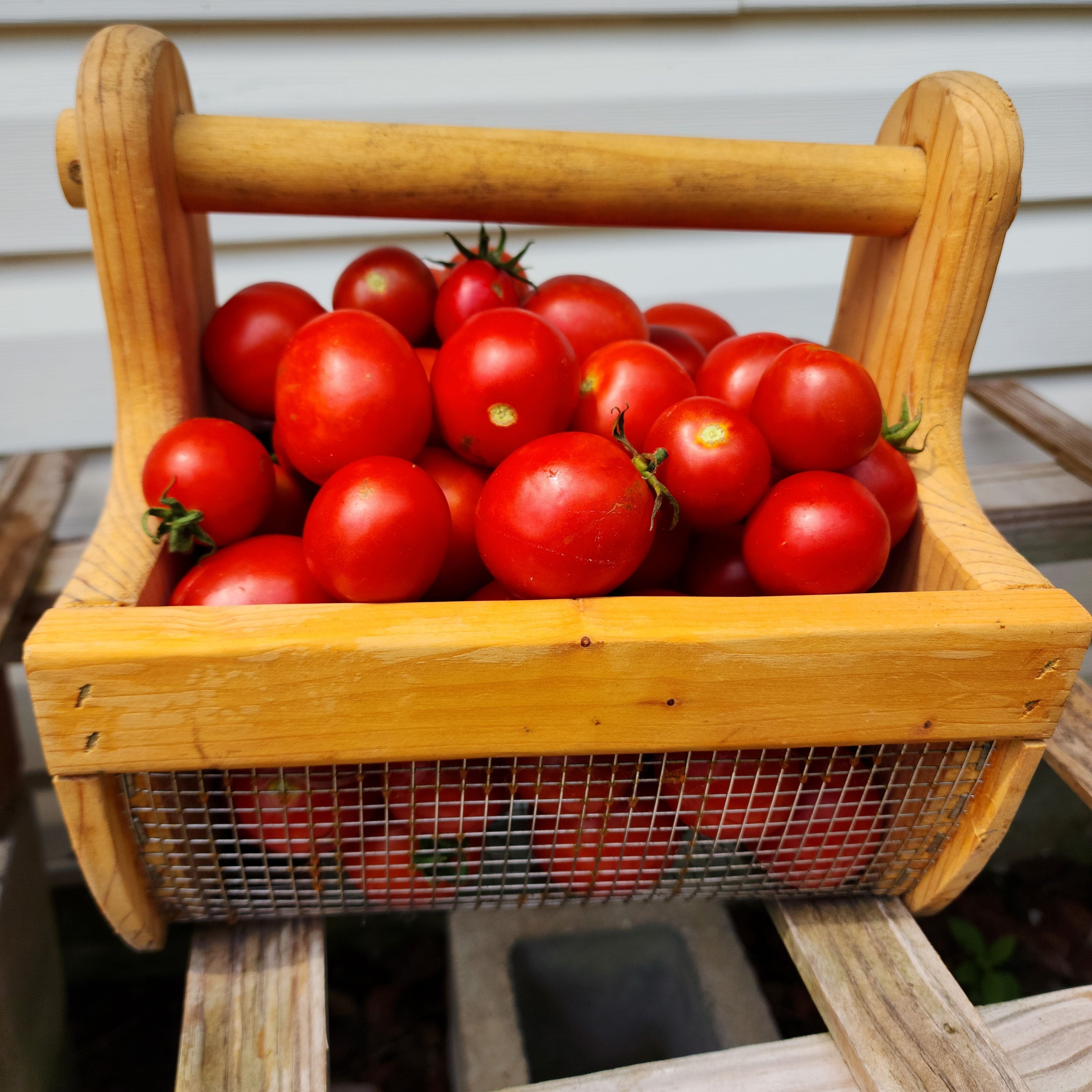
Small fruit is easier to handle, but the same steps apply. Choose your best plant, the one with the most flavor, the best shape, and the strongest growth. Mark it with a tag so you remember.
Leave the fruit on the vine until it is fully ripe, deep in color, and soft to the touch. Overripe fruit is fine for seed, as long as it has not started to rot on the vine. Pick several fruits from the same plant, so your seed has some genetic variety.
Cherry tomatoes have very small seeds, so be gentle when you handle them. Work over a bowl so no seed gets lost.
How to Ferment Tomato Seeds Step by Step
Fermentation is a traditional way to clean tomato seed. As the mix sits warm, naturally occurring microbes break down the gel around each seed, which frees the seeds and lets the good ones sink.
Before you start, consider the plant. Only save seed from plants that looked healthy at the time of harvest.
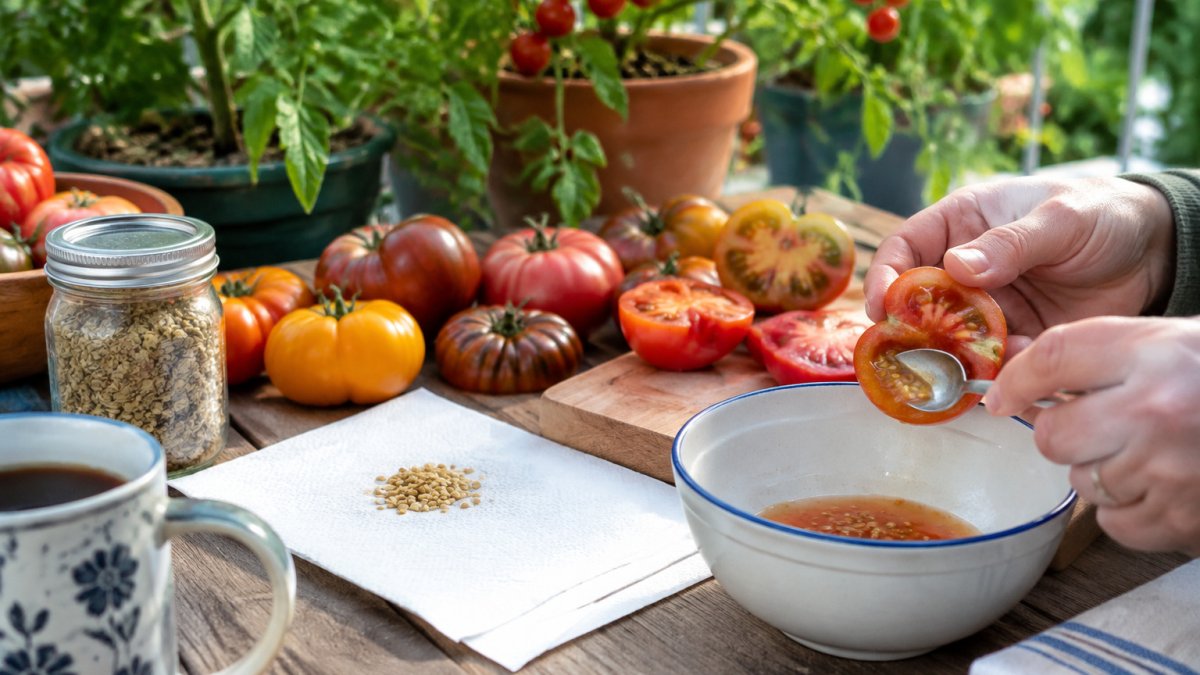
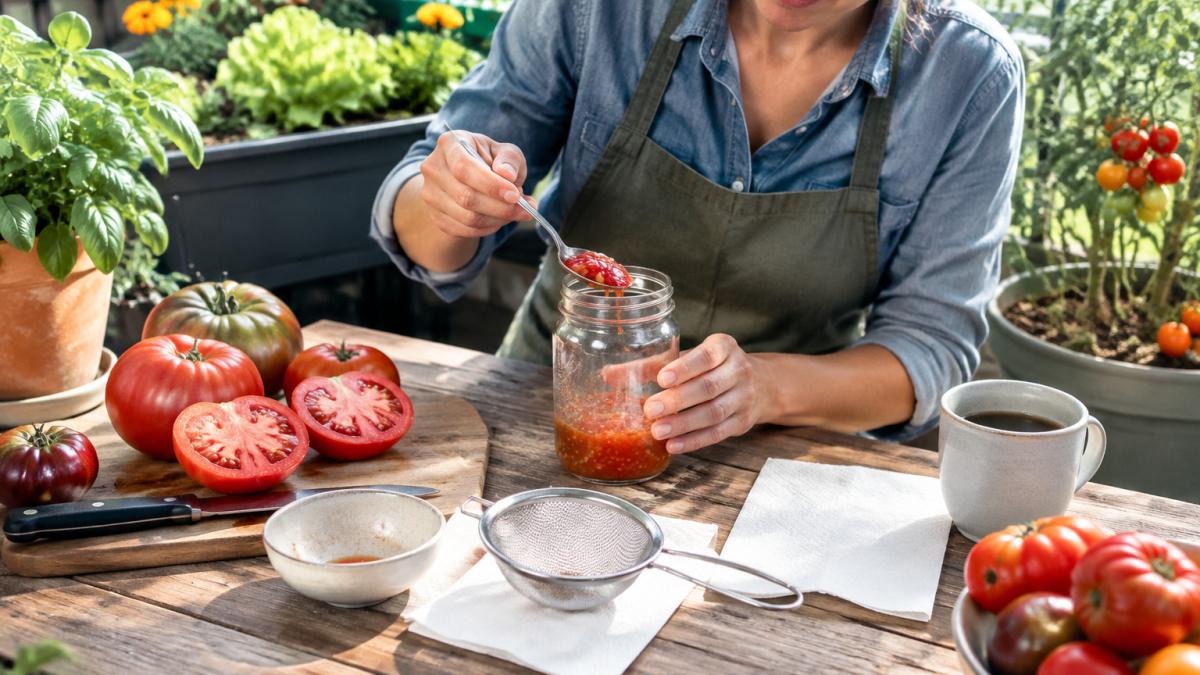
To start, scoop the seeds and surrounding gel into a clean glass jar. Add just enough water to loosen the mix, usually about a quarter cup for every cup of pulp. Cover the jar loosely with a paper towel secured by a rubber band, so air can escape but fruit flies cannot get in. Set the jar in a warm spot, roughly 70 to 80 degrees Fahrenheit, and out of direct sun.
Stir the mixture once a day. A thin white or grayish film on the surface is normal, but fuzzy mold in colors like green or black means the batch should be watched more closely or discarded. Within two to four days, the mix will look separated. Good seeds sink, the gel sits on top or floats, and the jar may smell sour, which is expected.
Knowing when to stop is the key skill. Stop the process as soon as the gel has loosened and the good seeds have settled. If you are unsure, check the jar regularly.
Watch out: a jar that smells rotten or develops fuzzy colored mold should be thrown out. Do not try to salvage that batch, because the seeds may be carrying spoilage organisms you cannot see.
How to Save Tomato Seeds Without Fermenting
Some gardeners skip fermentation altogether. You can simply scoop the seeds out, rinse them well, and dry them. This is faster, but it leaves the gel coating on, which can keep some seed-borne problems alive. If you choose this route, rinse thoroughly and dry the seeds promptly. Fermenting remains the safer choice for seed you plan to share or store long term.
Drying Seeds Properly So They Stay Viable
Drying is where many seed savers lose their work. Seeds that stay damp can mold, and seeds dried too hot can be killed.
- Spread seeds in a single layer on a paper towel, a coffee filter, or a ceramic plate.
- Set them in a room with good airflow, out of direct sun.
- Let them air-dry for about one to two weeks, stirring them every day so they dry evenly.
- Test them: a seed that is fully dry will snap, not bend.
Do not use a hot oven or a sunny windowsill to speed things up.
How to Store Tomato Seeds for Long-Term Use
Storage is where a good seed harvest either pays off for years or quietly fades. Most of the trouble comes from moisture, warmth, and air, so your goal is to keep all three low and steady.
Start with dryness. Seeds should be fully dry before they go into any container, which is why the snap test from the drying step matters. Once they are dry, add a food-safe desiccant packet to the jar to help keep moisture out.
Next, choose a temperature. A cool, dark closet or drawer away from the stove and the dishwasher works well for seeds you plan to replant within a season or two. Place the sealed, fully dried seed in a small airtight container, and let it come to room temperature before you open it.
Label every container with the variety name, the year harvested, and the parent plant if you tagged one. Labels matter more over time than you expect, because two packets of similar-looking seed from different years can be hard to tell apart.
To check on your stored seed, run a simple germination test every year or two, then plant a few extra seeds to compensate if results drop. Keeping a short record of these test results in your garden journal shows you exactly when a variety starts to decline.
Keep stored seed away from damp and warm spots.
Planning Your Next Season With Your Saved Seeds
Once your seeds are dry and stored, start planning. Note which plants performed best this year, and mark those as your seed parents for next season. Start seedlings indoors several weeks before your last frost date, and set out plants once the soil warms.
Keep a simple garden journal with the variety, planting date, harvest date, and any notes about flavor or disease. Over a few seasons, you will build a seed line that suits your own garden perfectly.
| Step | Time Needed | How Often |
|---|---|---|
| Harvest seed fruit | 1 day | Once per season |
| Ferment seeds | 2-4 days | Once per batch |
| Rinse and strain | 30 minutes | Once per batch |
| Dry seeds | 1-2 weeks | Once per batch |
| Store seeds | Ongoing | Check yearly |
Saving your own tomato seed is a simple habit that pays off every season. Grab a jar, pick your best tomato, and start your own seed line with Heritage Cottage Seeds varieties.
Frequently Asked Questions
Can heirloom tomato seeds be saved?
Yes. Heirloom tomatoes are open-pollinated, which means the seeds produced by the fruit grow true to type when planted the following year. Choose fully ripe fruit from your healthiest plant, extract the seeds, dry them completely, and store them in a cool, dark place. Hybrid tomatoes can also produce seeds, but those seeds may not resemble the parent plant, so heirloom varieties are the better choice for saving.
Can you save tomato seeds without fermenting?
Yes. Fermentation helps break down the gelatinous coating around tomato seeds. Without fermenting, you can still scoop out the seeds, rinse them thoroughly, and dry them on a paper towel or screen. Many gardeners skip fermentation for dry-fruited types, but for juicy heirloom tomatoes, fermentation is the more reliable method for cleaner, healthier seed.
How long do saved tomato seeds need to dry?
Tomato seeds usually need about one to two weeks to dry fully. Spread them in a single layer on a paper towel or ceramic plate and keep them out of direct sunlight in a warm, well-ventilated room. Seeds are ready for storage when they snap or break cleanly rather than bending. Stirring them once or twice a day helps prevent clumping and mold.
How should you store heirloom tomato seeds?
Store dry seeds in a labeled glass jar or sealed envelope with a small desiccant packet to keep moisture out. Keep the container in a cool, dark, dry place such as a pantry or basement drawer. Label each packet with the variety name and the year harvested. Store seeds in a cool, dark, dry place and label them clearly.