 how-to
Growing Peppers With Kids: Easy Enough for Beginners
Table of Contents
- Is Growing Peppers With Kids Actually Easy?
- Best Pepper Varieties for Beginners and Children
- Growing Peppers in Containers: The Easiest Setup for Families
- Pepper Plant Growth Stages for Kids: What to Expect Each Week
- Sunlight, Water, and the Basics Kids Can Handle
- Keeping Kids Engaged: Sensory Activities and Harvesting
- Common Pepper Growing Mistakes (and How Kids Help You Avoid Them)
- From Garden to Table: Kid-Friendly Pepper Ideas
- Frequently Asked Questions
Last Updated: September 28, 2026
Is Growing Peppers With Kids Actually Easy?
The short answer: yes, growing peppers with kids is genuinely one of the easiest vegetable gardening projects you can tackle together. Peppers are forgiving plants that reward patience and attention without demanding expert-level knowledge.
Here's what makes peppers different from tomatoes or squash. They're tough. They don't mind if you forget to water them for a day or two. They handle container gardening beautifully. And most importantly, kids can see real progress week to week. A tiny seedling becomes a flowering plant becomes a harvest in just a few months. That visible transformation keeps kids engaged in a way that makes the whole experience stick.
The real magic, though, isn't about the peppers themselves. It's about what happens when a child watches something grow from a seed they planted with their own hands. They start asking questions. They notice bugs. They learn patience. And somewhere along the way, they develop a genuine connection to where food comes from.
Best Pepper Varieties for Beginners and Children
Not all peppers are created equal when kids are involved. You want varieties that germinate reliably, grow quickly, and actually produce fruit without constant fussing.
Bell peppers are the obvious starting point. They're sweet, mild, and kids will actually eat them. Look for compact varieties that don't sprawl all over the place, they fit better in containers and are easier for small hands to manage.
Shishito peppers are a game-changer for families. These Japanese peppers are mild (most of them), produce heavily, and have a fun factor built in. Kids love the small, wrinkled shape. They're perfect for roasting whole, and harvesting them feels like picking tiny treasures.
Biquinho Red peppers from Heritage Cottage Seeds are another excellent choice. These Brazilian heirlooms are compact, highly productive, and produce beautiful teardrop-shaped red peppers with just a hint of sweetness. At approximately 500-1,000 SHU, they're gentle enough for kids to taste without overwhelming heat. The plants thrive in containers and perform well in warm conditions, ideal for families gardening in the Southeast.
Calabrian peppers work if your kids are older and like a little heat. These Italian peppers deliver medium-hot intensity without being extreme. They're vigorous growers and produce slender, tapered red pods that kids find visually exciting. Perfect for families interested in gourmet cooking alongside the gardening.

The key is choosing varieties that produce visible results quickly. Peppers that take 120+ days to mature will test a child's patience. Aim for cultivars that start flowering by 60-70 days and produce harvestable fruit by day 90-100.
Growing Peppers in Containers: The Easiest Setup for Families
Container gardening is where growing peppers with kids shifts from "nice idea" to "actually manageable." Containers give you control over soil drainage, keep plants closer to eye level for kids, and make the whole operation feel less overwhelming.
Container size matters. A 5-gallon bucket or pot works perfectly for most pepper plants (Container gardens offer ease, accessibility, variety). Anything smaller (less than 3 gallons) and you're fighting with watering schedules. Anything larger and you're moving heavy pots around. Five gallons is the sweet spot.
Soil drainage is non-negotiable. Use a quality potting mix, not garden soil. Garden soil compacts in containers and traps water. Peppers hate wet feet. A potting mix with perlite or vermiculite ensures water drains properly while still holding enough moisture for the plant.
Placement beats everything else. Peppers need sunlight, at least 6-8 hours daily, ideally more. A south-facing patio or deck is ideal. If you're in a shadier spot, the plants will survive but won't produce as much fruit. Kids notice this. When they see the difference between a sun-soaked plant and a shaded one, they understand why location matters.
The beauty of containers is that kids can help with every step. They can fill the pot with soil. They can plant the seedling. They can water it. They can move it if needed. There's no heavy lifting, no complicated setup. Just a pot, soil, a plant, and regular attention.
According to Mississippi State University Extension, container gardening allows families to grow vegetables in small spaces while maintaining full control over growing conditions, making it ideal for beginners and young gardeners learning the fundamentals of plant care. Equipping children with the right essential gardening tools ensures they can manage these containers effectively while developing the patience and dexterity required for a successful harvest.
Pepper Plant Growth Stages for Kids: What to Expect Each Week
Understanding what's happening at each stage helps kids stay engaged. Peppers follow a predictable timeline, and knowing what comes next keeps the excitement alive.
Weeks 1-2 (Germination): Seeds sprout and push through soil. This is the moment kids get hooked. One day there's nothing. The next day, tiny green shoots appear. It feels like magic. Germination typically takes 7-10 days at warm temperatures (70-80°F).
Weeks 3-6 (Seedling stage): The plant develops true leaves and grows taller. Growth is visible but not dramatic. This is where patience gets tested. Kids want faster results. Explain that the plant is building strong roots underground, work they can't see but matters enormously.
Weeks 7-10 (Vegetative growth): The plant gets bushier. More leaves appear. Branches form. Kids can help by gently pinching off the top growth to encourage branching (this makes the plant produce more fruit later). It feels productive.
Weeks 11-14 (Flowering): Small white or purple flowers appear. This is the turning point. Flowers mean fruit is coming. Kids understand cause and effect now. Flowers become fruit.
Weeks 15-20 (Fruiting): Tiny green peppers form where flowers were. They grow larger each week. Color develops. Peppers go from green to red (or yellow, orange, depending on variety). This is the payoff stage.
Week 20+: Harvest begins. Peppers reach full size and color. Kids pick them. Everyone tastes them. The cycle completes.
The entire timeline from seed to harvest is roughly 90-120 days. That's long enough to feel like a real project, short enough that kids don't lose interest.
Sunlight, Water, and the Basics Kids Can Handle
Pepper plants don't ask for much, but what they ask for matters.
Sunlight: Peppers want 6-8 hours of direct sun daily. More is better. Kids can help monitor this. Ask them to watch where the sun hits the patio in the morning versus afternoon. They'll start understanding how sunlight moves. If a plant isn't getting enough sun, move it together. Kids learn problem-solving.
Watering: This is the main task kids can own. Water when the top inch of soil feels dry. In hot weather, that might be daily. In cooler weather, every 2-3 days. The rule is simple: don't let the soil dry out completely, and don't keep it soggy. Stick a finger in the soil. If it's dry, water. If it's moist, wait.
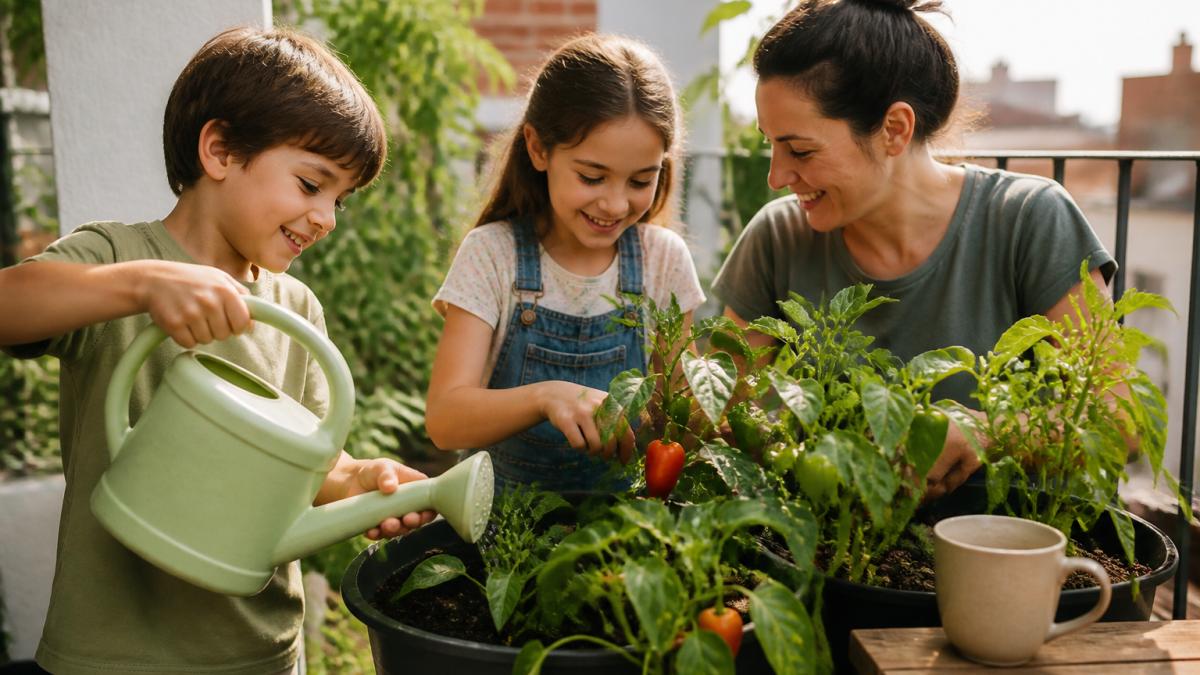
Let kids do the watering. Give them a small watering can. Make it their job. They'll take ownership, and they'll learn to read the plant's signals.
Fertilizer: Peppers benefit from regular feeding during the growing season. Use a balanced fertilizer (something like 10-10-10) or a fertilizer higher in phosphorus once flowering starts (to encourage fruit). Follow the package directions. This isn't a task for young kids, but older children can help mix and apply it under supervision.
Temperature: Peppers like warmth. They struggle below 60°F and really thrive between 70-85°F. This is less something kids control and more something they observe. Talk about how plants, like people, have preferences. Peppers prefer warm weather.
Keeping Kids Engaged: Sensory Activities and Harvesting
Growing peppers with kids works best when you build in activities beyond just watering and waiting.
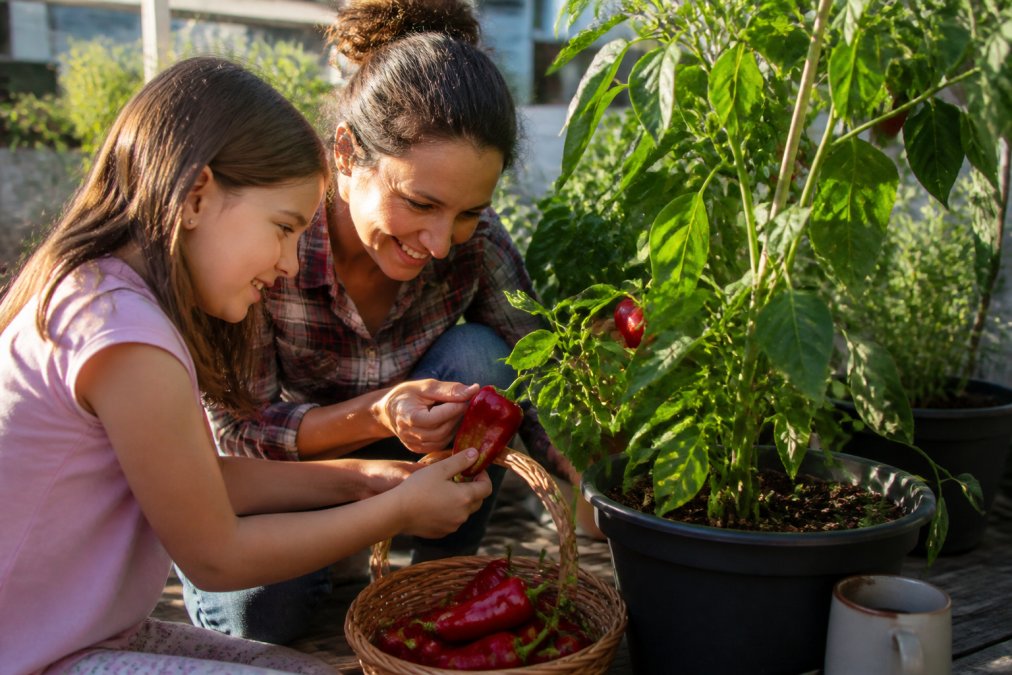
Sensory exploration: Let kids touch the leaves. Pepper leaves have a slightly fuzzy texture. Let them smell the flowers. Pepper flowers smell sweet.
Common Pepper Growing Mistakes (and How Kids Help You Avoid Them)
Most pepper problems come from a handful of repeated mistakes. The good news: kids can help prevent them.
From Garden to Table: Kid-Friendly Pepper Ideas
Harvested peppers are only half the story. What you do with them matters.
| Growth Stage | Timeline | What Kids See | What Kids Can Do |
|---|---|---|---|
| Germination | 7-10 days | Seeds sprout | Plant seeds, water gently |
| Seedling | Weeks 3-6 | True leaves form | Water, observe growth |
| Vegetative | Weeks 7-10 | Plant gets bushier | Pinch growth tips, water |
| Flowering | Weeks 11-14 | White/purple flowers | Pollinate with brush, water |
| Fruiting | Weeks 15-20 | Peppers grow and color | Monitor growth, water, fertilize |
| Harvest | Week 20+ | Full-size colored peppers | Pick peppers, taste them |
Frequently Asked Questions
What are the best pepper varieties for children to grow?
Biquinho Red peppers are ideal for kids, they're mild (500-1,000 SHU), highly productive, and produce beautiful red teardrop-shaped peppers perfect for fresh eating. Aleppo peppers offer gentle heat (5,000-10,000 SHU) and teach kids about heirloom varieties. Both thrive in containers and reward young gardeners with visible results quickly. Start with these beginner-friendly cultivars from Heritage Cottage Seeds to build confidence before exploring spicier varieties.
How long does it take for a pepper plant to produce fruit?
From seed germination to first flowers typically takes 6-8 weeks indoors. Once transplanted outdoors and established, flowers appear within 2-3 weeks. Fruit develops over the next 3-4 weeks, so expect your first harvestable peppers 12-16 weeks after planting seeds. Kids stay engaged when they understand this timeline, mark the milestones on a calendar so they can track progress and anticipate the harvest.
Can peppers be grown successfully in containers?
Yes, peppers thrive in containers and actually make the job easier for families. Use pots at least 5 gallons with good soil drainage, and place them where plants get 6-8 hours of direct sunlight daily. Container gardening lets kids move plants closer to water sources, monitor soil moisture easily, and harvest at comfortable heights. It's the most forgiving setup for beginners and keeps the gardening area organized and manageable for young hands.
What are the most common mistakes when growing peppers with kids?
The biggest mistake is inconsistent watering, peppers need steady moisture but hate waterlogged soil. Kids often forget or overwater. Set up a simple watering schedule together and check soil before watering. Another common error is planting too early before frost danger passes or in insufficient sunlight. Work with Mississippi State University Extension guidelines for your local frost dates, and choose a spot with at least 6-8 hours of direct sun.