 how-to
How to Germinate Rare Pepper Seeds Successfully
Table of Contents
- How Long Do Pepper Seeds Take to Germinate?
- Using Heat Mats for Pepper Seeds
- Troubleshooting Pepper Seed Germination
- Frequently Asked Questions
Last Updated: September 10, 2026
How Long Do Pepper Seeds Take to Germinate?
Learning how to germinate rare pepper seeds successfully starts with patience. Most peppers sprout in 7 to 14 days at around 80°F, while super hots and rare heirlooms can take three to six weeks (extension.msstate.edu).

Soil temperature matters more than the calendar, a tray at 68°F can take twice as long as one at 82°F (extension.psu.edu).
A few benchmarks: sweet and mild peppers 7-14 days, standard hots 10-21 days, super hots like Carolina Reaper and Ghost 21-40 days, and rare heirlooms with thick seed coats up to 6 weeks. Growing in containers, as many Southern gardeners do, lets you move the setup to the warmest spot in the house.
Using Heat Mats for Pepper Seeds
The best investment for germinating rare pepper seeds successfully is a heat mat. Peppers are tropical, and their seeds germinate best when the medium stays between 80°F and 85°F (extension.uga.edu).
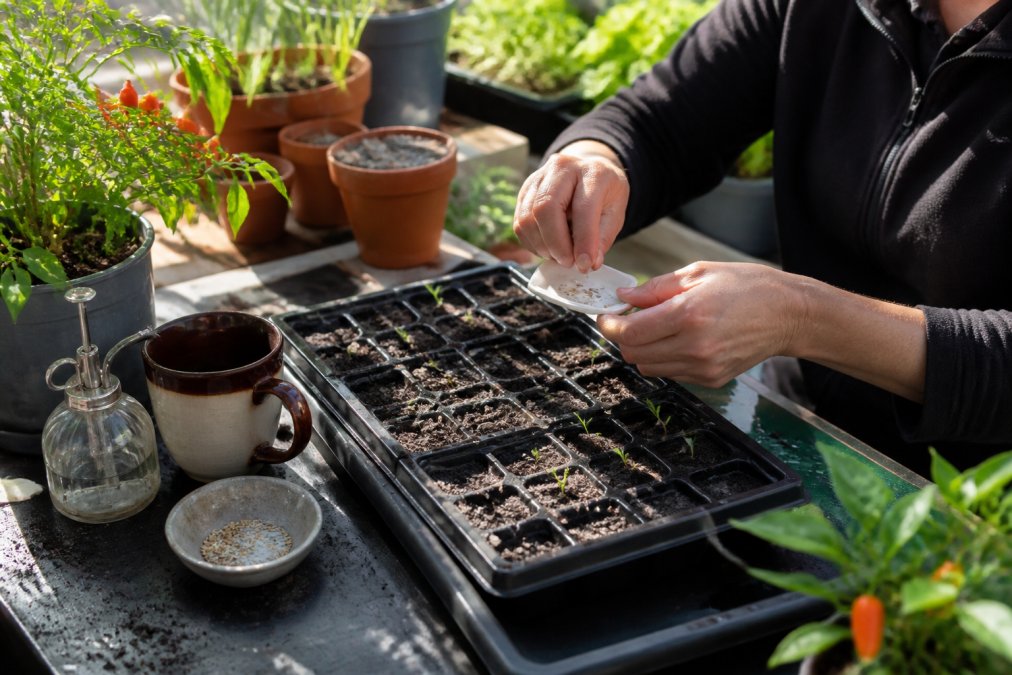
Here's how to set one up: set the mat on a stable, water-safe indoor surface, set the thermostat to 80-85°F, fill cell trays with sterile seed starting mix (not garden soil), sow a quarter inch deep, mist evenly, cover with a humidity dome, and remove the dome once sprouts appear.
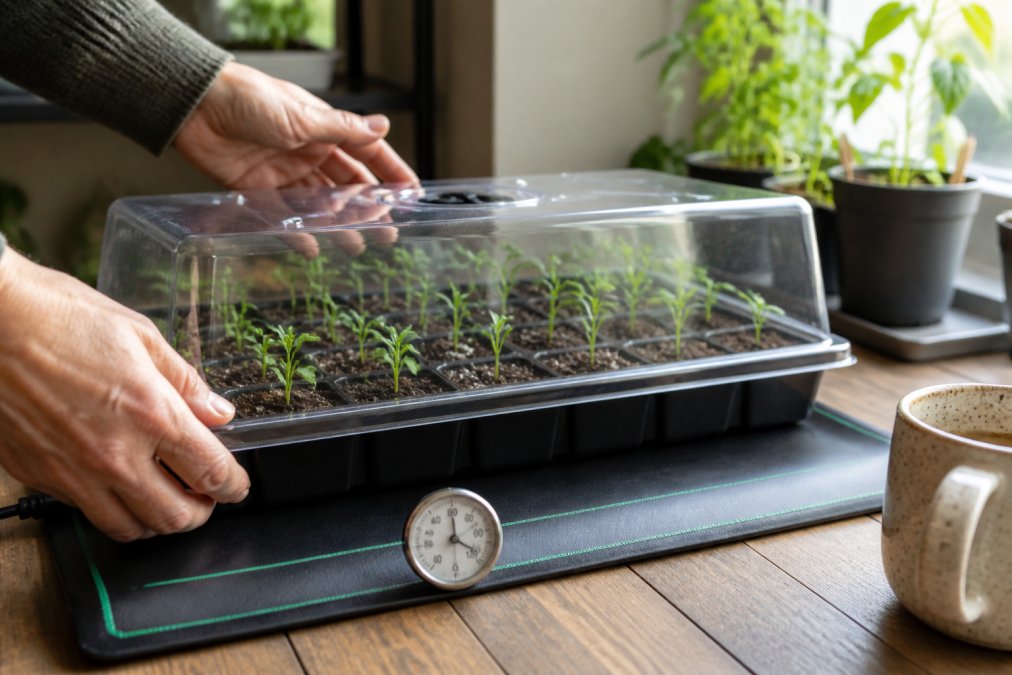
A readable thermometer matters more than the mat's dial. Cheap mats run hot in the center and cool at the edges, so trust a probe in the mix.
Troubleshooting Pepper Seed Germination
When rare pepper seeds fail to sprout, the cause is almost always one of five things: too cold, too wet, too dry, too deep, or old seed. Work through them in that order.
Too cold. Below 75°F, germination slows and some varieties stall. Add bottom heat or move trays somewhere warm.
Too wet. Soggy mix suffocates seeds and invites pathogens. It should feel like a wrung-out sponge.
Too dry. A dome helps, but check daily. Once the surface crusts, seeds can't push through.
Too deep. A quarter inch is plenty. Buried seeds exhaust their stored energy before reaching light.
Old or dead seed. Test viability: place ten seeds in a damp paper towel in a sealed bag, keep it warm, and count sprouts after two weeks. If fewer than half germinate, sow thicker.
Once seedlings show their first true leaves, move them off the heat mat and under bright light to avoid leggy stems.
Frequently Asked Questions
Why is it so hard to germinate rare pepper seeds?
Rare pepper varieties, especially super hots, often have thick seed coats and natural dormancy that slows water absorption. They also need consistent warmth, usually 80-90°F, which is higher than many common peppers. Without steady bottom heat and proper moisture, germination stalls. Using a heat mat and a sterile seed starting mix gives rare seeds the stable conditions they need to break dormancy.
How long does it take pepper seeds to germinate in a paper towel?
In a paper towel kept at 80-85°F, most pepper seeds sprout in 7-14 days. Rare and super-hot varieties can take 21-30 days or longer. Check the towel every couple of days for moisture and signs of a white root tip. Once you see a root, move the seed to a seed starting mix right away so it can develop properly.
What temperature is ideal for germinating super-hot pepper varieties?
Super hots germinate best between 80-90°F. A heat mat set to 85°F provides steady bottom heat without cooking the seeds. Avoid letting temperatures climb above 95°F, which can harm the seed. Once seedlings emerge, remove the heat mat and move them to a cooler, bright spot so they grow sturdy instead of leggy.
Rare pepper seeds reward the gardener who controls temperature instead of hoping for it. If you want varieties worth the wait, Heritage Cottage Seeds carries proven, hard-to-find peppers like Calabrian, Aleppo, and Biquinho Red, each selected for reliable performance in home gardens and containers. Browse the collection and start your trays with seed you can trust to sprout.