 listicle
Rare Heirloom Seeds for Sale Online
Table of Contents
- What Makes Heirloom Seeds Worth Growing
- Heirloom vs Hybrid Seeds Explained
- Best Heirloom Tomato Varieties for Containers
- Starting Heirloom Seeds Indoors
- Frequently Asked Questions
What Makes Heirloom Seeds Worth Growing
Heirloom seeds represent a direct link to gardening history, varieties passed down through generations and replanted year after year. Unlike modern hybrids bred for shipping durability, heirloom varieties were selected for flavor, adaptability, and the simple joy of growing food that tastes like something. Heritage Cottage Seeds specializes in these rare heirloom seeds for sale online, curating varieties that perform beautifully in home gardens.
Open-pollinated heirloom varieties let you save seeds from your best plants and grow them again next year, something impossible with hybrids. You build a living seed bank tailored to your specific garden conditions.
Heirloom vs Hybrid Seeds Explained
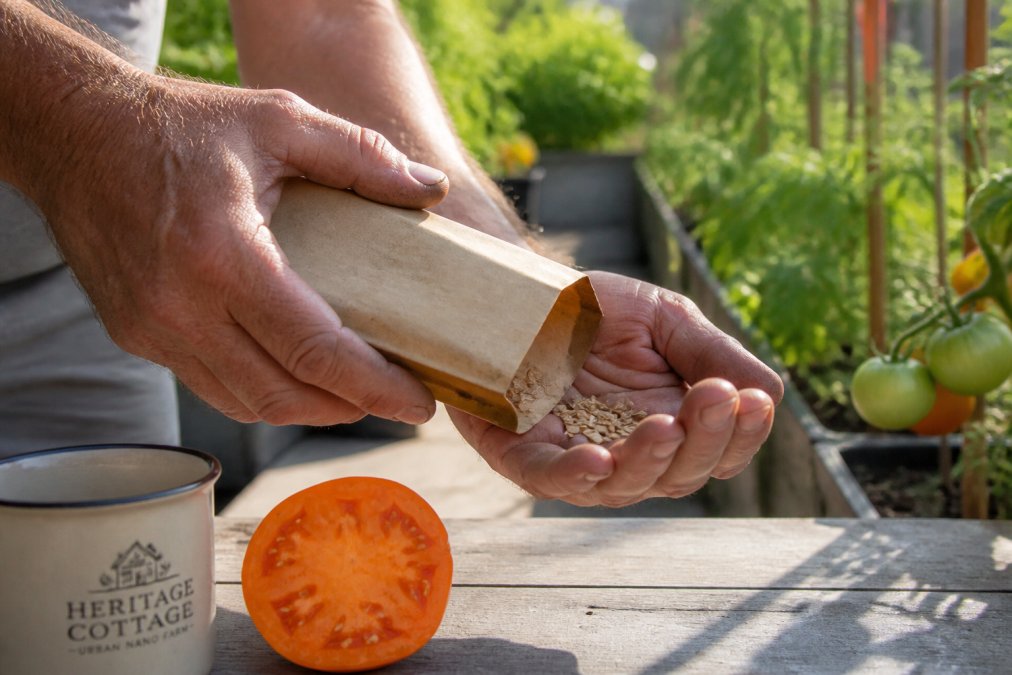
Heirloom varieties are open-pollinated, meaning they pollinate naturally through insects, wind, or self-pollination. The seeds you save produce plants identical to the parent, reliable and yours to keep improving year after year. Hybrid seeds result from crossing two specific parent plants to combine desired traits. That first-generation hybrid performs beautifully with larger yields and built-in disease resistance, but save seeds from a hybrid and next year's crop becomes unpredictable.
For home gardeners, heirlooms win on two fronts. First, seed saving: you grow a plant, select the best fruits, let them fully ripen, extract and dry the seeds, and plant again. Second, flavor and diversity. Commercial growers select hybrids for shipping toughness; heirlooms were selected for taste and local adaptation. In containers and small spaces, heirlooms thrive without the larger yields hybrids demand.
Best Heirloom Tomato Varieties for Containers
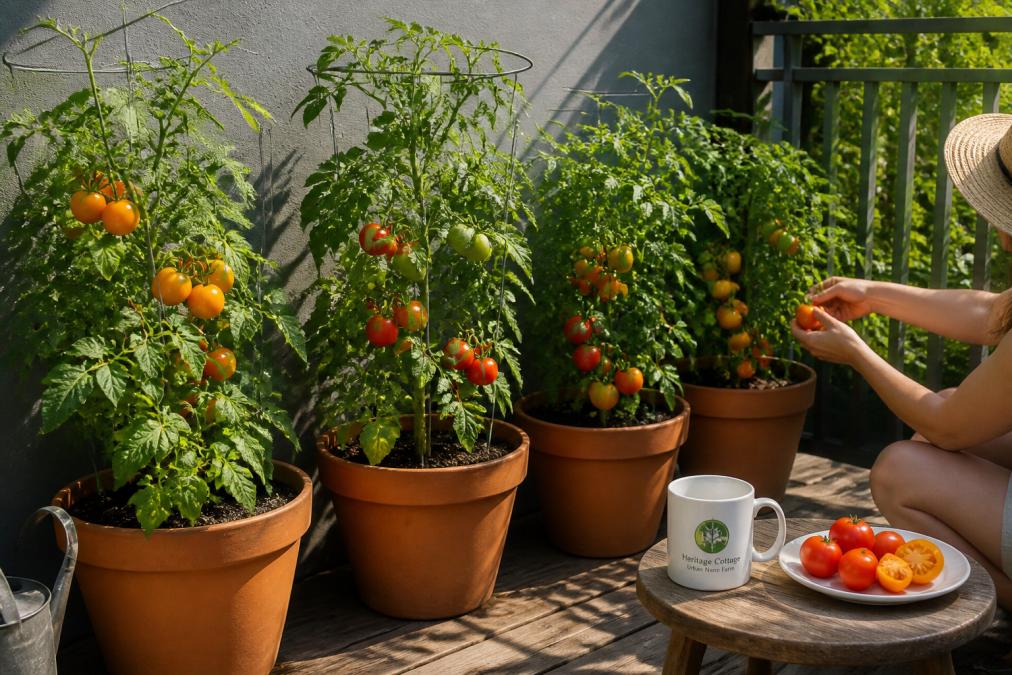
Container growing transforms what's possible in small spaces. You control the soil, drainage, and sunlight entirely. Determinate tomato varieties, compact bush-type plants that set all their fruit at once, thrive in containers better than sprawling indeterminates.
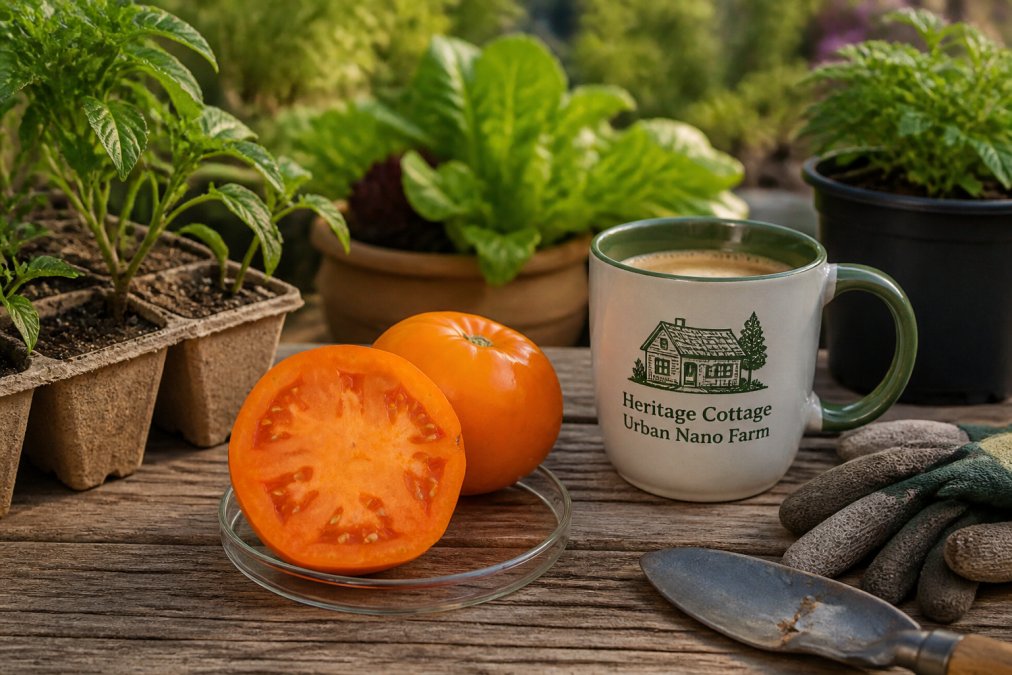
Heritage Cottage Seeds offers several exceptional heirloom tomatoes for containers. The Heritage Cottage Orange is a determinate variety, perfect for a 5-gallon container on a sunny patio.


For heat and humidity tolerance, the Everglades cherry tomato is legendary. This indeterminate variety thrives in challenging Southeast conditions where other varieties struggle. Tiny bright red fruits pack intense, old-fashioned tomato flavor.
The Black Sea Man is a determinate with striking dark mahogany skin and complex sweet-smoky flavor. Medium fruits are ideal for slicing, with compact growth perfect for containers.

| Variety | Type | Best Container Size | Flavor Profile | Harvest Pattern |
|---|---|---|---|---|
| Heritage Cottage Orange | Determinate | 5 gallons | Sweet-tangy | Concentrated |
| Black Sea Man | Determinate | 5 gallons | Sweet-smoky | Concentrated |
| Everglades | Indeterminate | 5-7 gallons | Intense, old-fashioned | Continuous |
Starting Heirloom Seeds Indoors
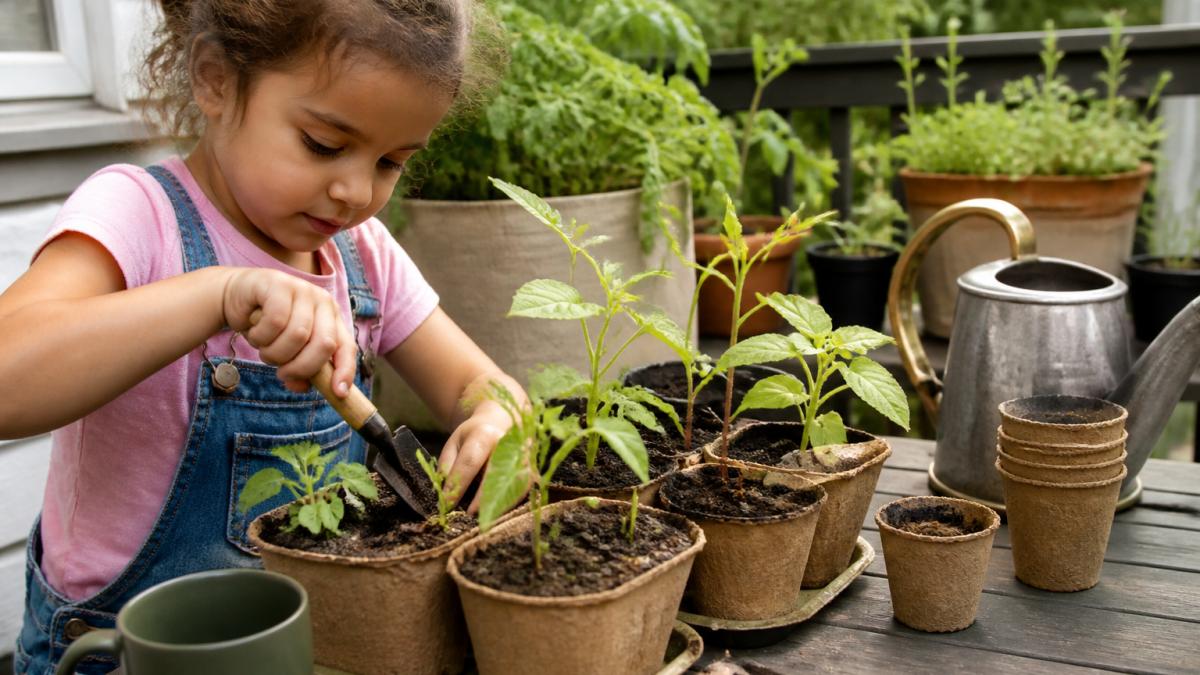
Most gardeners start seeds 6-8 weeks before their last spring frost (peer-reviewed research). Begin with a seed-starting mix, light and sterile. Fill containers, dampen the mix, and plant seeds at the depth recommended on the packet, tomato seeds typically go about a quarter-inch deep. Cover with a humidity dome or plastic wrap to keep moisture in during germination.
Warmth matters. Most heirloom tomato seeds germinate best around 70-75°F (extension.oregonstate.edu). Once sprouted, remove the cover and move seedlings under grow lights positioned just a few inches above the tops. Water from below by setting containers in a tray of water and letting them absorb moisture upward. This prevents damping-off fungus that kills young seedlings.
After true leaves appear, fertilize weekly with diluted liquid fertilizer. Harden off seedlings before transplanting outdoors by spending 7-10 days gradually exposing them to outdoor conditions, starting with an hour in shade and increasing to full sun daily.
When transplanting into the garden or larger containers, bury the stem deeper than it grew in the pot. Tomatoes develop roots all along the buried stem, creating a stronger root system. Space determinate varieties 24-30 inches apart; indeterminates need 36-48 inches.
According to Mississippi State University Extension's vegetable gardening guide, proper hardening-off and transplant timing are critical for establishing strong, productive plants. Water deeply and consistently as plants grow. Container tomatoes dry out faster than in-ground plants, so check soil moisture daily during hot weather. Mulch around plants to retain moisture and regulate soil temperature.
Growing rare heirloom seeds opens doors to flavors and varieties impossible to find at garden centers. Heritage Cottage Seeds curates varieties tested and proven to perform beautifully in home gardens, from compact determinate tomatoes perfect for containers to heat-tolerant cherry varieties that thrive in challenging Southeast conditions. Start seeds indoors in late winter, harden them off properly, and you'll have vigorous transplants ready to produce exceptional tomatoes all summer.
Frequently Asked Questions
Q: What defines a true heirloom seed versus a hybrid?
A: Heirloom seeds are open-pollinated varieties passed down through generations, producing plants that breed true to type year after year. Hybrids result from crossing two different parent varieties and won't produce identical seeds if you save them. Heirloom seeds let you save seeds from your best plants and grow them again next season, preserving genetic diversity and heritage cultivars. They're the foundation of seed saving and sustainable gardening.
Q: How can I ensure the heirloom seeds I buy online are high-quality?
A: Look for sellers who provide detailed variety descriptions, days to maturity, and performance notes. Check whether seeds are non-GMO and open-pollinated. Reputable sellers offer varieties they've grown and proven themselves. Read customer feedback about germination success and growth performance before ordering.
Q: Are heirloom seeds better for container gardening?
A: Some heirloom varieties excel in containers, especially determinate types that grow compact and bushy. Determinate heirlooms like Heritage Cottage Orange and Black Sea Man produce concentrated harvests in smaller spaces. Indeterminate varieties need more support but work in large containers. Choose based on the variety's growth habit and your container size. Starting heirloom seeds indoors gives you control over plant size and timing, making containers more productive.