 Listicle
7 Heat Tolerant Peppers for Containers That Thrive
Last Updated: November 13, 2026
Quick Summary
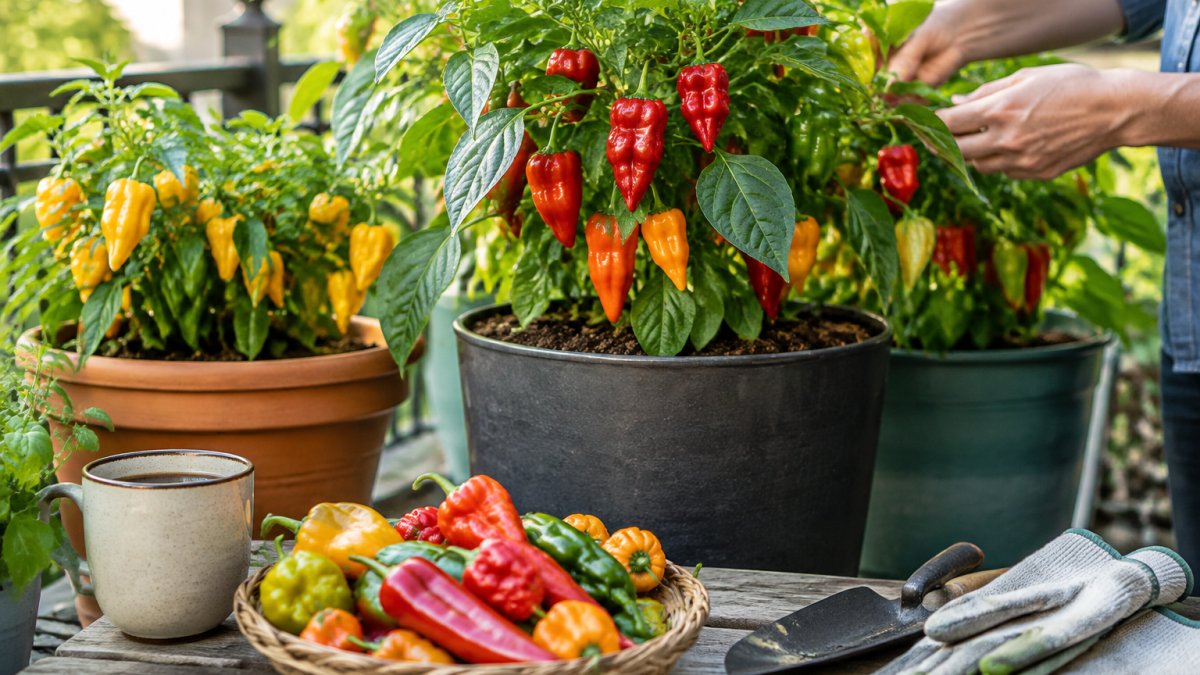
Heat tolerant peppers for containers are compact, productive varieties that set fruit and keep yielding when summer temperatures climb. We grow seven in pots, from two-foot Dwarf Tabasco to mild Biquinho, Shishito, and Manganji Togarashi. The real key is keeping roots cool, water steady, and flowers pollinated.
- Dwarf Tabasco stays about two feet by two feet, the smallest plant on our list.
- One pepper plant per five-gallon pot is the standard for compact varieties.
- Water deeply when the top inch of mix feels dry, preferably in the morning.
- Blossom drop happens when days climb above roughly 90°F and nights stay above 75°F.
- Shift pots into afternoon shade and mulch with an inch or two of straw during heat waves.
Table of Contents
- Why Heat Tolerant Peppers Belong in Containers
- The Best Peppers to Grow in Pots: 7 Heat-Hardy Varieties
- Pepper Plants in 5-Gallon Containers: Sizing and Setup
- Watering Peppers in Hot Weather Without Drowning the Roots
- Spotting Pepper Heat Stress and Poor Fruit Set
- Feeding, Sun, and Southeast Summer Care
- Picking Your Pepper Seeds for the Patio
- Frequently Asked Questions
Why Heat Tolerant Peppers Belong in Containers
Heat tolerant peppers for containers solve a problem in-ground gardeners wrestle with every summer: by midday, soil in a raised bed can bake roots that a pot could have kept cooler and easier to manage. At Heritage Cottage Seeds, we grow almost everything in pots on our urban farm, and peppers reward it most. Containers let you move plants out of a scorching afternoon, swap potting mix between seasons, and give a compact plant exactly the root zone it needs.
Here's what most guides get wrong: they treat heat tolerance as one trait. It's actually two. Some peppers set fruit in high temperatures, and others simply survive them without dropping leaves. The second kind will disappoint you in August.
Below, we walk through seven varieties we've chosen for pots, then the container setup, watering rhythm, and troubleshooting that keep them producing.
The Best Peppers to Grow in Pots: 7 Heat-Hardy Varieties
The best peppers to grow in pots are compact, productive varieties with small mature plant size and reliable fruit set in warm weather. We picked seven from our own seed collection, ranging from a two-foot firecracker to mild Japanese heirlooms.
Here is the quick comparison before we get into each one:
| Variety | Heat Level (SHU) | Plant Habit | Best For |
|---|---|---|---|
| Dwarf Tabasco | 30,000-50,000 | 2 ft by 2 ft, compact | Hot sauce in small spaces |
| Early Jalapeño | 2,500-8,000 | Vigorous, container-friendly | Fast, dependable harvests |
| McDonald's Thai | 50,000-90,000 | Compact, heavy clusters | Thai cooking, drying |
| Fresno | 2,500-10,000 | Early-bearing, productive | Salsa, pickling, flakes |
| Aleppo | 5,000-10,000 | Adaptable, productive | Drying into flakes |
| Biquinho Red and Yellow | 100-1,000 | Compact, highly productive | Snacking, pickling |
| Shishito and Manganji Togarashi | 50-500 | Vigorous, high-yielding | Blistering, grilling |
Heat Level (SHU)
Dwarf Tabasco: The Compact Firecracker
Dwarf Tabasco is the smallest plant on this list at about two feet by two feet, making it the easiest hot pepper to tuck onto a balcony. The original plant came from Avery Island, and we've saved these seeds for five years. Pods run one to two inches, ripening green to bright red, with a tangy heat in the 30,000 to 50,000 SHU range built for sauce.
The tradeoff is yield per plant. You won't get bushels, but a single pot on a hot patio will keep you in hot sauce all season. Shop Dwarf Tabasco pepper seeds if you want the compact version rather than the full-size plant.
Best for: small patios and sauce makers. Skip if: you need volume for feeding a crowd.
Early Jalapeño: Fast, Reliable, and Container-Friendly
Early Jalapeño earns its place because it matures fast and sets fruit uniformly, even when nights stay warm. Thick-walled pods run 2,500 to 8,000 SHU, ripening dark green to red, and the plants show excellent disease tolerance.
Jalapeños handle a slightly crowded pot better than most, though you'll get smaller pods. Order Early Jalapeño seeds and start them early for the fastest first harvest.
Best for: first-time container growers. Skip if: you want serious heat.
McDonald's Thai: Big Heat on a Small Plant
McDonald's Thai packs 50,000 to 90,000 SHU into a compact, vigorous plant that throws clusters of narrow pods. The flavor is clean and slightly fruity, and it dries beautifully into chili powder. These seeds came to us from our friend Garry McDonald in Arkansas. The plants stay small enough for a five-gallon pot but yield heavily through the warm season. Browse McDonald's Thai pepper seeds to grow your own.
Best for: cooks who want real Thai-style heat. Skip if: mild peppers are more your speed.
Fresno and Aleppo: Medium-Heat Workhorses
Fresno and Aleppo fill the middle of the heat range and the middle of your patio. Fresno runs 2,500 to 10,000 SHU with a crisp texture and fruity flavor, hotter and brighter than a jalapeño, and the plants bear early. Aleppo sits in a similar range at 5,000 to 10,000 SHU but brings a slow-building warmth and smoky depth that shines when sun-dried and crushed into flakes.
Both are productive and adaptable in containers. We'd grow Fresno for fresh salsa and Aleppo for the spice jar.
Biquinho, Shishito, and Manganji Togarashi: Mild but Productive
Mild peppers often outproduce the hot ones in pots, and these three prove it. Biquinho, in red and yellow, is a compact Brazilian heirloom with teardrop pods and a fruity, gentle warmth in the 100 to 1,000 SHU range, perfect for pickling and snacking straight off the plant. Shishito runs 50 to 200 SHU, with roughly one in ten pods delivering a surprise kick. Manganji Togarashi is the larger, more productive Japanese cousin at 100 to 500 SHU, ideal for grilling and tempura.
If you're growing with kids or you just prefer flavor over fire, start here.
Pepper Plants in 5-Gallon Containers: Sizing and Setup
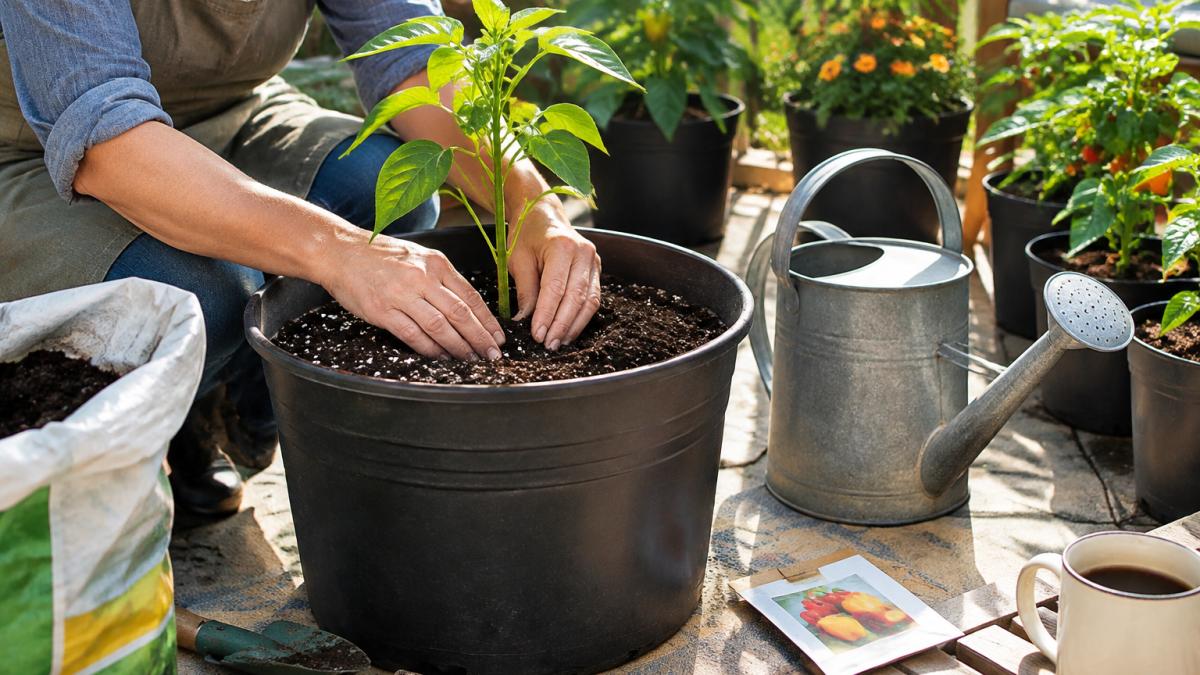
Pepper plants in 5-gallon containers hit the sweet spot for most compact varieties. A five-gallon pot gives roots enough room to spread without holding so much wet mix that it stays soggy.
Container material drives root-zone temperature and moisture loss. Fabric grow bags breathe well and air-prune roots, but in full sun they lose water fast, often a full day faster than plastic.
Dark pots absorb heat and warm the root zone fast, which helps in spring but can cook roots in a heat wave.
Use a potting mix built for containers rather than garden soil, which compacts and drains poorly in a pot.
One pepper plant per five-gallon pot is the standard for compact varieties.
Watch out: a dark pot on hot concrete can push root-zone temperatures high enough to stunt growth even when the air is moderate.
For a deeper walkthrough of mix, spacing, and starting seed, our guide on how to grow peppers in pots for a big backyard harvest covers the full season.
Watering Peppers in Hot Weather Without Drowning the Roots
Watering peppers in hot weather is a balance: containers dry out fast, but constant soaking drowns roots and invites rot. Water deeply when the top inch of mix feels dry, then let it drain fully. In a Southeast summer, that often means once a day for smaller pots and every other day for five-gallon ones.
Morning watering beats evening watering. It gives foliage time to dry before night, which cuts down on disease. Watch out: wilting at midday isn't always a sign of thirst. Peppers often droop in peak heat and recover by evening. Check the soil before you reach for the can, or you'll overwater a plant that was fine.
Spotting Pepper Heat Stress and Poor Fruit Set
Heat stress in peppers shows up in predictable ways.
The fix is partly environmental. Shift pots into afternoon shade during the hottest weeks, morning sun and filtered afternoon light works well.
Poor fruit set in containers also comes down to pollination. Our step-by-step guide on how to pollinate peppers in containers walks through the whole process.
Watch out: don't confuse heat stress with a pest or disease problem. If you see sticky residue or fine webbing, check for aphids or spider mites, which thrive in hot, dry conditions and can cause flower drop too.
Mississippi State University Extension recommends growing vegetables in containers for gardeners with limited space, and its guidance on potting media and watering applies directly to peppers. Following Mississippi State University Extension's container vegetable guidance will keep your plants on track through the humid months.
Feeding, Sun, and Southeast Summer Care
Feeding, sun, and summer care decide whether a well-chosen plant actually performs.
Mississippi State University Extension recommends growing vegetables in containers for gardeners with limited space, and its guidance on potting media and watering applies directly to peppers. Following Mississippi State University Extension's container vegetable guidance will keep your plants on track through the humid months. For general care standards, the university extension advice on growing peppers is a solid reference.
A few habits that pay off in a Southern summer:
- Mulch the top of the pot to slow moisture loss.
- Group pots so they shade each other's roots slightly.
- Harvest regularly; pods left on the plant slow new flowering.
- Check drainage saucers after storms and empty them.
Picking Your Pepper Seeds for the Patio
Choosing seed shapes your whole season, so match varieties to your space and your kitchen rather than grabbing whatever's on a rack. Compact plants suit small spaces; productive mild types suit families; a single fiery plant suits sauce makers. Every variety here is open-pollinated, so seed saving keeps working for you year after year.
That's the quiet advantage of growing from seed: you control the genetics and the heat level, and you can replant the ones that thrived on your patio. Start with two or three varieties, learn how they behave in your light and watering rhythm, then expand.
The real challenge with heat tolerant peppers for containers isn't finding seed. It's keeping roots cool, water steady, and flowers pollinated when summer turns brutal. Heritage Cottage Seeds grows and saves these varieties on our own urban farm, and we've picked each one for compact size and reliable production in pots.
Frequently Asked Questions
What is the lowest temperature pepper plants can tolerate?
Peppers are warm-season plants and do not handle cold well. Most varieties stall or show damage when nights drop below about 50°F, and a light frost can kill them outright. That is why container growers in the Southeast wait until the soil has warmed in spring before setting plants outside, and why pots are easy to move under cover when a late cold snap is forecast. If you start seeds indoors, keep them warm and don't rush the transplant date.
How many pepper plants can I grow in a 5-gallon container?
One plant per 5-gallon pot is the safe rule for most varieties, especially compact ones like Dwarf Tabasco or Biquinho. Two small plants can sometimes share a 5-gallon container, but they compete for water and nutrients, and in hot weather that competition shows up fast as dropped flowers and smaller fruit. Give each plant its own pot with drainage holes and you will get better airflow, easier watering, and a cleaner harvest.
Is 100 degrees too hot for pepper plants?
Peppers can survive 100°F, but they often stop setting fruit. When daytime heat climbs that high and nights stay warm, pollen becomes less viable and flowers drop instead of forming peppers. Container plants feel it more because their root zone heats up faster than garden soil. Move pots into afternoon shade, keep the soil consistently moist, and expect production to resume once temperatures ease back into the 80s and low 90s.
Which hot peppers grow well in containers?
Compact, vigorous varieties do best. Dwarf Tabasco stays around 2 feet by 2 feet and delivers 30,000 to 50,000 SHU, while McDonald's Thai is a compact plant with 50,000 to 90,000 SHU and heavy pod clusters. Early Jalapeño and Fresno are dependable medium-heat choices that perform well in pots. All of these are open-pollinated heirlooms, so you can save seed from your best container plant year after year.
How do I keep container peppers from wilting in a Southern summer?
Wilting at midday is often temporary heat stress rather than a sign the plant is dying. Check the soil before watering, since pots can dry out fast in full sun. A layer of mulch on top of the potting mix slows evaporation, and moving the pot so it gets afternoon shade protects the root zone. Water deeply in the morning, make sure the container drains freely, and avoid letting the pot sit in a saucer of standing water.