 blog
blog
Best Okra Varieties for Southern Gardens
Table of Contents
- Why Okra Thrives in Southern Heat
- Top Okra Varieties for Southern Gardeners
- Growing Okra in Containers for Limited Space
- How to Harvest Okra Properly for Best Texture
- Soil Prep and Feeding Your Okra Plants
- Managing Pests and Disease in Southern Gardens
- Saving Seeds from Your Okra Harvest
- Frequently Asked Questions
Last Updated: September 23, 2026
Why Okra Thrives in Southern Heat
Okra is practically made for Southern gardens, and exploring okra varieties southern gardens helps you pick the best performers for your climate. This heat-loving crop laughs at temperatures that wilt other vegetables. When your neighbors are struggling to keep their tomatoes alive in August, your okra plants are pumping out pods like they own the place.
Okra evolved in hot climates and doesn't just tolerate heat, it needs it. Pods develop faster, flavor deepens, and plants stay prolific when temperatures climb. Plant it too early and you'll spend weeks waiting for growth; wait until soil is genuinely warm, and everything changes.
According to Mississippi State University Extension guidance on warm-season vegetables, okra performs best when soil temperatures reach at least 65°F, with optimal growth occurring between 75°F and 95°F. This makes okra ideal for anyone gardening in the Southeast who wants reliable, prolific harvests from June straight through the first frost.
Okra thrives when other crops struggle: drought tolerance, disease resistance, and manageable pest pressure. Plant it and get out of the way.
Top Okra Varieties for Southern Gardeners
Not all okra varieties perform equally in Southern heat, which is why understanding okra varieties southern gardens matters for reliable harvests. Some are bred for northern gardens and peter out when temperatures spike; others are selected for heat tolerance, prolific yields, and flavor.
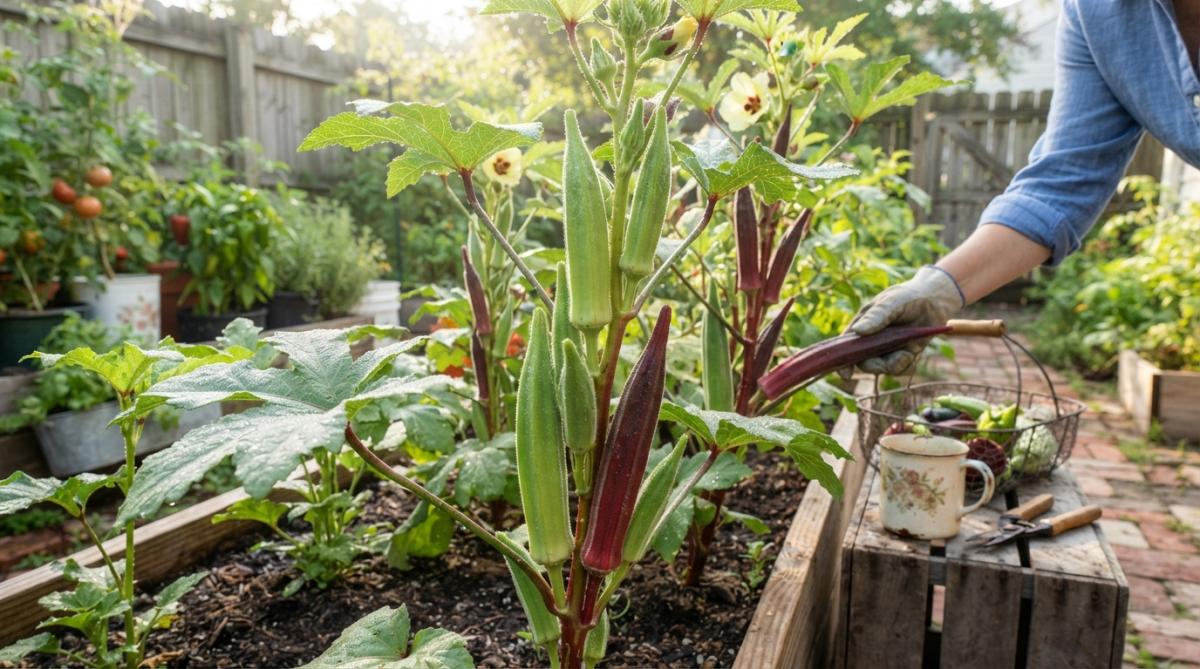
Baby Bubba: Compact, High-Yielding Performance
Baby Bubba is our top recommendation for Southern gardeners with limited space. This compact heirloom delivers full-size harvests from plants that stay 3-4 feet tall.
Spineless pods are genuinely tender when harvested young.
Why it wins for Southern gardens:
- Heat-tolerant and prolific even in peak summer
- Spineless pods mean less work during harvest
- Perfect for raised beds, containers, and small spaces
- Fast-growing with early yields
Where it falls short:
- Not ideal if you want maximum plant height for visual drama
- Requires consistent harvesting to maintain tenderness
Growing Okra in Containers for Limited Space
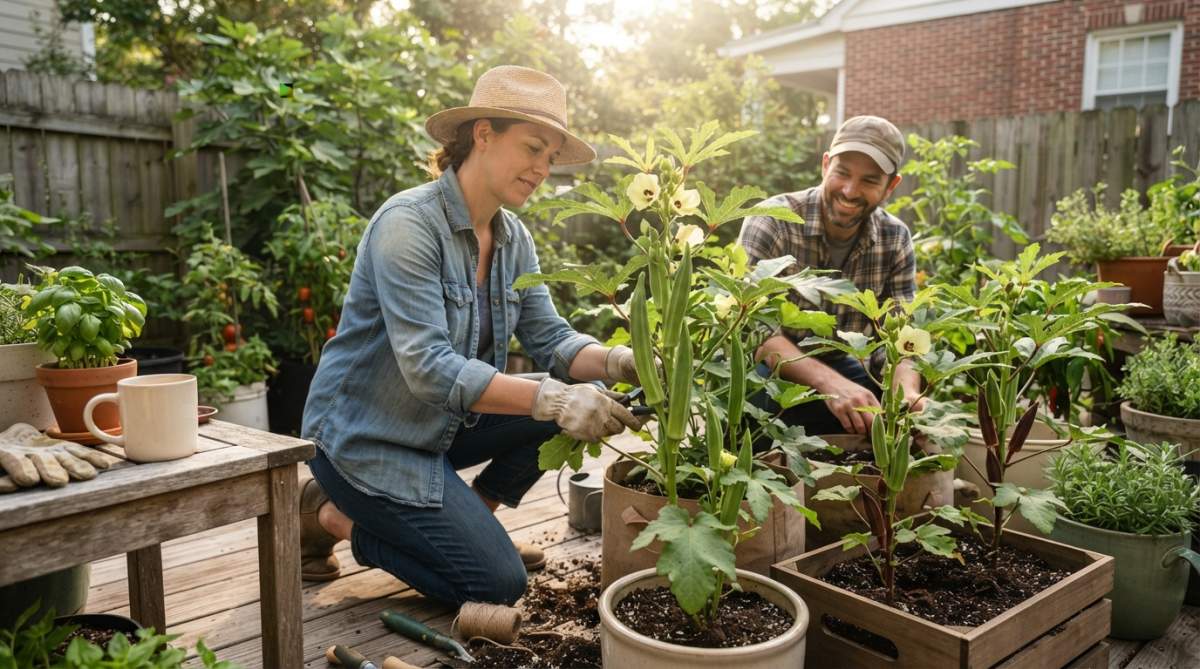
Container gardening okra works beautifully with the right variety and care. Baby Bubba is purpose-built for containers.

Container requirements:
- Minimum 12-inch pot (larger is better)
- Well-draining potting mix, not garden soil
- Full sun, okra needs 6-8 hours minimum, ideally 8+
- Consistent moisture without waterlogging
Container care through the season:
- Water deeply when the top inch of soil feels dry
- Feed every 2-3 weeks with balanced fertilizer once flowering starts
- Pinch off the first few flower buds to encourage bushier growth
- Harvest pods when they're young and tender (3-5 inches)
How to Harvest Okra Properly for Best Texture
Okra texture is everything. Pick pods too late and they become tough, fibrous, and unpleasant. Pick them at the right stage and they're tender, gooey, and delicious.
The harvest window:
- Pick pods when they're 3-5 inches long
- Harvest every 2-3 days during peak season
- Young pods snap cleanly when bent
- Older pods feel tough and woody
Harvesting technique:
- Wear gloves or long sleeves (even spineless varieties have irritating sap)
- Snap the pod off at the stem joint
- Never pull downward, this damages the plant
- Morning harvest yields the most tender pods
Soil Prep and Feeding Your Okra Plants
Southern soils benefit from targeted preparation. The difference between a decent crop and a prolific one comes down to what you do before planting.
Understanding your Southern soil type:
Pre-planting soil checklist:
- Test soil pH; okra prefers 6.0-7.0
- Work in 2-4 inches of compost or aged manure 2-3 weeks before planting
- Raise beds if your yard stays wet after rain
- Test through your local extension office for nutrient levels and nematode pressure
Seasonal feeding schedule:
Don't fertilize at planting time. Follow this timeline instead:
- At planting: No fertilizer needed if you've worked in compost
- First flowers appear (usually 6-8 weeks in): Begin feeding with a balanced 10-10-10 fertilizer or similar all-purpose formula
- Every 2-3 weeks through August: Continue feeding while plants are flowering and setting pods
- September onward: Reduce feeding frequency as temperatures cool and production naturally slows
Mulching for Southern heat and humidity:
Common feeding mistakes to avoid:
- Starting fertilizer before flowering begins
- Using high-nitrogen formulas (okra needs balanced nutrition)
- Overfertilizing containers with in-ground schedules
- Forgetting to mulch
Managing Pests and Disease in Southern Gardens
Southern heat and humidity create ideal conditions for both okra and pests. Okra is tougher than most vegetables and bounces back quickly. Understanding what to watch for saves time and keeps plants productive.
The pest landscape in Southern gardens:
- Japanese beetles: Handpick in early morning when they're sluggish. They rarely cause enough damage to warrant spraying. A few chewed leaves won't slow production.
- Stink bugs: Monitor for clusters on developing pods. A few stink bugs are normal; spray with insecticidal soap only if you see 5+ bugs per plant or active feeding damage on pods.
- Whiteflies: These are more of a nuisance in containers than in-ground. Increase humidity by misting foliage, and spray undersides of leaves with insecticidal soap if populations explode.
- Spider mites: Dry conditions favor them. Spray water on leaf undersides to increase humidity; this often solves the problem without chemicals.
- Aphids: Occasional clusters appear but rarely justify intervention. A strong spray from the hose removes them; beneficial insects usually keep populations in check.
Root-knot nematodes: The hidden Southern threat:
Okra is susceptible to root-knot nematodes, so prevention matters:
- Rotate crops: Don't plant okra in the same bed two years running. Nematodes build up in soil over time. A 2-3 year rotation to non-host crops (like beans or corn) breaks the cycle.
- Amend with compost: Annual compost additions support beneficial soil microbes that suppress nematode populations. This is another reason mulching and soil prep pay off.
- Choose resistant varieties when available: Not all okra varieties list nematode resistance, but selecting varieties bred for Southern conditions (like Baby Bubba) gives you plants with better overall vigor to tolerate minor nematode pressure.
- Solarize problem beds: If nematodes are severe, cover the bed with clear plastic in late spring for 4-6 weeks. Heat kills nematodes in the top 6-8 inches of soil. This is a one-time investment that resets a heavily infested bed.
Disease prevention in humid Southern climates:
-
Space plants for airflow: Don't crowd okra. Space plants 12-18 inches apart in rows 24-30 inches apart. Airflow is your best fungal defense.
-
Water at soil level, never overhead: Wet foliage invites fungal spores. Drip irrigation or soaker hoses keep leaves dry and disease pressure low.
-
Thin lower foliage once plants are established: Once plants reach 18-24 inches tall, remove leaves from the bottom 12-18 inches of stem. This improves airflow, reduces humidity around the base, and prevents soil-borne spores from splashing onto leaves during rain. It looks odd, but healthy plants outproduce leafy ones.
-
Remove infected leaves promptly: If you spot yellowing or spotted leaves, remove them immediately. Don't compost diseased foliage; throw it away.
-
Mulch to prevent soil splash: Mulch prevents rain from splashing soil (and fungal spores) onto lower leaves. This is especially important in the humid South.
-
Rotate crops yearly: Don't plant okra in the same bed two years running. Different crops break disease cycles.
-
Minor leaf damage (a few chewed edges, light spotting): Leave it alone. The plant will outgrow it.
-
5+ pests per plant or visible feeding damage on pods: Handpick or spray with insecticidal soap.
-
Yellowing leaves that spread up the plant: Check for nematodes or fungal disease. Remove affected leaves and improve airflow.
-
Powdery white coating on leaves: Spray with sulfur dust or neem oil if it covers more than 20% of foliage. Minor powdery mildew doesn't reduce yield.
Saving Seeds from Your Okra Harvest
Okra seed saving is straightforward. Open-pollinated varieties like Baby Bubba breed true, meaning seeds produce plants identical to their parents.
How to save okra seeds:
- Let a few pods mature fully on the plant (leave them unharvested)
- Pods turn brown and papery when seeds are ready
- Split pods open and collect seeds
- Dry seeds on a paper plate in a warm, dry location
- Store in a cool, dark place in an airtight container
Frequently Asked Questions
What is the best okra variety for hot, humid climates?
Heat-loving varieties like Baby Bubba excel in Southern conditions. These spineless types tolerate intense humidity and produce tender, gooey pods all summer. Mississippi State University Extension recommends selecting prolific heirloom varieties bred for heat tolerance. Baby Bubba reaches only 3-4 feet tall, making it ideal for Southern gardens where space and intense sun are concerns. Harvest pods young at 3-5 inches for the best texture and flavor.
Can I grow okra in containers in intense heat?
Yes, okra grows exceptionally well in containers, especially compact varieties like Baby Bubba. Container growing offers better drainage control and allows you to position plants for optimal sun exposure. Use well-draining soil and water consistently during hot weather. Containers dry out faster in heat, so check soil moisture daily. Dwarf and compact varieties produce full harvests from smaller footprints, making them perfect for raised beds and urban gardens even in the hottest Southern summers.
How often should I harvest okra for the best texture?
Harvest okra every 2-3 days when pods reach 3-5 inches long. Younger pods stay tender with minimal fiber content and that desirable gooey texture ideal for frying and gumbo. Waiting too long results in woody, fibrous pods that lose their culinary appeal. Regular harvesting also encourages continued pod production throughout the growing season, extending your yield window well into fall.
What are the benefits of growing heirloom okra varieties?
Heirloom varieties offer superior flavor, proven performance in regional climates, and the ability to save seeds year after year. Unlike hybrids, open-pollinated heirlooms let you preserve genetics and grow true-to-type plants from saved seed. Many heirlooms were bred specifically for heat and humidity, making them naturally adapted to Southern gardens. They also provide culinary versatility, excellent for frying, stewing, pickling, and traditional Southern dishes.
Growing okra in Southern gardens is genuinely one of the easiest paths to a reliable, prolific harvest. This crop rewards basic care with consistent production. If you're ready to try a proven performer, Baby Bubba okra from Heritage Cottage Seeds delivers compact plants, tender spineless pods, and the heat tolerance that makes Southern summers work for you instead of against you. Start with quality seeds, prepare your soil, and harvest frequently, that's the whole formula.