 how-to
Gardening Accessories for Young Beginners: A Starter Guide
Table of Contents
- Why the Right Gardening Accessories Matter for Young Beginners
- Essential Hand Tools: Starting Small and Light
- Gardening Tools for Kids: Choosing the Right Fit
- Watering and Care Accessories
- Container Gardening with Kids: Perfect for Small Spaces
- Easy Vegetables to Grow with Kids
- Kids Garden Safety: Supervision and Best Practices
- Building a Budget-Conscious Starter Kit
- Frequently Asked Questions
Last Updated: October 13, 2026
Why the Right Gardening Accessories Matter for Young Beginners
Starting a garden with kids using the right gardening accessories young beginners need is one of the best gifts you can give them.
The right gardening accessories for young beginners change everything. They fit small hands, feel light enough to use without frustration, and make the work manageable instead of a chore.
This guide covers the essential gardening accessories young beginners need, plus how to build a starter kit without breaking the bank.
Essential Hand Tools: Starting Small and Light
Every garden starts with the right hand tools, lightweight, sized to a child's grip, and easy to use without exhaustion.
Hand Trowels and Small Digging Tools
A hand trowel is the workhorse of small-space gardening. For kids, look for handles around 7-8 inches long and a blade 2-3 inches wide.
The best trowels for young beginners have:
- Lightweight metal or reinforced plastic blades
- Non-slip grips that won't rotate in wet hands
- Measurements marked on the blade (helpful for planting depth)
Kids use trowels for digging planting holes, moving soil, and mixing compost. A quality trowel lasts multiple seasons; cheap ones bend or break within weeks.
Mississippi State University Extension recommends starting with one reliable trowel rather than a set of five cheap ones. One good tool teaches proper technique.
Garden Gloves and Hand Protection
Garden gloves protect hands from soil, thorns, and blisters, but oversized gloves slip off and make fine work impossible.
Kids' garden gloves should:
- Fit snugly without restricting movement
- Have grip on the palm and fingers
- Be easy to put on and take off
- Dry quickly if they get wet
Cotton gloves work for light digging; nitrile-coated ones offer better grip and water resistance. Most kids prefer colorful gloves over plain brown.
Start with one pair and have your child wear them every session, so they learn to keep them on.
Gardening Tools for Kids: Choosing the Right Fit
Not all gardening tools come in child sizes, but many do. The trick is matching the tool to the child's height, grip, and strength. Mississippi State University Extension reminds us that kids develop at different rates, so use these as starting points and adjust to your own child.
Match the tool to the age, not just the label
Toddlers (about 2-4 years). The goal is participation, not production.
Early elementary (about 6-9 years). They can manage a small hand rake, a child-sized hoe, and a 1-2 gallon watering can, handles 2-3 feet long, weight under 2 pounds.
Older kids (about 9-12 years). They can handle most child-sized tools and some lightweight adult ones, like a small spade or a full-size rake if it's not too heavy.
What to look for in any kid-sized tool
- Grip size. The handle should fit comfortably in their hand, not be so thick they can't close their fingers around it.
- Weight. If they can't lift it easily with one hand, it's too heavy.
- Rounded edges. No sharp points or corners on handles or blades.
- Durable materials. Wood handles and metal heads last longer than thin plastic, but plastic is fine for toddlers. Look for tools that don't flex or bend when you press them into soil.
- Safety features. Pruning shears should have a safety lock or guard, and trowels a smooth finish that won't splinter.
Lightweight rakes and hoes
A rake or hoe breaks up soil, clears leaves, and prepares beds. For kids under 10, a small hand rake beats a full-sized garden rake, handles no longer than the child's height, tines close together, and total weight under 2 pounds.
A hoe removes weeds and shapes beds. Child-sized hoes have shorter handles and smaller blades, so they're easier to control and less likely to damage nearby plants.
Pruning shears for gentle harvesting
Pruning shears let kids harvest vegetables, deadhead flowers, and remove dead branches, and they feel like "real tools," which kids love. Choose shears with blades around 6-8 inches long, minimal hand strength required, safety guards, and a sharp edge. Dull shears are more dangerous because kids have to squeeze harder.
Let kids practice on soft stems like herbs first, then move to thicker stems once they can position the blade and squeeze the handles.
A note on supervision
Even with right-sized tools, kids need an adult nearby, not hovering, just close enough to step in. Teach them to carry tools pointy end down, pass handle first, and store tools when done. These habits stick for life.
Mississippi State University Extension recommends starting with one reliable tool rather than five cheap ones. One good tool teaches proper technique; multiple weak tools create frustration.
Watering and Care Accessories
Watering is often a kid's favorite garden job. The right tools make it fun and keep plants healthy.
Child-Sized Watering Cans and Sprayers
A too-large watering can is exhausting.
Good watering cans have:
- A wide spout that pours slowly and steadily
- A handle that fits small hands
- A capacity between 1-2 gallons
A spray bottle is another essential tool for misting seedlings, watering delicate plants, and learning to water gently. A basic one from any store works fine.
Soaker hoses and drip irrigation suit older kids and larger gardens, but for containers and small beds, a watering can and spray bottle do the job.
Container Gardening with Kids: Perfect for Small Spaces
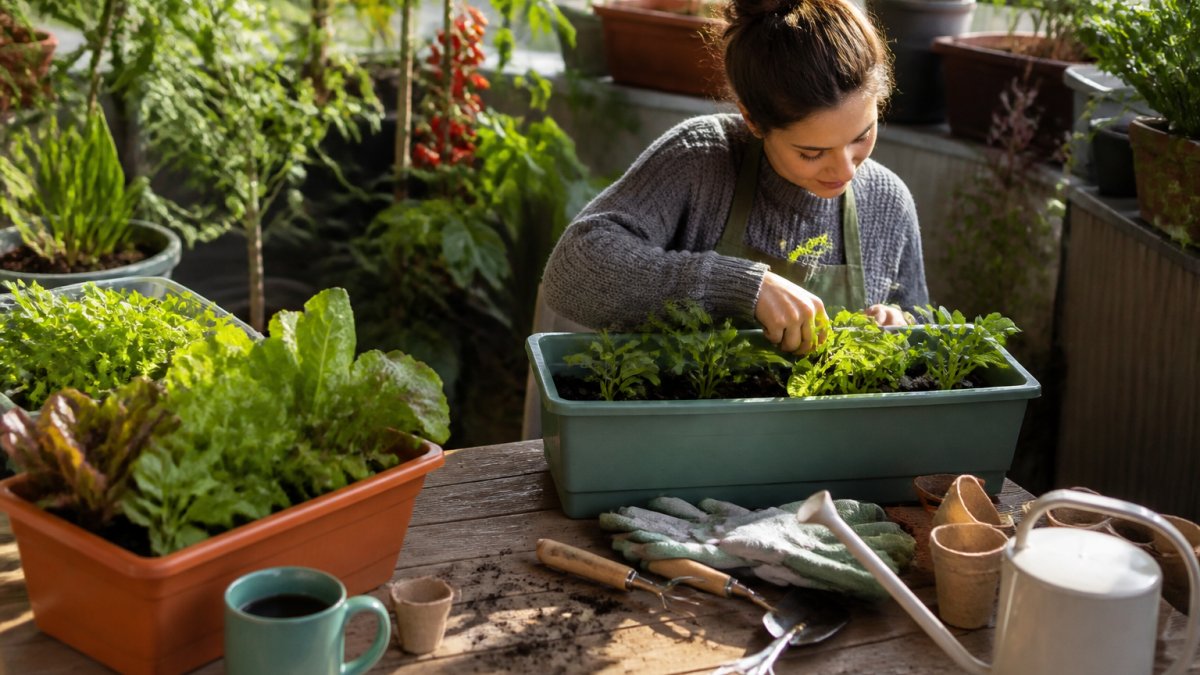
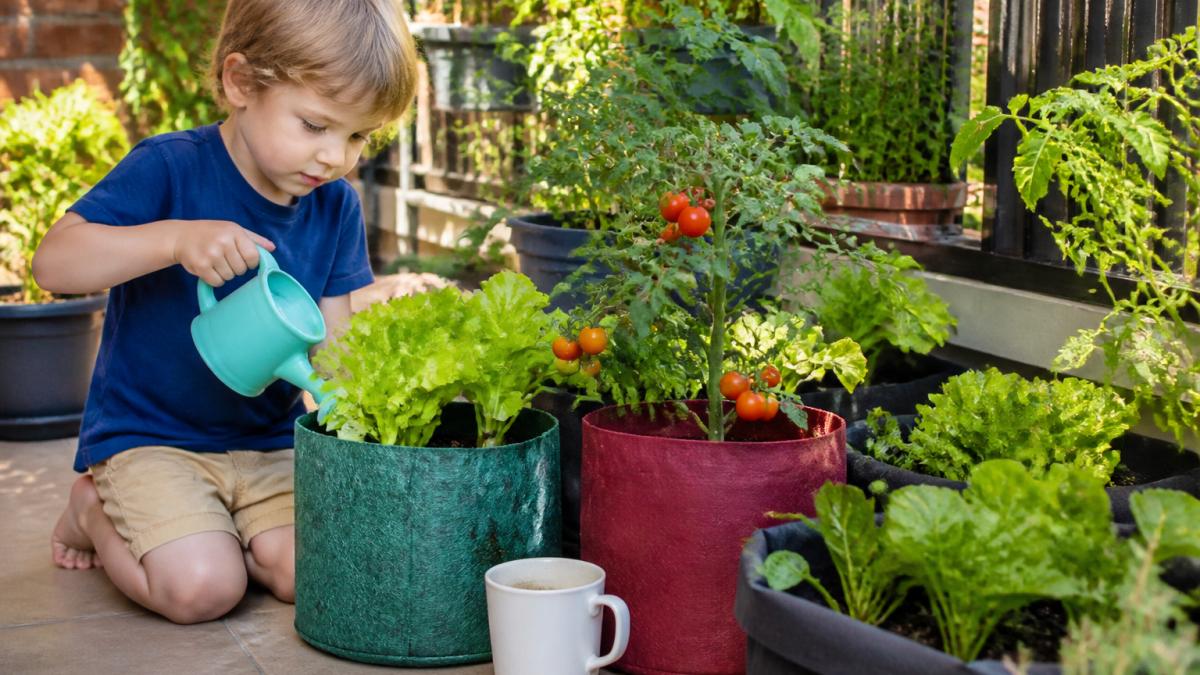
Container gardening is ideal for young beginners. Pots are manageable, soil is easier to maintain, and kids can move plants around.
Choosing Containers and Planters
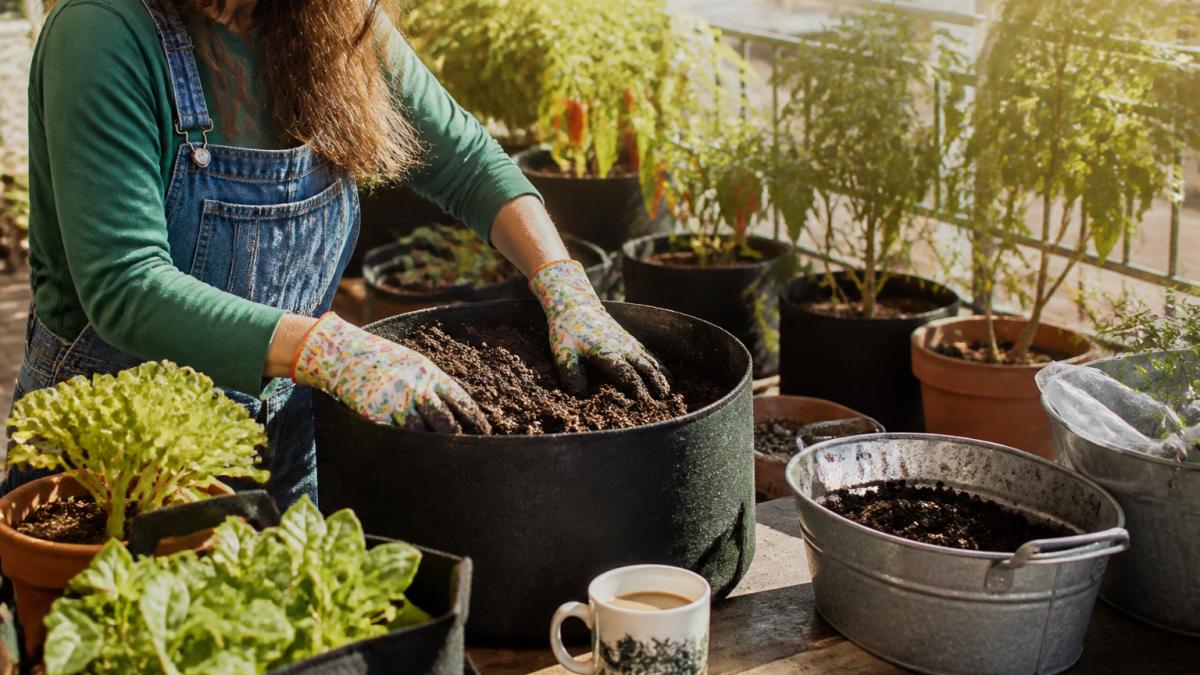
Fabric pots are excellent for beginners, affordable, durable, and air-pruning roots naturally. Plastic pots work too and last for years.
Let kids pick containers in colors they like. A child who chooses a bright red pot is more invested in what grows there.
For vegetables, use containers at least 8-10 inches deep. Shallow pots dry out quickly and restrict roots. Tomatoes, peppers, and lettuce all do well in properly sized containers.
Plant Labels and Organization
Plant labels help kids track what they've planted and when, simple but powerful learning tools.
Use labels to record:
- Plant name
- Planting date
- Expected harvest date
- Watering notes
Kids can make labels from popsicle sticks, paint them, and write with permanent marker, or use store-bought ones. Labeling teaches observation and record-keeping.
Easy Vegetables to Grow with Kids
The best vegetables for young beginners are fast-growing, forgiving, and rewarding. Here's what works:
Lettuce grows in 30-45 days and thrives in containers. Tom Thumb lettuce from Heritage Cottage Seeds stays small, matures quickly, and produces tender leaves kids will actually eat. Plant it in a 6-inch pot and harvest leaves as they grow.

Micro-dwarf tomatoes are ideal for containers.
Herbs like basil and mint grow fast and give immediate results. Kids can snip leaves for cooking within weeks.
Radishes mature in 25-30 days.
Zinnias aren't vegetables, but they're perfect for kids learning to garden.
Skip slow vegetables (like carrots) or space hogs (like melons) when starting out. Fast results keep kids motivated.
Kids Garden Safety: Supervision and Best Practices
Safety matters when kids are gardening.
Teach hand washing. Garden soil contains bacteria. Kids should wash hands before eating and after gardening.
Protect from sun. Kids burn quickly, so apply sunscreen before gardening and provide a shaded break area.
Watch for insects. Most garden insects are harmless, but some sting or bite.
Use kid-safe tools only. Adult tools are heavier and harder to control.
Supervision doesn't mean hovering.
Building a Budget-Conscious Starter Kit
You don't need everything at once. Build your kit in phases as your child's skills and interest grow, so you're not buying stuff they'll never use.
Phase 1: The absolute essentials
Start with just three things:
- One hand trowel. A lightweight metal or reinforced plastic blade with a comfortable grip, the workhorse for digging holes, moving soil, and planting.
- One pair of kids' gloves. Snug but not restrictive. Cotton works for light digging; nitrile-coated offers better grip and water resistance.
- One small watering can. A 1-2 gallon can is light enough for most young kids to carry one-handed but holds enough water for several plants.
These three cover planting, watering, and protecting hands.
Phase 2: Add as interest grows
Once your child is comfortable with the essentials, add:
- A small hand rake. Great for breaking up soil, clearing leaves, and preparing containers.
- A spray bottle. Perfect for misting seedlings and gentle watering.
- Plant labels. Popsicle sticks work fine, or buy a pack. Labeling teaches observation and record-keeping.
Phase 3: For older or more experienced kids
When your child is ready for more responsibility, consider:
- Pruning shears. Choose a child-sized pair with a safety guard, for supervised use only.
- A child-sized hoe. Helpful for weeding and shaping beds, but not necessary for container gardening.
Where to save and where to invest
You can find basic tools at garden centers, hardware stores, or online. Focus your budget on the tools your child will use most: the trowel, gloves, and watering can.
For containers, repurpose things you already have, like plastic buckets or fabric grow bags, as long as they have drainage holes. For seeds, start with fast-growing, forgiving varieties like lettuce, radishes, and herbs.
A note on container gardening
Container gardening is perfect for small spaces and young beginners. You don't need a big yard or many tools. A few containers, a trowel, and a watering can are enough to grow lettuce, herbs, and even micro-dwarf tomatoes. Start small, keep it simple, and let your child take the lead. The goal is to have fun and learn together, not a perfect garden.
Heritage Cottage Seeds offers rare vegetable varieties well-suited to container gardening with kids. Their Tom Thumb lettuce and Tiny Tim tomatoes are chosen for small spaces and young gardeners.

Frequently Asked Questions
What gardening accessories are best for young beginners?
Start with lightweight, child-sized hand tools: a small trowel, comfortable garden gloves, and a watering can they can handle safely. For container gardening with kids, add lightweight rakes, pruning shears designed for small hands, and plant labels for organization. According to Mississippi State University Extension, beginner-friendly accessories should be durable but manageable for young gardeners to use independently with supervision.
How do you choose gardening tools that fit a child's hands?
Look for tools with shorter handles (12-18 inches) and lighter weight materials like aluminum or plastic. Test the grip comfort before purchasing, your child should hold the tool with fingers relaxed and wrists straight. Hand gloves should fit snugly without slipping, and pruning shears should require minimal hand strength to operate. Properly sized tools reduce frustration and build confidence as young gardeners learn.
What vegetables are easiest for kids to grow in containers?
Compact varieties like Tom Thumb lettuce and micro-dwarf tomatoes are perfect for container gardening with kids. Tom Thumb lettuce matures in 45-55 days and grows to tennis-ball size, ideal for small pots. Micro tomatoes like Orange Hat and Tiny Tim reach just 8-12 inches tall and produce abundant harvests quickly. These varieties reward young gardeners with fast results and minimal care, building enthusiasm and success.
How can kids garden safely with adult supervision?
Establish clear rules about tool handling, always wear gloves and closed-toe shoes, and keep work areas organized to prevent trips. Supervise all tool use, especially pruning shears and watering activities. Store tools in a designated, child-safe location after use. Teach children to wash hands after gardening and to be aware of sun exposure. Mississippi State University Extension recommends making safety part of the gardening routine so young beginners develop safe habits from the start.
Growing a garden with kids teaches patience, responsibility, and where food comes from. The right gardening accessories make it enjoyable instead of frustrating. Start simple, choose tools that fit small hands, and pick vegetables that grow fast. Your child will remember these moments forever. Get started with Heritage Cottage Seeds and grow something special together.