 how-to
How to Pollinate Peppers in Containers: A Step-by-Step Guide
Table of Contents
- Why Container Peppers Need Help with Pollination
- When to Pollinate Pepper Flowers: Timing and Readiness
- Best Tools for Hand-Pollinating Peppers
- How to Hand-Pollinate Pepper Plants: Step-by-Step
- Pepper Flowers Falling Off: Causes and Solutions
- Container Setup for Better Pollination Success
- Aftercare and Confirming Successful Pollination
- Frequently Asked Questions
Last Updated: October 20, 2026
Why Container Peppers Need Help with Pollination
Growing peppers in containers is rewarding, but learning how to pollinate peppers containers matters far more indoors than in an open garden.
Pepper flowers are technically self-pollinating, but in still indoor air, pollen sits heavy on the anther.
This is especially true for container-grown peppers because:
- No wind or breeze to jostle the plant naturally
- Few or no pollinators indoors or on enclosed patios
- Stagnant air around the flowers
Hand-pollinating gives you abundant fruit; skipping it gives you beautiful flowers and an empty harvest.
When to Pollinate Pepper Flowers: Timing and Readiness
Timing matters. A pepper flower is ready for pollination only briefly, when freshly opened and pollen is at peak viability.
Look for these signs of a ready flower:
- Fully open blooms (not tight buds)
- Bright yellow pollen visible on the anther
- Flower standing upright or slightly drooping
Skip wilting, browning, or curling flowers and move to younger blooms. The best time to pollinate is mid-morning on a dry day, when pollen is driest and most viable.
Best Tools for Hand-Pollinating Peppers
You don't need expensive equipment. Each simple method works slightly differently, so choose what feels comfortable and what you have on hand.
Gentle Shaking and Vibration
The simplest approach mimics what wind and bees do naturally: vibration. Hold the pot steady with one hand and gently tap or shake the flowering stem with the other; the vibration releases pollen onto the stigma below. It works best when flowers are clustered together: a single tap on a stem with 3-4 flowers can pollinate all of them at once, with zero tools.
Cotton Swabs and Simple Brushes
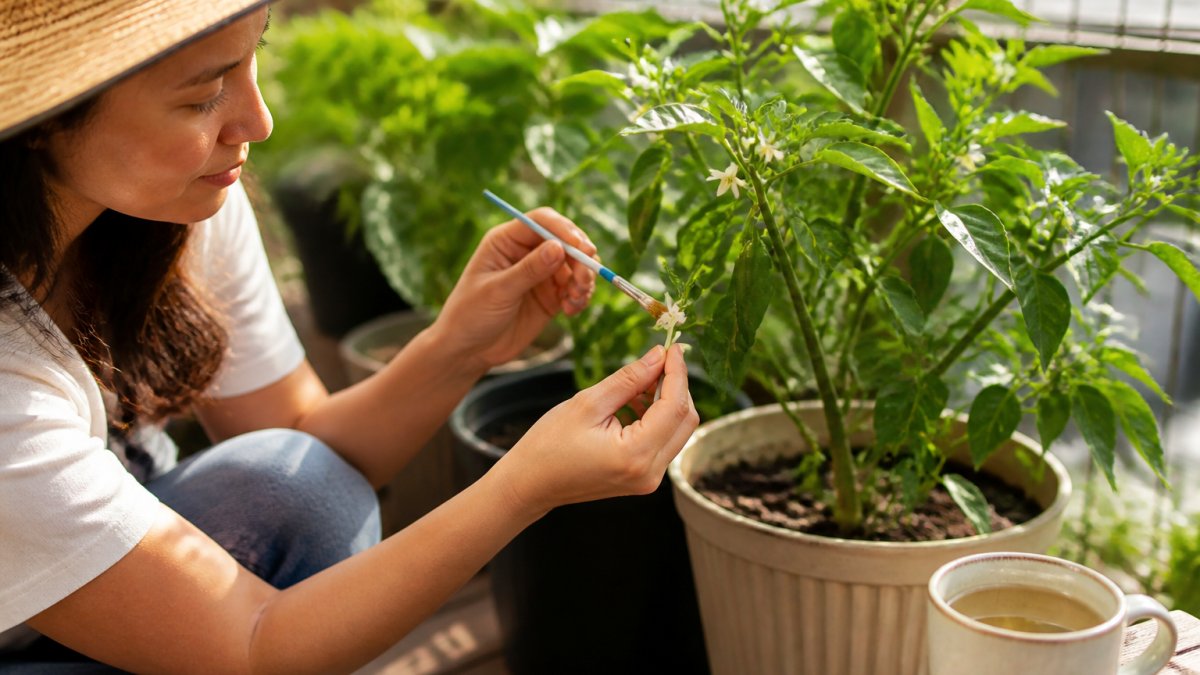
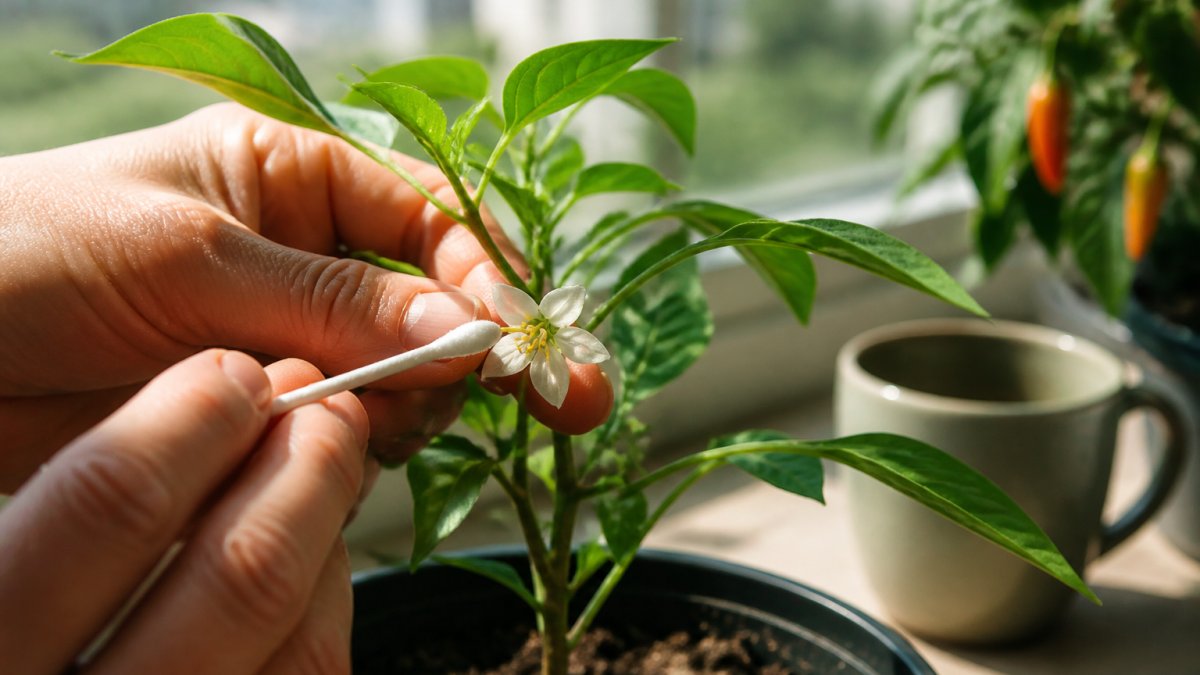
A cotton swab gives you direct control, transferring pollen from the anther to the stigma exactly as a bee would. Gently touch the yellow pollen with the swab tip, rotate slightly to load it, then dab the stigma (the center tip of the flower) with a light motion, don't scrub.
Electric Toothbrush Method
An electric toothbrush creates consistent, gentle vibration, one of the most effective methods for container peppers because it mimics the frequency of bee wing vibrations. Turn it on its lowest setting and hold it gently against the flowering stem for 2-3 seconds, then move to the next cluster.
How to Hand-Pollinate Pepper Plants: Step-by-Step
Now let's walk through the actual process. This is where theory becomes practice.
Step 1: Identify Open Flowers
Scan your pepper plant for blooms that are fully open and showing yellow pollen, skipping tight buds and wilting flowers. You're looking for flowers 1-3 days old.
Look at the center of each flower for a small cluster of yellow pollen on the anther.
Step 2: Choose Your Pollination Method
Decide which approach fits your situation:
- Shaking: fastest, works for clustered flowers
- Cotton swab: most precise, good for individual flowers
- Electric toothbrush: most effective, works for all flower types
If you're new to this, start with gentle shaking. It's hard to mess up and takes the least time.
Step 3: Transfer Pollen Gently
Apply your chosen method. Whether shaking, brushing, or vibrating, the goal is the same: move pollen from the anther to the stigma. Shake the stem and tap gently 2-3 times, dab the anther then the stigma with a swab, or hold an electric toothbrush lightly against the stem for 2-3 seconds.
Step 4: Repeat Across Multiple Flowers
Don't stop at one flower. Pepper plants often have multiple blooms at different stages, so work through every open flower. On a plant with 10 flowers, you might spend 2-3 minutes total once you're comfortable with the motion. Tag pollinated flowers to track which blooms set fruit.
Pepper Flowers Falling Off: Causes and Solutions
Flower drop is the most common frustration with container peppers, and the easiest thing to misdiagnose. Once you learn to hand-pollinate, every dropped flower looks like a pollination failure, so you keep pollinating flowers that were never going to set fruit. Before you reach for the cotton swab again, figure out which problem you actually have.
First, Separate Pollination Failure from Flower Drop
These look similar but happen at different points:
- Pollination failure: the flower opens, you pollinate (or don't), and within a few days the whole flower drops cleanly, with the stem staying green.
- Environmental flower drop: buds yellow and drop before opening, or open flowers abort in waves, often with curling leaves or stalled growth.
If flowers drop before they open, pollination is not your problem. If open flowers drop in ones and twos while the plant looks healthy, that's often normal self-regulation.
Rule Out the Big Environmental Causes
When drop is widespread, check these in order. Each can cause flower abortion on its own:
Temperature stress. Nighttime temperatures below about 60°F or daytime temperatures above the mid-80s°F can cause flowers to abort. Container plants are more exposed to swings than garden plants.
Watering extremes. Both drought and soggy soil trigger drop.
Light shortage. Peppers flower best with 12 or more hours of bright light.
Humidity and still air. Very dry indoor air or a still corner can interfere with pollen release.
Nutrient imbalance. Too much nitrogen pushes leafy growth at the expense of flowers.
Use a Simple Diagnostic Sequence
When flowers are dropping, work through this checklist before you blame your pollination method:
- Check the calendar and thermometer. Cold nights or a heat wave in the last week? Wait for the next flush of flowers.
- Check soil moisture. Bone dry or waterlogged? Correct the watering pattern for a week and watch new flowers.
- Check light. Less than 10-12 hours of direct or very bright light is a red flag.
- Check for pests. Thrips and aphids can damage buds and flowers. Look inside open flowers and along new growth.
- Check your pollination technique last. If the plant is healthy and you're pollinating fresh flowers every couple of days, then revisit technique.
What Normal Flower Drop Looks Like
Pepper plants routinely produce more flowers than they can carry. A healthy plant may drop some flowers even with perfect care and pollination. If it's growing vigorously, holding some fruit, and dropping only a fraction of its flowers, that's self-regulation, not failure.
When to Change Your Pollination Approach
If the plant is healthy, temperatures are steady, watering is consistent, light is strong, and flowers still drop without setting fruit, look at pollination:
- Pollinate flowers that are fully open and showing yellow pollen, not tight buds.
- Pollinate in the morning when pollen is dry and viable.
- Try a different method. If shaking hasn't worked, a cotton swab or electric toothbrush gives more direct transfer.
Fix the Environment First, Then Pollinate
The takeaway is simple: pollination is only one link in the chain. If flowers abort because the plant is too hot, too dry, too shaded, or too hungry, no amount of hand-pollinating will fix it. Stabilize the container environment first, wait for the next round of flowers, then pollinate with confidence.
Container Setup for Better Pollination Success
Here's the part most guides skip: your container setup directly affects whether pollen moves and whether flowers hold. You can do everything right with a cotton swab and still fight poor fruit set if the pot is in dead air, tipping every time you touch it, or baking on a hot patio.
Make the Pot Stable Enough to Work On
A wobbly pot is a pollination problem. Every time you tap a stem, the whole plant sways, and you end up gripping the rim instead of the flower cluster. A few simple fixes:
- Set the pot on a firm, level surface, not loose gravel or a slatted rail.
- For pots 5 gallons and up, a plant caddy with locking casters lets you rotate the plant without lifting it.
- Sink a short stake or tomato cage into the pot at planting time for a steady handhold near the flower clusters.
A stable pot also lets you vibrate one stem without disturbing the rest of the plant.
Size the Container for the Plant You're Growing
Container size affects how much stress the plant carries into flowering, and stressed peppers drop flowers. As a general guide:
- Compact and dwarf types can finish in 3-5 gallon pots.
- Most standard bell and frying pepper varieties do better in 5-7 gallon pots.
- Larger-fruited or long-season varieties benefit from 10 gallons or more.
Bigger pots hold more moisture and buffer temperature swings, both of which reduce flower drop. If you're tight on space, choose a compact variety rather than cramming a full-size plant into a small pot.
Put the Pot Where Air Actually Moves
Pepper pollen is heavy and doesn't travel far on its own. In a still room or sheltered patio, it stays put on the anther. You don't need a wind tunnel, just gentle air exchange:
- Place containers near an open window, a doorway, or an oscillating fan on low.
- Run a small fan for 15-30 minutes a couple of times a day during flowering, so leaves flutter lightly.
- Avoid corners behind furniture or against a solid wall where air pools.
A little airflow moves pollen and discourages the still, humid conditions that lead to blossom-end problems and fungal issues.
Watch Temperature and Humidity Around the Pot
Peppers set fruit best when nighttime temperatures stay roughly in the 60s°F and daytime temperatures stay below the mid-80s°F.
- On a sunny patio, shade the pot (not the leaves) with a light-colored wrap or by grouping pots so sun hits foliage rather than black plastic.
- Avoid south- or west-facing walls that radiate heat into the evening.
- In dry indoor air, a pebble tray under the pot or grouping plants raises humidity slightly around the flowers.
Mississippi State University Extension notes that peppers are sensitive to temperature extremes during flowering, and container-grown plants feel those swings more sharply than in-ground plants.
Rotate for Even Light, But Time It Right
Peppers need bright light to flower well, and a container plant only gets even exposure if you turn it. Rotate the pot a quarter turn every few days so all sides get light and flowers develop evenly. Do it in the morning, then leave the plant alone so you're not disturbing flowers when you plan to pollinate.
Keep the Root Zone Consistent
Inconsistent moisture is one of the most common reasons container peppers drop flowers.
- Use a quality potting mix that drains well but holds some moisture.
- Water when the top inch or two of soil feels dry, until it runs out the drainage holes.
- Mulch the surface with an inch of straw or shredded leaves to slow evaporation.
A steady root zone won't pollinate flowers for you, but it keeps the plant in condition to hold the fruit you set. Set the container up right and hand-pollination becomes a two-minute job.
Aftercare and Confirming Successful Pollination
After you pollinate, there's a short window where success or failure becomes clear.
Within 3-5 days, you'll see signs:
- Successful pollination: the flower base swells slightly, petals may drop, a tiny green fruit begins forming
- Failed pollination: the entire flower drops off
If the flower stays on and the base starts to swell, pollination worked.
What to do after successful pollination:
- Keep the plant in steady conditions (no temperature swings)
- Continue consistent watering
- Don't fertilize heavily; moderate feeding is better
A developing pepper takes 2-4 weeks to reach full size, depending on variety.
If most flowers drop after pollination:
- The plant might be stressed despite your best effort
- Check watering consistency and light levels
- Wait for the next flush of flowers (peppers often produce in waves)
One successful pollination proves the method works.
Frequently Asked Questions
Do pepper plants grown in containers need to be hand-pollinated?
Peppers are self-pollinating, so they don't always need help. However, container-grown peppers often lack natural pollinators like bees and wind movement indoors or on sheltered patios. Hand-pollinating increases fruit set significantly, especially for indoor plants. Even a gentle shake can move pollen between flowers, but deliberate hand-pollination gives you the best chance at a full harvest.
When is the best time to pollinate pepper flowers?
Pollinate pepper flowers in the morning, ideally between 8 and 11 a.m., when pollen is most viable and flowers are fully open. Look for flowers that have opened completely and show visible pollen on the stamens. Avoid pollinating closed buds or flowers that are already wilting. Repeat every 2-3 days during the flowering season to catch new blooms as they open.
Why are my container pepper flowers falling off?
Flower drop happens when peppers experience stress: inconsistent watering, low light, temperature fluctuations, or low humidity. Container plants are more vulnerable because soil dries faster and roots have limited space. Ensure your container has drainage holes, water consistently, provide adequate direct sunlight daily, and maintain humidity by misting or grouping plants together. Hand-pollination also reduces drop by confirming fruit set early.
Can you use an electric toothbrush to pollinate peppers?
Yes, an electric toothbrush works well for pepper pollination. The vibration mimics natural pollination methods and releases pollen effectively. Hold the vibrating toothbrush gently against the flower stem or flower itself for a few seconds. This method is especially helpful for indoor peppers where air movement is limited. It's quick, consistent, and less labor-intensive than hand-pollinating dozens of flowers one by one.