 How-to
How to Grow Peppers in Pots for a Big Backyard Harvest
Last Updated: November 8, 2026
Quick Summary
To grow peppers in pots, give them a container holding at least 3 to 5 gallons with drainage holes, a warm spot with 6 to 8 hours of sun, and steady moisture. Water when the top inch of soil feels dry, and feed every few weeks once flowers appear.
- Aim for a pot at least 12 inches wide and 12 inches deep for most pepper varieties.
- Start pepper seeds indoors 8 to 10 weeks before your last expected frost.
- Keep seed-starting soil warm, around 75 to 85°F, for the fastest sprouting.
- Insert a stake or small tomato cage at planting time to support top-heavy hot peppers.
- Indoor bell peppers need daily help with pollination, such as tapping the main stem.
Table of Contents
- Why Peppers Love Container Growing
- Choosing the Right Pot Size and Drainage
- How to Grow Peppers in Pots From Seeds
- The Best Peppers to Grow in Pots
- Growing Hot Peppers in Pots
- Growing Bell Peppers in Pots Indoors
- Watering, Feeding, and Fixing Common Pepper Problems
- Picking Your Pepper Seeds for This Season
- Frequently Asked Questions
Why Peppers Love Container Growing
Peppers are one of the easiest vegetables to grow in containers, and a single healthy plant can keep a kitchen supplied for months. If you want to know how to grow peppers in pots, the short answer is this: give them a big enough pot, a warm sunny spot, and steady moisture, and they will do the rest. At Heritage Cottage Seeds, we keep coming back to containers for one simple reason. You control everything.
Container growing lets you move plants out of a cold snap, chase the sun across a balcony, and sidestep the soil problems that plague in-ground beds. Peppers are native to warm climates, so they reward that kind of attention. The Mississippi State University Extension vegetable gardening guides make the same point: heat-loving crops perform best when gardeners can manage soil, water, and warmth closely.
Here is what we will cover. Pot size and drainage, starting from seed, the best varieties for pots, and how to fix the problems that trip up new growers.
Choosing the Right Pot Size and Drainage
Pot size is the single biggest factor in how well peppers grow. A pepper plant in a cramped pot stays small, sets fewer flowers, and dries out fast. Give it room and it rewards you with a bigger canopy and more fruit.
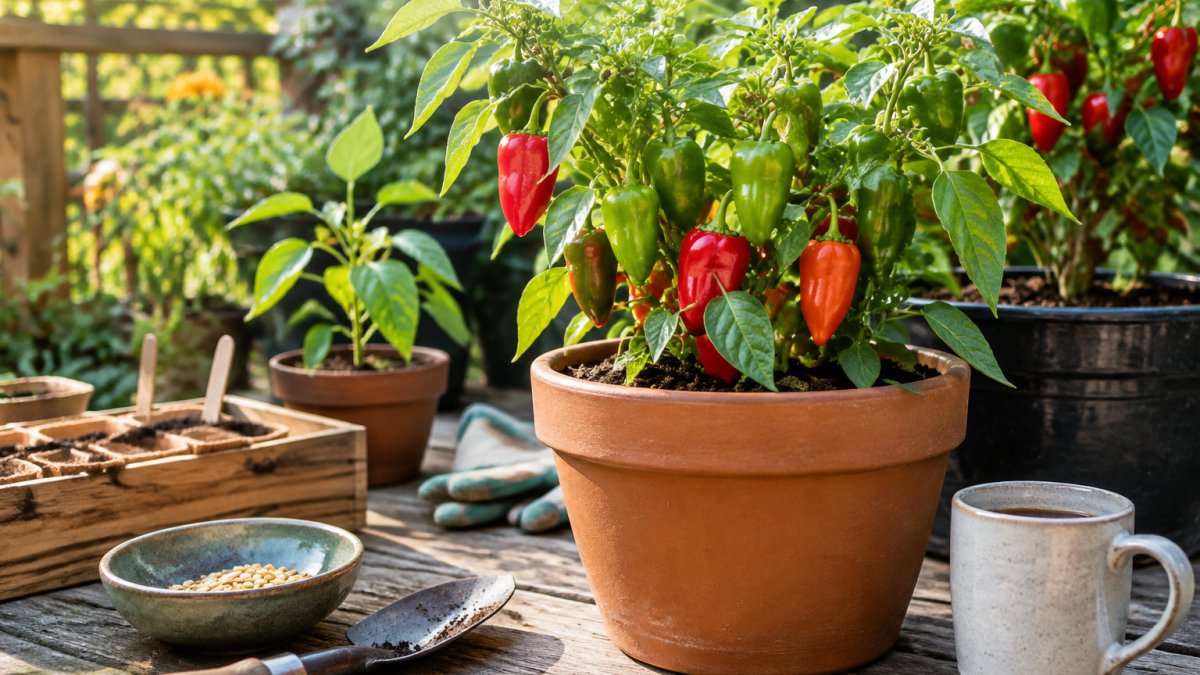
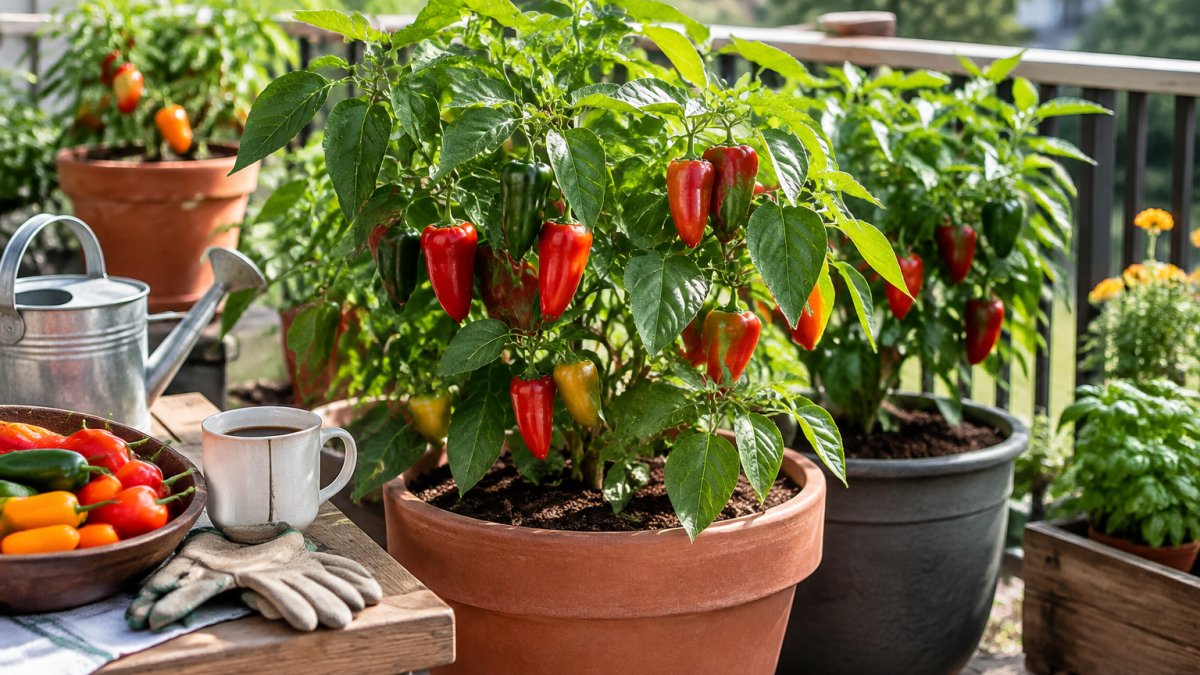
Aim for a pot that holds at least 3 to 5 gallons, with a diameter of 12 inches or more. A 5-gallon container is the sweet spot for most varieties. Depth matters too, so look for a pot at least 12 inches deep to give roots room to spread.
Drainage is non-negotiable. Every pot needs drainage holes at the bottom. Peppers hate soggy roots, and a pot without holes turns into a swamp after one heavy rain. If you love a decorative pot with no holes, drop a nursery pot with drainage inside it and empty the outer pot after watering.
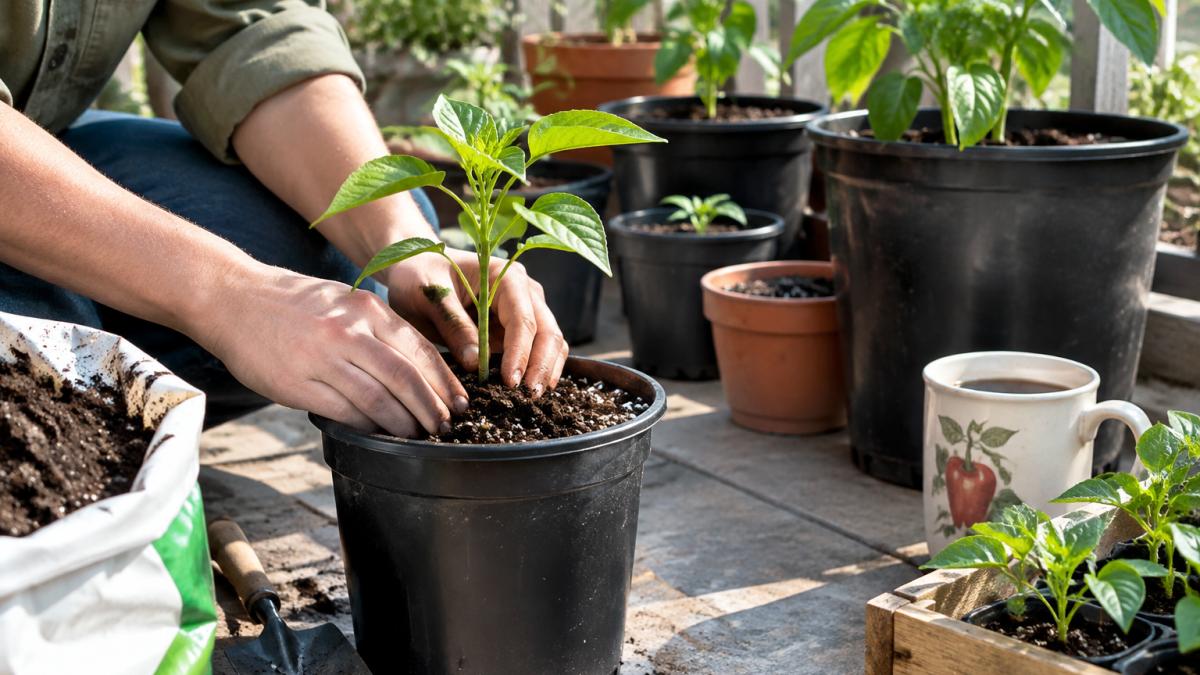
Matching Pot Size to Pepper Type
Different peppers need different amounts of room. Here is how we match pots to plant size:
| Pepper Type | Pot Size | Pot Diameter | Notes |
|---|---|---|---|
| Dwarf and compact hot peppers | 2-3 gallons | 10-12 inches | Small plants, big flavor |
| Bell peppers | 5 gallons | 12-14 inches | Need room for heavy fruit |
| Standard hot peppers | 3-5 gallons | 12 inches | Stake for support |
| Shishito and slender types | 3 gallons | 10-12 inches | Productive in small pots |
Pot Size
Dwarf varieties are a gift for small spaces. Our Dwarf Tabasco pepper grows to about 2 feet by 2 feet, which makes it a natural fit for a compact pot on a balcony. Full-size bells want the bigger end of the range.
How to Grow Peppers in Pots From Seeds
Starting peppers from seed gives you the widest choice of varieties and the best control over timing. Peppers need warmth to germinate, so start seeds indoors 8 to 10 weeks before your last expected frost. A warm spot, a sunny window, and a little patience are all you need.
Follow these steps:
- Fill small seed cells or trays with a light, sterile seed-starting mix.
- Sow seeds a quarter inch deep and keep the mix moist but not soaked.
- Keep soil warm, around 75 to 85°F, for the fastest sprouting.
- Move seedlings to a bright spot as soon as they break the surface.
- Transplant into larger pots once seedlings have two sets of true leaves.
For a deeper walkthrough, our guide on how to start pepper seeds indoors covers timing, lighting, and hardening off. If your seeds are slow to sprout, this piece on germinating rare pepper seeds walks through the fixes.
Use potting mix, not garden soil. Garden soil compacts in pots and drains poorly. A quality potting mix with compost holds moisture and air in the right balance.
The Best Peppers to Grow in Pots
The best peppers for pots are compact, productive varieties that set fruit in a small footprint. Flavor matters too, so we lean toward heirlooms with real character.
Our short list:
- Dwarf Tabasco. A compact hot pepper that reaches about 2 feet by 2 feet, with 1-2 inch fruits and a Scoville rating of 30,000 to 50,000. Great for sauces.
- Shishito. A mild Japanese pepper, 50 to 200 SHU, with a sweet, smoky flavor. About one in ten brings a surprise kick.
- Compact bells and sweet types. Look for varieties bred for short plants and early fruit.
- Micro-dwarf tomatoes as pot companions. Our Orange Hat and Red Robin tomatoes stay 8-12 inches tall, so they share a sunny patio with your peppers.
Avoid sprawling, late-season varieties in small pots. They run out of room before they fruit.
Growing Hot Peppers in Pots
Hot peppers are a good fit for containers. They stay compact and tolerate heat. But to get the most from container-grown hot peppers, you need to manage support, pruning, and watering carefully.
Give hot peppers full sun, at least 6 to 8 hours a day. Water when the top inch of soil feels dry. Hot peppers prefer soil that dries slightly between waterings, wet feet lead to dropped blossoms and yellow leaves. Feed every few weeks with a balanced organic fertilizer once flowers appear, but avoid excessive nitrogen or you will get leaves instead of peppers. If water runs straight through instead of keeping the soil evenly moist, troubleshooting water drainage in pots can help you avoid swings between drought and soggy roots.
Support is critical for hot peppers in pots. Varieties like jalapeño, serrano, and habanero can become top-heavy with fruit. Insert a sturdy stake or a small tomato cage at planting time to avoid damaging roots later. Tie stems loosely with soft twine or plant ties, and check ties regularly as stems thicken.
Pruning helps container hot peppers in two ways: it improves airflow and directs energy to fruit. Remove suckers that grow in the crotch between the main stem and branches, and pinch off the first few flowers that appear on young plants to encourage a stronger root system before fruit set. Once the plant is established, prune only lightly, remove yellowing or crowded leaves and any branches that cross. Watch out: over-pruning can sunburn exposed peppers, so leave enough foliage to shade the fruit.
A common mistake is overwatering. Hot peppers prefer soil that dries slightly between waterings. Wet feet lead to dropped blossoms and yellow leaves. In hot weather, you may need to water daily; in cooler spells, back off. Terracotta pots dry faster than plastic, so adjust accordingly.
Growing Bell Peppers in Pots Indoors
Bell peppers can grow indoors, but they need light and room. A sunny south-facing window may not be enough on its own. A simple grow light keeps plants strong through short winter days.
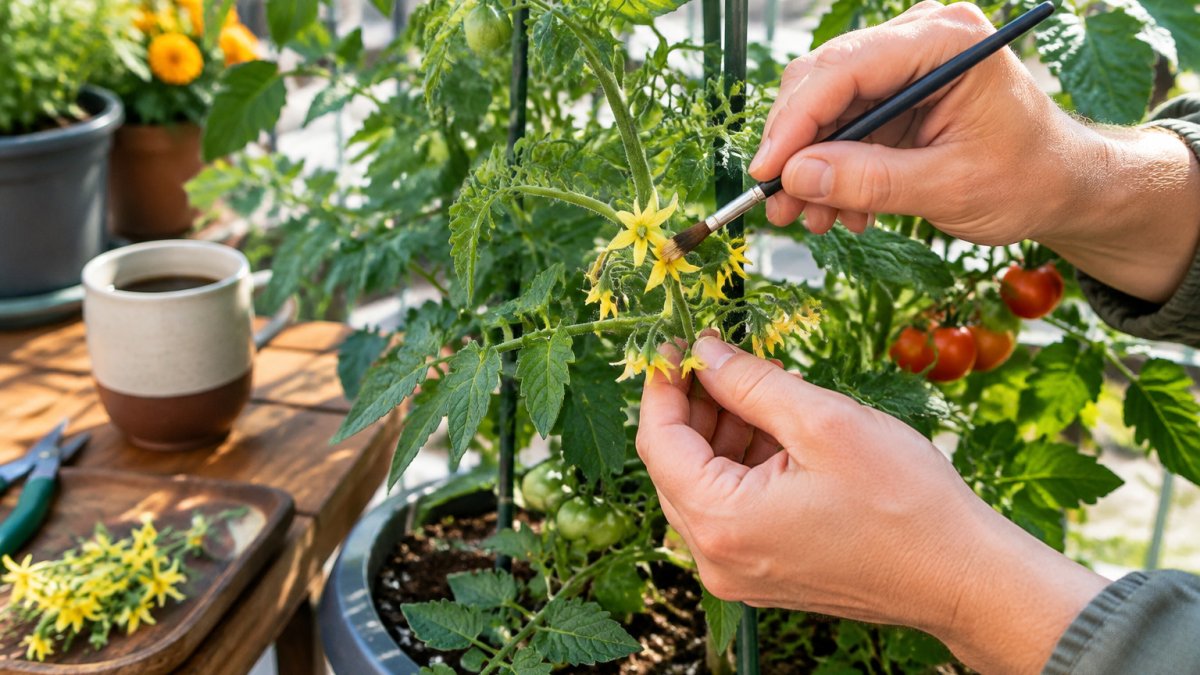
Indoor bells need help with pollination. Without wind or insects, flowers often drop without setting fruit. Tap the main stem gently each day, or use a small brush to move pollen between flowers. Our step-by-step guide on pollinating peppers in containers shows exactly how.
Choose a pot of at least 5 gallons. Keep the plant warm, above 60°F at night. Rotate the pot weekly so all sides get light.
Watering, Feeding, and Fixing Common Pepper Problems
Watering is where most container peppers succeed or fail. Pots dry out fast in heat and wind, and they stay wet too long in cool, cloudy weather. Check the soil with your finger before you water. Water deeply when the top inch is dry, then let it breathe. Pot material changes the schedule, since terracotta dries out faster than plastic. Check the soil before you water.
Feed container peppers on a steady schedule, since too much nitrogen gives you lush leaves and few peppers. Here is a general stage-based plan:
| Growth Stage | Fertilizer Type | Frequency | Notes |
|---|---|---|---|
| Seedling to transplant | Half-strength liquid organic (fish emulsion or kelp) | Every 10-14 days | Avoid burning tender roots |
| Vegetative growth | Balanced liquid organic (e.g., 5-5-5) | Every 2-3 weeks | Supports leaf and stem development |
| Flowering and fruiting | Low-nitrogen, higher phosphorus and potassium (e.g., 2-8-4) | Every 2 weeks | Encourages fruit set over foliage |
| Peak harvest | Same low-nitrogen blend | Every 2-3 weeks | Maintain fruit production |
Our guide on identifying pepper plant nutrient deficiencies helps you read the signs, and natural pest control methods covers safe options for container gardens.
Picking Your Pepper Seeds for This Season
Choosing seeds is the fun part, and it sets up everything else. Pick varieties that match your space, your climate, and how you like to eat. A balcony grower wants compact plants. A sauce maker wants heat and tang. A family with kids wants something mild and reliable.
Start with a small, focused list. Two or three varieties is plenty for a first season. Add one experiment each year.
At Heritage Cottage Seeds, our Dwarf Tabasco is a good example of a compact plant with real heat. Our seeds are a curated selection of rare and unusual varieties. Browse our pepper seeds and pick a few that fit your pots, your sun, and your table.
The best way to learn how to grow peppers in pots is to plant a few seeds and pay attention. Start with the right container size, keep the soil warm, and water with a steady hand. Heritage Cottage Seeds offers rare and unusual pepper varieties, including compact types like Dwarf Tabasco and Shishito, plus micro-dwarf tomatoes for small spaces. Every order ships with carefully selected, proven seeds. Search our pepper collection and start your container garden this season.
Frequently Asked Questions
What is the trick to growing peppers in pots?
The single biggest factor is pot size. A pepper plant needs room for its roots, so aim for a container at least 12 inches deep and in the 3-5 gallon range for most varieties. Use a quality potting mix rather than garden soil, make sure there are drainage holes, and keep the soil consistently moist but never soggy. Peppers also want warmth and at least six to eight hours of direct sunlight. Get those basics right and the plant handles the rest.
Can I put two pepper plants in a 5-gallon bucket?
You can, but it is tight. A 5-gallon container works well for one full-size pepper plant. Squeezing two in means they compete for water, nutrients, and light, and airflow drops, which invites disease. If you want two plants in one bucket, choose compact or dwarf varieties and expect a smaller harvest from each. For most gardeners, one plant per 5-gallon pot gives better results and an easier watering routine.
How often should I water peppers in containers?
In hot summer weather, potted peppers often need water every day or every other day, since containers dry out much faster than garden beds. Check the soil moisture by pushing a finger an inch or two into the mix. Water when the top inch feels dry, and water until it runs out the drainage holes. Terra cotta pots dry faster than plastic, and small pots dry faster than large ones, so adjust to what your plants actually tell you.
Which pepper varieties grow best in pots?
Compact and dwarf varieties do best because they stay manageable in a container. Dwarf Tabasco stays around 2 feet by 2 feet while delivering 30,000 to 50,000 SHU heat. Shishito is a mild, slender option at 50 to 200 SHU. For a tiny-space pepper, look for dwarf or compact varieties. Match the plant's mature size to your pot and you avoid a rootbound, struggling plant.