 how-to
How to Stake Heirloom Tomato Plants the Right Way
Table of Contents
- Why Heirloom Tomato Plants Need Staking
- When to Stake Tomato Plants (And Why Timing Matters)
- The Best Stakes for Tomato Plants: Materials and Heights
- How to Tie Tomato Plants to Stakes Without Damaging Stems
- Staking Tomatoes in Containers: A Different Setup
- Step-by-Step: How to Stake Heirloom Tomato Plants
- Common Mistakes and Season-Long Troubleshooting
- Frequently Asked Questions
Last Updated: October 15, 2026
Why Heirloom Tomato Plants Need Staking
Learning how to stake heirloom tomato plants is one of the smartest moves you can make in the garden. At Heritage Cottage Seeds, we've grown and saved heirloom tomato seeds for years, and we've learned the hard way what happens when you skip support. Staking keeps heavy fruit off the ground, improves air circulation, and makes harvest a whole lot easier.
Heirloom tomatoes carry a reputation for flavor. They also carry a reputation for flopping over.
Unlike modern hybrids bred for compact growth, many heirloom varieties grow tall and sprawling. Give them a fence line and they'll take it. Give them nothing, and you'll find fruit resting in the dirt by August.
Here's the good news: support doesn't have to be complicated. A sturdy stake, some soft ties, and a little know-how will carry you through the season.
How Heirloom Growth Habits Differ From Hybrids
Heirloom tomatoes come in two main growth habits, and each one asks something different from your support system.
Determinate tomatoes grow to a set height and then stop. They ripen most of their fruit in a short window. These plants stay compact, often topping out around 3 to 4 feet. Our Heritage Cottage Orange is a good example. It grows in a tidy, determinate habit that works well in containers and raised beds.
Indeterminate tomatoes keep growing until frost. They set fruit all season long, and vines can stretch well past 6 feet. Cherokee Purple and Black Ethiopian both grow as indeterminate types, producing large fruit over months rather than weeks.

That difference matters. A short determinate plant needs modest support. A sprawling indeterminate vine needs something tall, strong, and ready to hold weight all season.
When to Stake Tomato Plants (And Why Timing Matters)
The best time to stake tomato plants is at planting. Drive your support into the ground before the roots spread and before the vine starts leaning. Staking early means you never disturb the root system later.
Timing matters more than most folks realize. A tomato seedling looks harmless in May. By July, it's a heavy, top-loaded plant that snaps if you bend it.
Set your stake first. Then plant beside it. That order saves you a world of trouble.
Can You Stake a Tomato Plant After It Starts Growing?
Yes, you can stake a tomato plant after it starts growing. It just takes more care. Water the plant well the day before, then drive the stake a safe distance from the main stem so you don't slice through roots.
If the plant has already sprawled, gather the stems gently. Work slowly. Heirloom vines are brittle when they're loaded with fruit, and a sudden bend can cost you a whole branch.
The Best Stakes for Tomato Plants: Materials and Heights
The best stakes for tomato plants are sturdy, tall, and driven deep. Material matters less than strength. What matters is that your stake holds up under a full fruit load and a summer storm.
Here's how the common options compare:
| Stake Type | Best For | Strength | Notes |
|---|---|---|---|
| Wood stakes | Indeterminate vines | Strong | Choose rot-resistant lumber |
| Bamboo stakes | Seedlings, determinate types | Light | Great for containers |
| Metal stakes | Tall vines, windy sites | Very strong | Lasts many seasons |
| Tomato cages | Determinate plants, containers | Medium | Needs anchoring in wind |
| Florida weave | Rows of plants | Strong | Uses twine between posts |
For indeterminate heirloom varieties, pick a stake that stands at least 6 feet tall. Drive it 8 to 12 inches into the soil so it doesn't tip. A stake that's too short forces you to top the plant, and topping costs you fruit.
Thickness counts too. A pencil-thin bamboo pole bends under a heavy cluster of beefsteaks. Look for something closer to the thickness of a broom handle for big vines.
How to Tie Tomato Plants to Stakes Without Damaging Stems
Soft plant ties protect stems. That's the whole rule. Anything that cuts into the stem will choke the plant and open a door for disease.
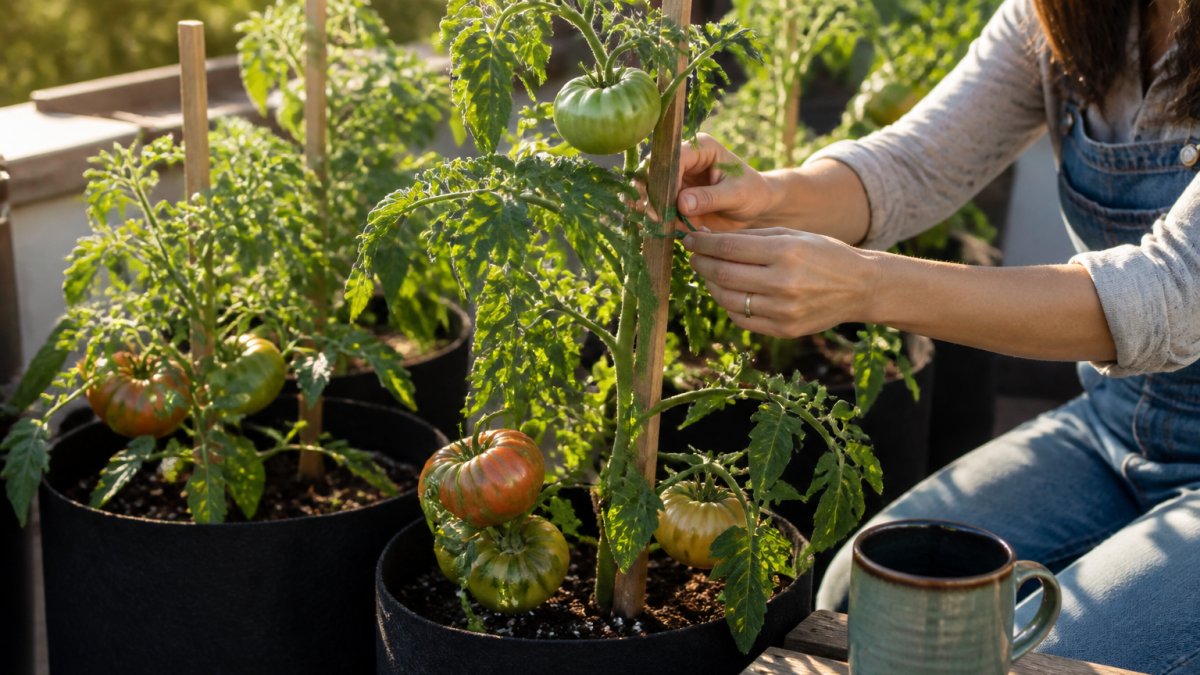
Use garden twine, soft plant ties, or strips of old cloth. Loop the tie around the stake first, then around the stem. Leave a little slack so the stem can move.
Never tie tight. A tomato stem thickens as the season goes on. A snug tie in June becomes a tourniquet in August.
Tomato - Heritage Cottage Orange →
- Use soft, stretchy material, not wire or fishing line
- Tie below a strong branch, not at the very top
- Leave room for the stem to grow
- Check ties every couple of weeks
- Re-tie as the plant climbs
Staking Tomatoes in Containers: A Different Setup
Staking tomatoes in containers is a different animal, and it's one of the most common places folks run into trouble. A container plant has only a few gallons of soil to anchor into, so a tall stake can lever the whole pot over in a gust.
Start with a heavy pot. A full container is top-heavy, and wind loves a top-heavy pot. A 15- to 20-gallon container gives indeterminate heirloom roots room to spread and adds enough weight to resist tipping. Set the pot where it will stay for the season before you add support, once it's loaded with fruit, you won't want to move it.
For determinate varieties like Heritage Cottage Orange, a 3- to 4-foot bamboo stake or a small cage works fine. The plant stays compact, so you don't need a 6-foot pole. For indeterminate heirlooms like Cherokee Purple or Black Ethiopian, use a stake that reaches at least 5 to 6 feet and drive it 8 to 10 inches into the potting mix.

Container soil dries out faster than garden soil, especially in Southeast heat. Check moisture daily once the plant is loaded with fruit. Mississippi State University Extension recommends a well-drained potting mix and consistent watering to avoid blossom end rot, which is common when containers dry out between waterings.
A few container-specific tips:
- Use a potting mix, not garden soil, to keep drainage and weight manageable.
- Mulch the surface to slow moisture loss in summer heat.
- Feed regularly, container plants run out of nutrients faster than in-ground plants.
- Choose determinate or compact indeterminate heirlooms for smaller pots; save the big sprawling types for 20-gallon containers or raised beds.
For more on container vegetable growing in the Southeast, Mississippi State University Extension's container gardening resources cover potting mixes, watering, and support options in detail.
Step-by-Step: How to Stake Heirloom Tomato Plants
Here's the full process, start to finish. Follow these steps and your plants will stand tall through the season.
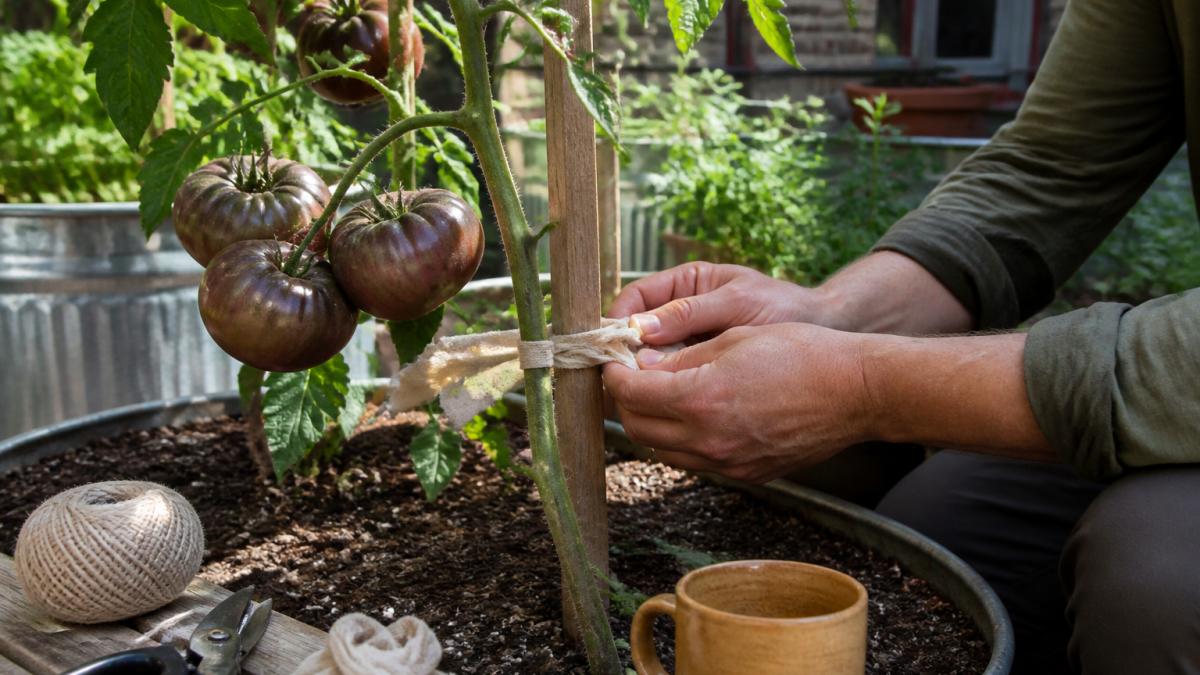
What you'll need:
- A sturdy stake at least 6 feet tall for indeterminate vines
- Soft plant ties, garden twine, or cloth strips
- A hammer or mallet for wooden stakes
- Gloves
- Set the stake before or at planting. Drive it 8 to 12 inches into the soil, a few inches from where the stem will sit.
- Plant beside the stake. Keep the root ball intact and the stem clear of the wood.
- Tie the stem loosely. Use soft material and leave slack for growth.
- Add ties as the plant grows. Every 8 to 12 inches of new growth gets a new tie.
- Check ties weekly. Loosen any that look tight against the stem.
- Add a second stake for heavy vines. Two stakes with twine between them hold big indeterminate plants better than one.
For a deeper look at soil prep and planting, Mississippi State University Extension's vegetable gardening guides cover bed preparation and spacing in detail.
Pruning and Training as the Season Goes On
Pruning and training keep your support system working. Suckers are the shoots that grow between the main stem and a branch. Remove some of them to keep the plant manageable.
Don't strip everything, though. Heirloom tomatoes need foliage to shade fruit and feed the plant. A common mistake is over-pruning, which leaves fruit exposed to sunscald.
A good middle ground: remove suckers below the first flower cluster, then let the plant grow. Tie new growth as it climbs. This keeps air moving and light reaching the leaves.
Common Mistakes and Season-Long Troubleshooting
Most staking problems trace back to a few avoidable mistakes. Here's what to watch for.
- Staking too late. The vine sprawls, and you damage roots trying to catch up.
- Tying too tight. The stem thickens and the tie strangles it.
- Using weak stakes. A thin pole bends under fruit load.
- Skipping ties as the plant grows. New growth flops over and snaps.
- Over-pruning. Too much leaf removal exposes fruit to sun and stress.
- Ignoring wind. A tall plant needs a deep stake or a second anchor.
If a stem does break, trim it cleanly below the break. The plant will usually push new growth. Keep watering steady and watch for pests around the wound.
For climate-specific timing and variety selection, Mississippi State University Extension's tomato resources offer regional guidance that helps Southern gardeners plan around heat and humidity.
If you're growing in containers, University of Georgia Extension's container gardening guidance walks through potting mixes, watering, and support for small-space gardens.
Staking heirloom tomatoes takes a little planning, but the payoff shows up at harvest. Tall, well-supported vines mean cleaner fruit, better airflow, and fewer heartbreaks in August. At Heritage Cottage Seeds, we offer rare and unusual varieties like Cherokee Purple, Black Ethiopian, and our own Heritage Cottage Orange, all tested and proven to perform. Each pack holds 20 to 25 seeds, ready for your garden. Search our collection and find the heirloom tomatoes that fit your space, whether that's a raised bed, a patio pot, or a full garden row.

Frequently Asked Questions
When should you stake heirloom tomato plants?
Put your stake in the ground at planting time, or within a week or two of transplanting while the root ball is still small. Driving a stake later means pushing through established roots, which sets the plant back. If you missed that window, water the bed well first, then slide the stake in about 4 to 6 inches away from the main stem so you slice past the root zone rather than through it. Heirloom seedlings outgrow floppy stems fast, so earlier is always easier.
Should heirloom tomatoes be staked or caged?
It depends on the variety. Indeterminate heirlooms like Cherokee Purple or Black Ethiopian keep growing and setting fruit until frost, so a tall single stake or a Florida weave works better than a short cage that tops out early. Determinate types such as Heritage Cottage Orange stay compact at 3 to 4 feet and do fine with a simple stake or a smaller cage. In containers, a single sturdy stake is usually the simplest choice because it takes up less room in the pot.
How do you tie tomato plants to stakes without damaging the stems?
Use soft plant ties, strips of old cotton t-shirt, or garden twine, and loop it in a figure-eight: around the stake first, then around the stem, so the stem never rubs directly against the stake. Leave a little slack so the stem can thicken as it grows. Check ties every week or two and loosen or move them up as the plant adds height. Wire, zip ties, and thin string cut into stems once the plant starts carrying heavy fruit.
How tall should a stake be for an heirloom tomato plant?
For indeterminate heirlooms, an 8-foot stake driven about 1 foot into the ground leaves roughly 7 feet of above-ground support, which covers most home garden varieties. Determinate types like Heritage Cottage Orange top out around 3 to 4 feet, so a 5-foot stake is plenty. Whatever length you pick, drive it deep enough that a windstorm with a full fruit load will not tip it over.