 how-to
How to Identify Pepper Plant Nutrient Deficiencies
Table of Contents
- Why Pepper Plants Show Nutrient Deficiency Symptoms
- Nitrogen Deficiency in Pepper Plants: Spotting Overall Yellowing
- Calcium Deficiency in Pepper Plants: Leaf Tips and Fruit Damage
- Other Common Nutrient Problems: Phosphorus, Potassium, and Magnesium
- Pepper Plant Nutrient Deficiency Chart: Quick Reference Guide
- Container Pepper Plant Nutrient Problems: Prevention and Solutions
- Step-by-Step Diagnosis: From Symptoms to Soil Testing
- Correcting Deficiencies and Getting Your Peppers Back on Track
- Frequently Asked Questions
Last Updated: October 14, 2026
Why Pepper Plants Show Nutrient Deficiency Symptoms
Growing pepper plants is rewarding until something goes wrong. Leaves turn colors they shouldn't, and you're left wondering what happened. Pepper plant nutrient deficiencies are pretty vocal, when plants are hungry, they show it through their leaves.

The good news? Most nutrient problems are fixable once you know what to look for.
Peppers need macronutrients (nitrogen, phosphorus, potassium) and micronutrients (magnesium, calcium, sulfur, and others). When soil lacks one, the plant can't grow properly.
Nitrogen Deficiency in Pepper Plants: Spotting Overall Yellowing
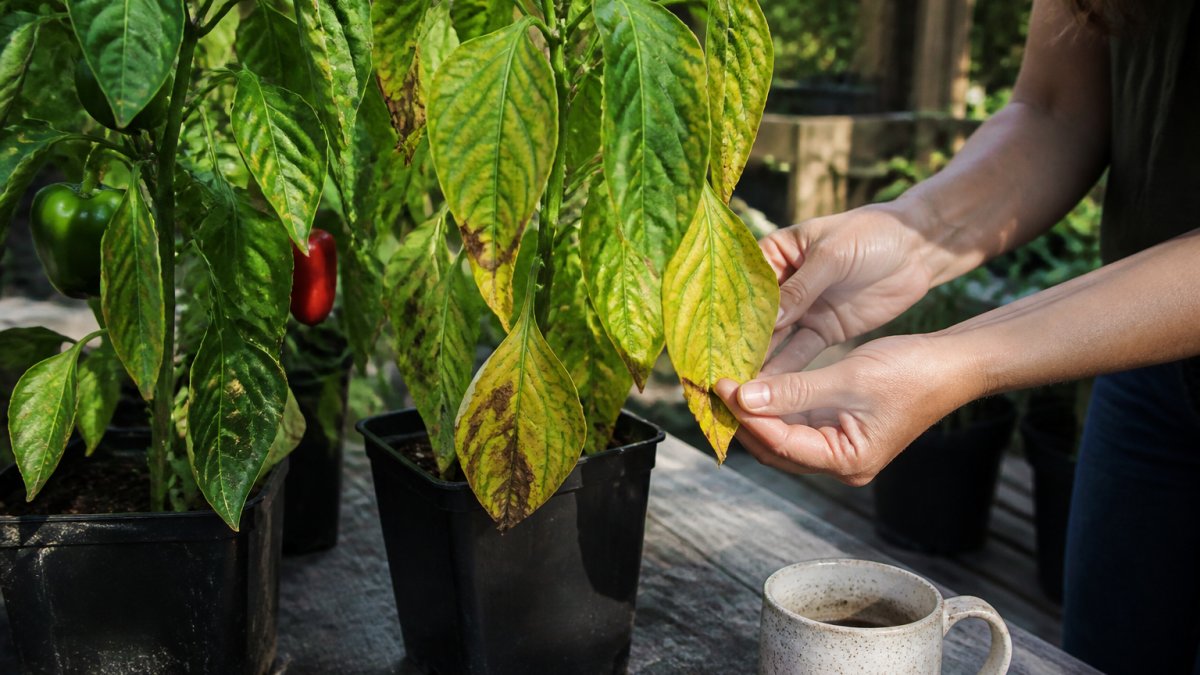
Nitrogen deficiency is the most common nutrient problem gardeners see. The whole plant looks pale and weak, with older leaves yellowing first while newer growth stays green longer.

Here's what to look for:
- Older leaves fade to pale yellow or light green
- Yellowing starts at the leaf edges and moves inward
- Stems may look thin and spindly
Nitrogen moves freely, so it gets pulled from old leaves to feed new growth, that's why bottom leaves show trouble first.
Caught early, it's easy to fix: water with a balanced fertilizer or one higher in nitrogen. Container peppers especially need regular feeding since nutrients wash out with watering.
Calcium Deficiency in Pepper Plants: Leaf Tips and Fruit Damage
Calcium deficiency is sneaky because it often shows on the fruit first.
On the leaves, calcium deficiency shows up as:
- Brown or black spots on leaf tips
- Edges of new leaves curl or look scorched
- Leaf deformation as new growth emerges
Calcium doesn't move through the plant easily. It gets stuck where it lands. New growth and developing fruit need calcium to form properly, so that's where problems appear first.
Calcium deficiency often happens even when calcium is in the soil. The real culprit is usually watering, letting soil dry out completely, then soaking it, prevents proper calcium uptake. Container peppers are especially prone.

The fix: water consistently, keeping soil evenly moist, not soggy. Blossom end rot won't heal on damaged fruit, but consistent watering protects new peppers forming above.
Other Common Nutrient Problems: Phosphorus, Potassium, and Magnesium
Nitrogen and calcium get most of the attention, but three more nutrients cause distinctive patterns. All three are mobile, so the plant pulls them from older leaves to feed new growth, symptoms cluster on lower and middle leaves first.
Phosphorus Deficiency: Dark, Purplish, and Stunted
Phosphorus deficiency makes a pepper plant look darker instead of lighter. Instead of yellowing, you'll see:
- A deep, dull green that looks almost blue-green compared to healthy leaves
- Purple or bronze tingeing along the undersides of leaves and on the stems, especially in cool weather
- Leaves that are smaller than normal and held at a tighter angle
Phosphorus drives energy transfer inside the plant, so when it's short, cell division slows and the plant can't build new tissue fast enough.
A common lookalike is cool spring weather. Peppers in soil below about 55°F often turn purple even when phosphorus is present, because cold roots can't take it up. If the purple fades as soil warms, it wasn't a true deficiency.
Potassium Deficiency: Scorched Edges, Green Centers
Potassium deficiency has one of the most recognizable signatures in the garden:
- Yellowing that starts at the leaf margins and works inward
- Leaf edges that look scorched, browned, or papery
- The center of the leaf staying green longer than the edges, creating a distinct halo pattern
Potassium regulates water movement and enzyme activity, so when it's short, the plant can't manage moisture in its tissues. Leaf edges, farthest from the veins, dry out and die first.
Don't confuse this with salt burn from overfertilizing, which hits leaf tips across the whole plant at once, including new growth. Potassium deficiency creeps upward from the bottom over one to two weeks.
Magnesium Deficiency: Yellow Between Green Veins
Magnesium deficiency is the classic interveinal chlorosis pattern:
- Yellowing between the veins while the veins themselves stay green
- A striped, mottled, or marbled look on older leaves
- In severe cases, the yellow areas turn bronze or reddish before the leaf drops
Magnesium sits at the center of the chlorophyll molecule, so without it the plant can't build working chlorophyll between the veins. It's mobile, so the plant moves magnesium out of old leaves to supply new ones, the bottom and middle yellow first while the top stays green.
A frequent lookalike is natural fade on very old leaves late in the season. If only the lowest one or two leaves show it and the rest of the plant is vigorous, that's normal aging.
Quick Side-by-Side
| Nutrient | Mobility | First Leaves Affected | Signature Pattern |
|---|---|---|---|
| Phosphorus | Mobile | Older / lower | Dark green with purple or bronze tinge, stunted |
| Potassium | Mobile | Older / lower | Yellow edges, green center, scorched margins |
| Magnesium | Mobile | Older / lower | Yellow between veins, veins stay green |
Why Containers Make All Three Worse
In garden soil, these three are usually adequate and get replenished by organic matter. In containers, they deplete on a much shorter clock, every watering leaches soluble nutrients out the drainage holes, and potting mixes have a limited reserve.
The practical takeaway: in pots, don't wait for symptoms. Feed on a schedule with a balanced vegetable fertilizer, and if you see one of these patterns, correct it with a complete fertilizer rather than a single-nutrient product.
Pepper Plant Nutrient Deficiency Chart: Quick Reference Guide
| Nutrient | Where It Shows | Leaf Color & Pattern | Where on Plant |
|---|---|---|---|
| Nitrogen | Older leaves first | Pale yellow or light green | Bottom leaves |
| Calcium | New leaves and fruit | Brown leaf tips, fruit spots | Fruit and new growth |
| Phosphorus | Older leaves first | Dark green or purple tint | Lower leaves |
| Potassium | Older leaves first | Yellow edges, green center | Leaf edges |
| Magnesium | Older leaves first | Yellow with green veins | Lower and middle leaves |
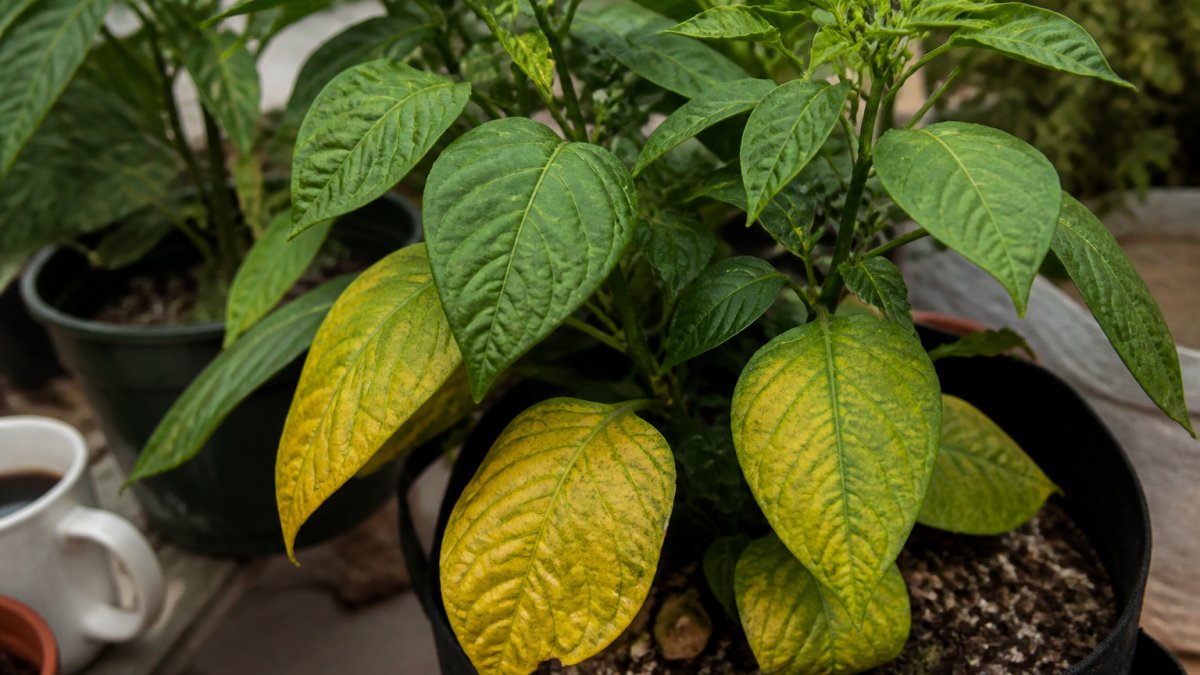
Match what you see on your plants to the symptoms listed. Most of the time, you'll spot the problem within the first few weeks.
Container Pepper Plant Nutrient Problems: Prevention and Solutions
Container gardening is fantastic for growing rare peppers, but nutrients wash out with every watering, soil in pots doesn't get replenished the way garden soil does.
Here's what makes container pepper plants different:
- Nutrients deplete faster (every 4-6 weeks instead of months)
- Watering frequency affects nutrient availability
- Soil pH changes more quickly in containers
Prevention is easier than fixing problems. Start with quality potting soil, not garden soil.
Water consistently. Let the top inch of soil dry between waterings, but don't let it dry out completely. This keeps nutrients available and prevents calcium lockup that causes blossom end rot.
Step-by-Step Diagnosis: From Symptoms to Soil Testing
Start with what you see. Which leaves show symptoms, old leaves or new growth?
Here's your diagnostic workflow:
Step 1: Observe leaf location. Are lower, older leaves affected or new growth at the top? This tells you if the nutrient is mobile or immobile.
Step 2: Identify the color pattern. Is the whole leaf pale, or are specific areas affected?
Step 3: Check the fruit. Are developing peppers showing spots or damage?
Step 4: Review your watering. Is soil staying evenly moist? Container plants especially need consistent moisture.
Step 5: Test your soil. If symptoms persist after you've adjusted watering and feeding, get a soil test. Contact Mississippi State University Extension for soil testing services.
A soil test gives you exact information instead of guessing.
Correcting Deficiencies and Getting Your Peppers Back on Track
Most guides stop at "add fertilizer," but the right fix depends on which nutrient is short, whether you're in a container or in the ground, and how far the deficiency has progressed.
Rule Out the Lookalikes First
Before you feed anything, confirm it's actually a nutrient problem. Yellowing and leaf damage are nonspecific, and several common issues mimic deficiencies:
- Overwatering causes uniform yellowing and limp leaves, often across the whole plant, with soggy soil and sometimes a sour smell.
- Underwatering causes crispy brown leaf edges that look like potassium burn, but the whole plant wilts and the soil is bone dry.
- Herbicide drift causes twisted, cupped, or strapped new growth that can resemble calcium deficiency.
If the pattern follows the mobility rules (old leaves first for mobile nutrients, new growth first for immobile ones), you're probably looking at a true deficiency.
Match the Fix to the Nutrient
Mobile nutrients (nitrogen, phosphorus, potassium, magnesium): Correct these by feeding the soil, the plant pulls the nutrient into new growth as soon as it's available. A balanced vegetable fertilizer or one formulated for tomatoes and peppers works for most home gardens.
Immobile nutrients (calcium, and to a lesser degree boron): These are trickier because the plant can't move them from old tissue to new.
Safe Application: Don't Overcorrect
Overfertilizing is the most common mistake once a gardener spots a deficiency. Too much soluble salt burns roots, locks out other nutrients, and can make the plant look worse within days.
- Follow the label rate. For container peppers, many gardeners use half the label rate and feed more often, which is gentler on roots and keeps nutrients steadier.
- Water before you feed. Applying fertilizer to dry soil can scorch roots. Moist soil first, then feed.
- Don't stack products. If you're using a balanced fertilizer, you usually don't also need a separate nitrogen or magnesium product.
Foliar Feeding: When It Helps and When It Doesn't
Foliar sprays can green up a plant faster than soil feeding for mobile nutrients like magnesium and nitrogen, because leaves absorb a small amount directly. They're a useful bridge while soil corrections take effect, but a short-term patch, not a fix. Roots are still the main delivery system, and foliar sprays won't correct calcium problems in fruit, because calcium moves with water through the roots, not leaf tissue.
Recovery Timelines to Expect
- Nitrogen: new growth greens up in 1 to 2 weeks; full canopy recovery in 3 to 4 weeks.
- Phosphorus and potassium: 2 to 4 weeks for new growth to look normal; fruit set may lag a week or two behind.
- Magnesium: 2 to 3 weeks for new leaves; older yellowed leaves stay yellow.
If nothing improves after three to four weeks of correct feeding and watering, that's your signal to test. A soil test through your local Extension office tells you pH and nutrient levels directly instead of leaving you to guess. In the Southeast, our soils tend to be acidic and often low in magnesium and calcium, so a test is worth the small effort.
Frequently Asked Questions
How can you identify a nutrient deficiency in a pepper plant?
Start by examining leaf color and texture. Nutrient deficiencies show up first on older leaves for mobile nutrients like nitrogen, or on new growth for immobile ones like calcium. Yellow leaves, brown leaf tips, dark-green undersized foliage, or leaf deformation are common signs. Check soil pH and moisture next, poor nutrient uptake often stems from pH imbalance or inconsistent watering rather than actual nutrient absence. A soil test through your local extension office confirms what's missing.
Can overwatering cause symptoms that look like nutrient deficiency?
Yes, absolutely. Overwatering suffocates roots and blocks nutrient uptake, mimicking deficiency symptoms like yellowing and stunted growth. The difference: overwatering affects the whole plant uniformly and often comes with soft, waterlogged stems. True nutrient deficiency shows a pattern, nitrogen yellows old leaves first, while calcium damage appears on new fruit and leaf tips. Check soil moisture before assuming a nutrient problem. In containers, ensure drainage holes are clear and water only when the top inch of soil feels dry.
What does magnesium deficiency look like on pepper leaves?
Magnesium deficiency creates distinctive yellow or orange veining on older leaves while the leaf centers stay green, almost like a road map pattern. The veins remain dark green while tissue between them fades. New growth looks normal at first. This symptom appears mid-season when plants are heavy with fruit.
How do you correct a nutrient deficiency in a container-grown pepper plant?
Container peppers need consistent feeding because frequent watering leaches nutrients. First, confirm the deficiency through leaf symptoms and ideally a soil test. For nitrogen deficiency, apply a balanced fertilizer every 2-3 weeks during the growing season. Always water thoroughly before fertilizing to avoid root burn. Container soil should be refreshed or amended each spring, aged potting mix loses nutrients over time.