 how-to
How to Start a Container Herb Garden With Basil
Table of Contents
- Why Basil Makes a Perfect Container Herb
- Choosing the Best Container for Basil
- Preparing Your Potting Soil and Setup
- Planting Basil and Companion Herbs to Grow With Basil
- Basil Watering and Sunlight Needs
- How to Harvest Basil Leaves for Maximum Yield
- Troubleshooting Common Container Basil Problems
- Frequently Asked Questions
Last Updated: October 21, 2026
Why Basil Makes a Perfect Container Herb
Learning how to start a container herb garden with basil is one of the easiest ways to grow herbs in a pot. It thrives in containers, grows fast, and gives you fresh leaves all season long. You get a beautiful plant that smells amazing and tastes even better in your kitchen.
The best part? Basil loves warm weather and doesn't need much space. A single pot on a sunny patio or windowsill gives you more fresh basil than you'd buy at the grocery store. At Heritage Cottage Seeds, container basil is a gateway into herb gardening. It builds confidence and delivers real results quickly.
Basil also pairs beautifully with other herbs. You can grow it alongside parsley, oregano, or thyme in the same container. This creates a compact kitchen garden that handles all your culinary needs from one spot.
Choosing the Best Container for Basil
Pot Size and Drainage Essentials
Basil needs a container that's at least 6 inches deep, but don't stop there. A 6 to 8-inch pot works for a single plant, yet in the Southeast's long, hot summers, basil roots appreciate more room. A 10 to 12-inch container gives a single basil plant space to spread and holds moisture more evenly during July and August. If you're mixing basil with parsley or oregano, go with a 14 to 16-inch pot so each plant has its own zone.
Drainage is non-negotiable. Every pot must have holes in the bottom, at least three or four, each about 1/4 to 1/2 inch across. Without drainage, water sits and roots rot. That kills basil faster than anything else. Place a saucer under the pot to catch runoff, but empty it after heavy rain so the pot isn't sitting in water. Mississippi State University Extension emphasizes that container vegetables need free drainage to prevent root disease, especially during the Southeast's humid stretches.
Materials That Work Best
Terracotta pots are classic and breathable. They let soil dry out evenly, which basil appreciates, and they're affordable. But in the Southeast's heat, terracotta dries fast, you may need to water daily in midsummer. Plastic containers are lightweight, durable, and retain moisture longer, which is a real advantage during a Southern heat wave. Fabric grow bags offer excellent drainage and prevent root circling; many vegetable gardeners in containers swear by them for tomatoes and peppers, and basil thrives in them too.
Avoid pots without drainage holes, and skip glazed ceramic without drainage, these trap water and create soggy soil that basil hates. If you fall in love with a decorative pot that has no holes, use it as a cachepot and keep your basil in a plain nursery pot inside it.
Southeast-Specific Container Tips
In the Southeast, afternoon sun can be brutal. A light-colored container reflects heat and keeps roots cooler than a dark pot, which can bake in full sun. Raise pots on bricks or pot feet so air circulates underneath and water drains freely. If you're growing on a wooden deck or patio, a saucer or trivet protects the surface. Mississippi State University Extension recommends checking container plants more often in hot, humid weather because they dry out faster and are more prone to fungal issues when air circulation is poor. Material choice remains critical for thermal regulation, and exploring the structural integrity of 3D printed pots provides a modern alternative for managing these specific environmental stresses.
Preparing Your Potting Soil and Setup
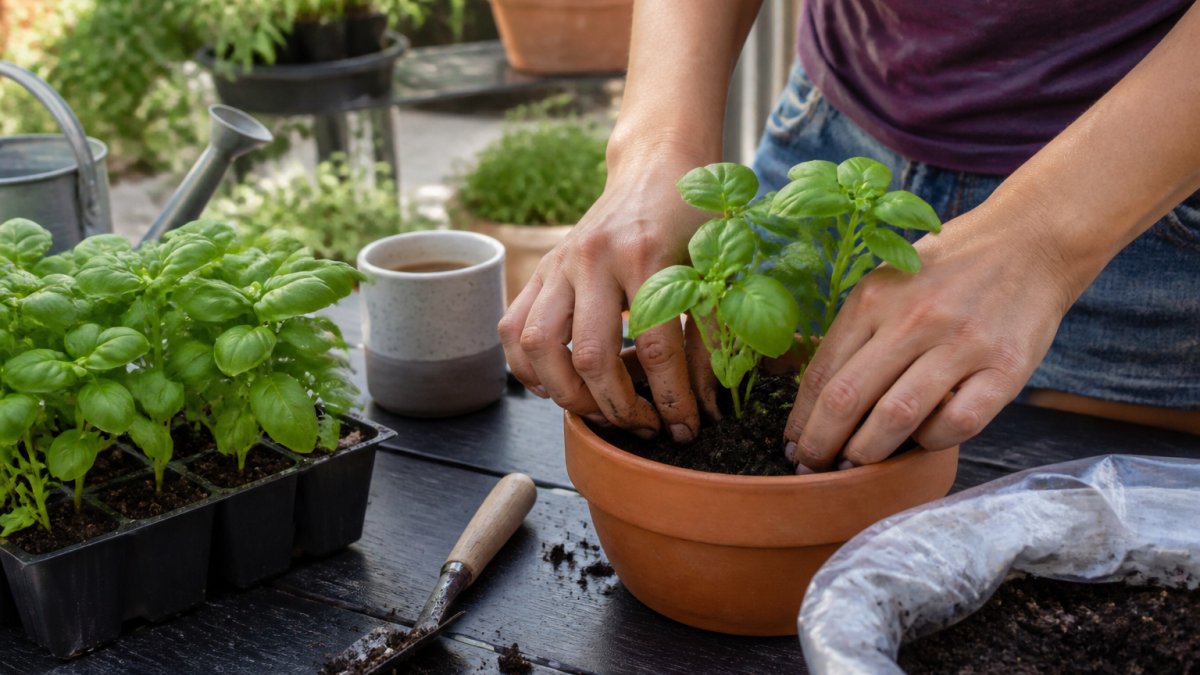
Basil needs loose, well-draining soil. Use a quality organic potting mix, not garden soil from your yard. Garden soil compacts in pots and suffocates roots.
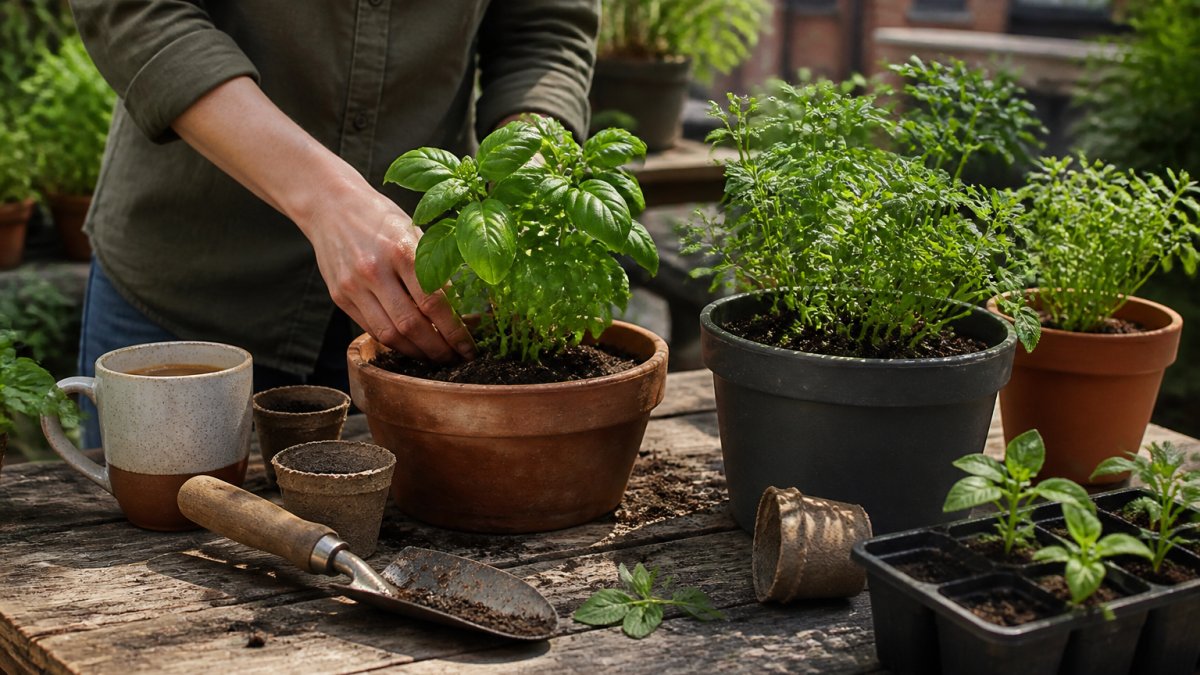
Fill your container three-quarters full with potting soil. Leave space at the top for watering. Gently firm the soil without packing it down.
Before planting, water the soil lightly. Moist soil helps seedlings or transplants settle in. It also reduces transplant shock.
Consider adding a thin layer of landscape cloth at the bottom of the pot. This keeps soil from washing out the drainage holes while water still flows freely. Some gardeners skip this step entirely, it's optional but helpful if you water aggressively.
Mississippi State University Extension recommends using a potting mix with good organic matter content for container herbs. This supports steady growth and nutrient retention throughout the season.
Planting Basil and Companion Herbs to Grow With Basil
Starting From Seeds vs. Transplants
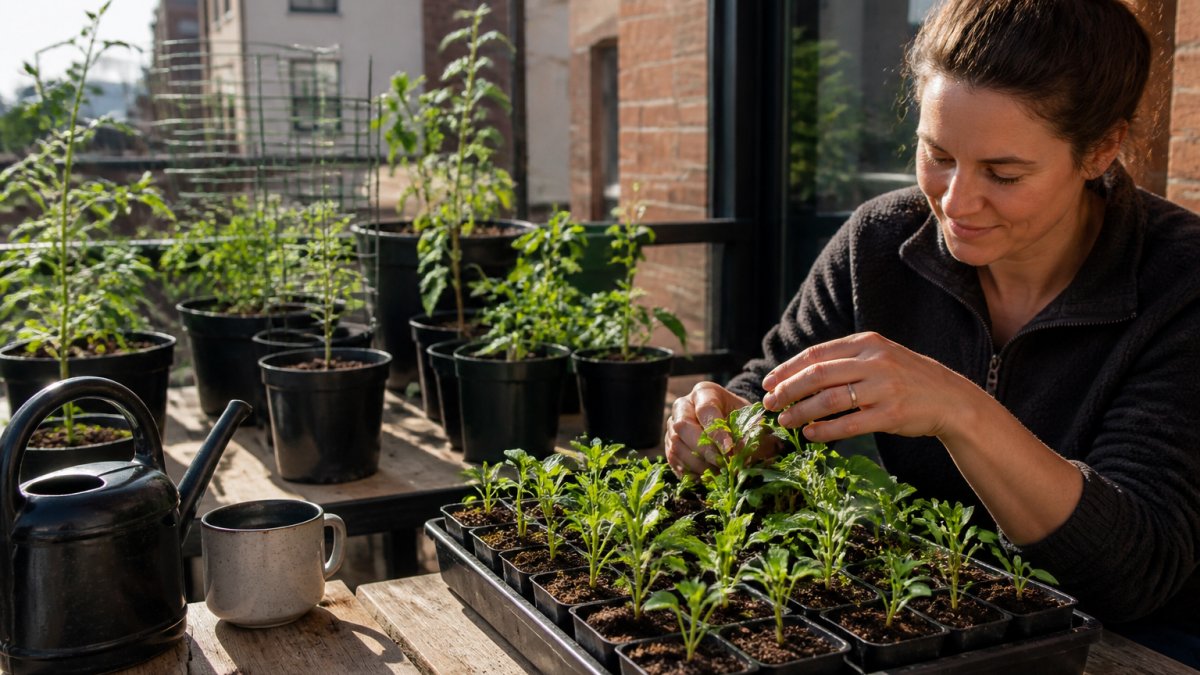
You can start basil from seed indoors 6 weeks before your last frost date. Seeds germinate in 5 to 10 days under warm conditions. This gives you seedlings ready to transplant into containers once soil warms up.
Buying transplants from a garden center is faster. You skip the indoor seed-starting step and plant directly into your container. This works especially well if you're new to gardening.
Mrs. Burns' Lemon Basil from Heritage Cottage Seeds is a standout choice if you're starting from seed when learning how to start a container herb garden with basil. This heirloom variety reaches 24 to 30 inches tall, produces vibrant green leaves, and delivers intense lemon fragrance. It thrives in containers and grows quickly. At just $4.00 per packet, it's an affordable way to start your container herb garden with basil.

Spacing and Pairing Herbs Together
Space basil plants 6 inches apart in a container. If you're growing a single plant, this isn't an issue. But if you're planting multiple basil seedlings or mixing basil with other herbs, give each plant breathing room.
Basil pairs well with parsley, oregano, and thyme in the same pot. These herbs have similar watering needs and sunlight preferences. They create a functional kitchen garden in one container.
Mint grows aggressively and can crowd basil out. If you want mint, plant it in a separate container to keep it from taking over.
Dill works with basil, but dill grows taller. Plant dill toward the back of a container so it doesn't shade basil.
Basil Watering and Sunlight Needs
Light Requirements for Thriving Plants
Basil needs 6 to 8 hours of direct sunlight daily. A south-facing windowsill or patio spot is ideal. Morning sun is especially valuable, it dries dew and reduces disease risk.
If you're growing basil indoors, place it near a bright window. Rotate the pot every few days so all sides get light. Without enough light, basil grows leggy and weak.
Basil tolerates partial shade but produces fewer leaves. In hot climates, afternoon shade can prevent leaf scorch during peak summer heat.
Watering Schedules and Soil Moisture
Check soil moisture daily by touching it with your finger. Water when the top inch feels dry. Basil likes consistently moist soil but not waterlogged.
In summer, you may need to water every day or every other day. Container soil dries faster than garden soil, especially in terracotta pots.
Water at the base of the plant, not on the leaves. Wet foliage invites fungal disease.
Reduce watering in cooler months. Basil grows slower in fall and winter, so it needs less water.
Overwatering is the most common mistake. If leaves yellow and droop even after watering, you've likely watered too much. Let the soil dry out slightly between waterings.
How to Harvest Basil Leaves for Maximum Yield
Start harvesting once your basil plant has 6 to 8 leaves. Pinch off the top two leaves regularly. This encourages the plant to branch and grow bushier instead of tall and spindly.
Harvest in the morning after dew dries. Leaves are most flavorful then.
Remove flower buds as soon as they appear. Flowering signals the plant to stop producing leaves and focus on seeds. Pinching off flowers keeps basil productive all season.
You can harvest continuously throughout summer. The more you pick, the more the plant produces. A healthy basil plant in a container yields handfuls of leaves weekly.
For the best flavor, use fresh basil immediately after harvesting. If you need to store it, wrap stems in a damp paper towel and refrigerate for up to a week.
Troubleshooting Common Container Basil Problems
Yellow leaves: This usually means overwatering or poor drainage. Check that water drains freely from the pot and that the saucer isn't holding water. Let the soil dry out slightly between waterings. In the Southeast's humid summers, yellowing can also signal too little air circulation, space pots apart and avoid crowding.
Leggy, thin growth: Your basil isn't getting enough light. Move the pot to a brighter location or closer to a south-facing window. Indoors, rotate the pot every few days so all sides get light. Without enough light, basil grows tall and weak instead of bushy.
Brown spots on leaves: This is often a fungal disease caused by wet foliage. Water only at the soil level, and water in the morning so leaves dry before evening. Improve air circulation around the plant. Mississippi State University Extension notes that humid conditions favor fungal problems in container vegetables, so give plants room to breathe.
Slow growth: Basil may need nutrients. Feed monthly with a balanced liquid fertilizer diluted to half strength. Container soil depletes nutrients faster than garden soil, especially after heavy watering. If growth stalls in midsummer, a light feeding often perks plants up within a week.
Wilting despite moist soil: This can indicate root rot from poor drainage. Repot the basil in fresh, dry potting soil in a container with better drainage holes. Trim away mushy roots before replanting. If the soil smells sour, root rot is likely.
Pests: Aphids and spider mites sometimes attack basil. Spray affected leaves with a strong stream of water to dislodge pests, and repeat every few days as needed. Check the undersides of leaves, where mites hide. In the Southeast, aphid pressure can build quickly in spring, catch them early.
Flowering too soon: If your basil sends up flower buds early, pinch them off. Stress from dry soil or extreme heat can trigger flowering. Keep soil consistently moist and harvest regularly to keep the plant in leaf production.
Frequently Asked Questions
How big should a container be for basil?
A container herb garden with basil needs at least 6-8 inches deep and 6 inches wide for a single plant. If you're growing multiple herbs together, aim for a larger pot, 10-12 inches wide gives roots room to spread without crowding. Basil has shallow roots but grows bushy, so depth matters less than width. Drainage holes are essential to prevent waterlogging.
What herbs grow well alongside basil in a container?
Basil pairs beautifully with oregano, thyme, parsley, and dill in a shared container. These herbs to grow with basil have similar water and sunlight needs, making them ideal companions. Mint can work but grows aggressively, so some gardeners prefer containing it separately. Avoid pairing basil with rosemary, which prefers drier conditions. Group herbs by their moisture requirements for the healthiest container herb garden.
How often should you water basil in a pot?
Check your container's soil daily during warm weather, basil prefers consistently moist (not soggy) soil. Water when the top inch feels dry to the touch, typically every 1-2 days in summer. Reduce frequency in cooler months. Containers dry faster than garden beds, so consistent watering is key. Overwatering causes root rot, while underwatering stresses the plant and slows growth.
Can you grow basil from seed in a container?
Yes, basil grows easily from seed indoors or directly in containers. Start seeds indoors 6-8 weeks before your last frost, then transplant seedlings outdoors after frost danger passes. Or sow seeds directly into containers once soil warms. Seeds germinate in 5-10 days in warm conditions. Mrs. Burns' Lemon Basil seeds are a flavorful heirloom option that thrives in containers and reaches 24-30 inches tall with a full, bushy habit perfect for regular harvesting.