 ultimate-guide
How to Start Pepper Seeds Indoors: A 2026 Guide
Table of Contents
- When to Start Pepper Seeds for Your Garden
- How to Start Pepper Seeds Indoors Step by Step
- Growing Peppers in Containers After Transplanting
- How to Harden Off Pepper Seedlings Before Moving Them Outside
- Frequently Asked Questions
Last Updated: August 21, 2026
When to Start Pepper Seeds for Your Garden
Knowing when to start pepper seeds is crucial, get the timing wrong and you'll either have tiny seedlings at planting time or overgrown plants. Mississippi State University Extension recommends starting pepper seeds indoors 8 to 10 weeks before your last expected frost date. For most of the Southeast, that's late January through early March, depending on your zone.
Here's what catches most gardeners: peppers are slow starters. Unlike tomatoes that germinate in a week, peppers take 2 to 3 weeks just to sprout. Factor that into your timeline.
A quick timing cheat sheet:
| Pepper Type | Weeks Before Last Frost | Notes |
|---|---|---|
| Sweet bells and mild varieties | 8-10 weeks | Standard timeline |
| Hot peppers (jalapeño, cayenne) | 10-12 weeks | Slower to germinate |
| Superhots and rare heirlooms | 12-14 weeks | Need extra lead time |
How to Start Pepper Seeds Indoors Step by Step
Starting pepper seeds indoors successfully comes down to warmth, moisture, and patience.

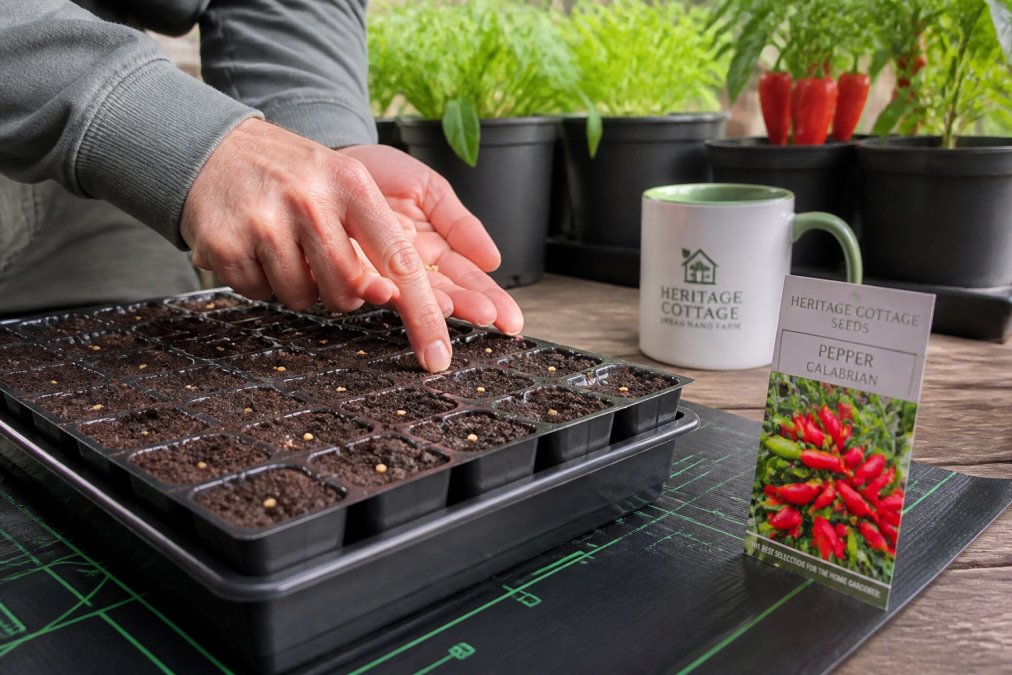
What you'll need:
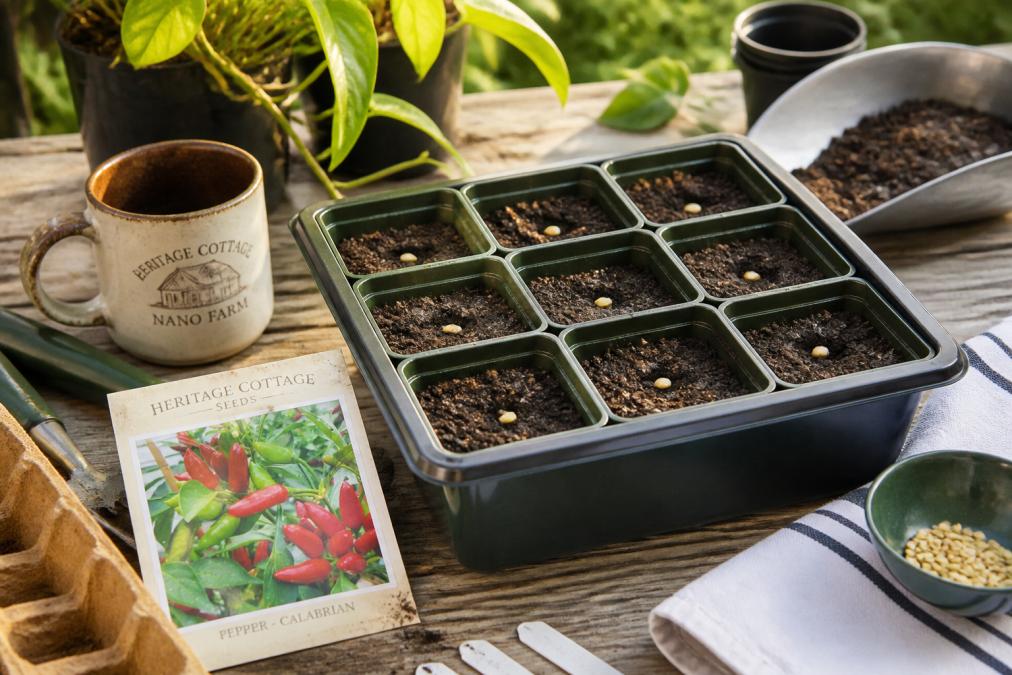
- Seedling tray or cell pack
- Sterile seed starting mix (not regular potting soil)
- Heat mat
- Moisture dome or plastic wrap
- Grow lights or a bright south-facing window
Step 1: Fill your tray with seed starting mix. Use a sterile, soilless mix with perlite and vermiculite for drainage. Avoid garden soil, which compacts and carries pathogens.
Step 2: Pre-moisten the mix. Water thoroughly before planting so seeds settle into moist soil.
Step 3: Plant seeds at the right depth. Press seeds about ¼ inch deep, too shallow and they dry out; too deep and they can't push through.
Step 4: Apply bottom heat. Soil temperature should be 80°F to 85°F. A heat mat is the single biggest game-changer for germination success.
Step 5: Cover with a moisture dome. This keeps humidity high during germination. Check daily and crack the dome if condensation pools heavily.
Step 6: Add grow lights once seedlings emerge. The moment you see cotyledons, remove the dome and place them under full spectrum grow lights for 14 to 16 hours daily. Leggy seedlings signal a light problem.
Troubleshooting germination failure: If nothing has sprouted after 3 weeks, check your soil temperature first. Cold is the number one culprit. According to Mississippi State University Extension's vegetable gardening guide, consistent warmth throughout germination is critical for peppers.
Growing Peppers in Containers After Transplanting
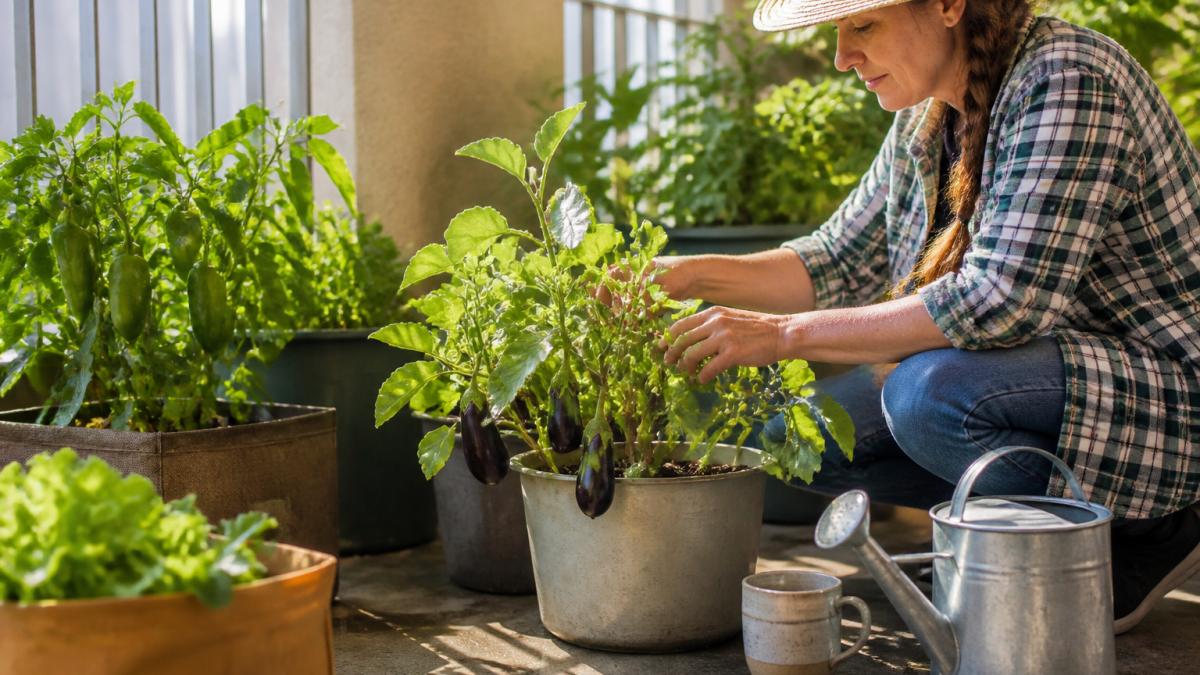
Container growing is one of the best ways to grow peppers, especially in the Southeast where you can move pots to manage heat, adjust drainage, and extend the season by bringing them inside before frost.
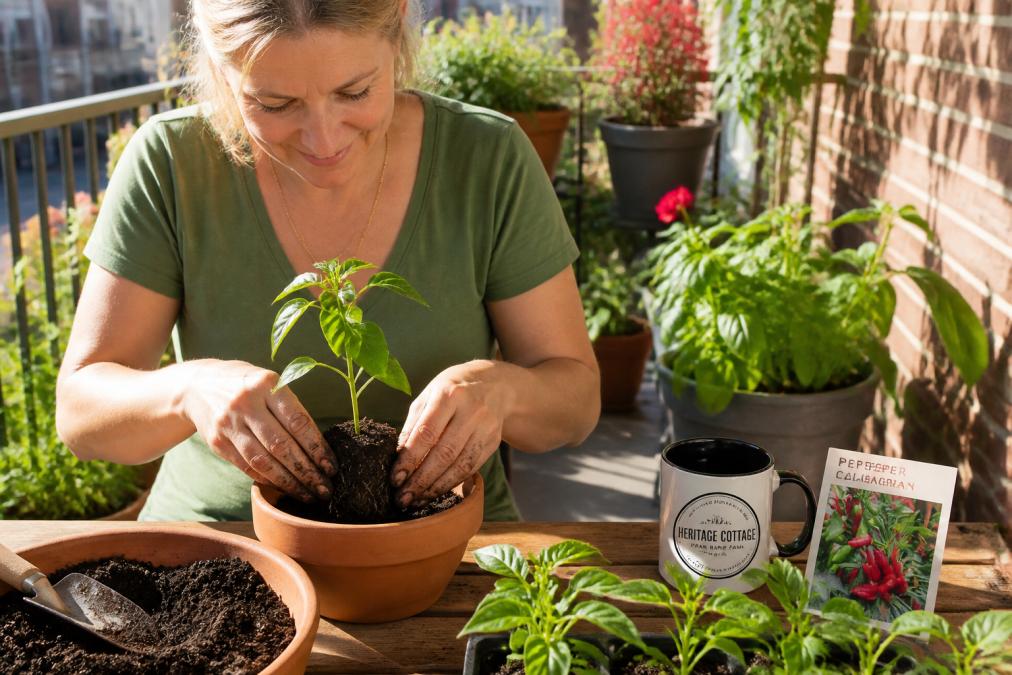
Once your seedlings develop their first set of true leaves beyond the initial cotyledons, they're ready to pot up. True leaves are the plant's actual foliage, not the seed leaves that appear first.
Container basics that matter:
- Size: A 5-gallon container is the minimum for most pepper varieties. Dwarf varieties work beautifully in smaller pots on a balcony or patio.
- Drainage: Non-negotiable. Waterlogged roots kill peppers fast. Every container needs drainage holes.
- Soil: Use quality potting mix, not seed starting mix. Add perlite if the mix feels dense.
- Watering: Containers dry out faster than garden beds. Check daily in summer heat.
Containers let you experiment with unusual varieties without committing a whole garden bed. After seedlings have been in containers for about two weeks, they'll need feeding. Start with diluted balanced fertilizer and transition to lower-nitrogen, higher-phosphorus formula once flowering begins to encourage fruit production.
How to Harden Off Pepper Seedlings Before Moving Them Outside
Hardening off separates seedlings that thrive from ones that sulk for a month after transplanting. Gradually introduce your indoor-grown plants to outdoor conditions over 7 to 10 days.
Start by setting plants outside in a shaded, sheltered spot for 1 to 2 hours on day one. Bring them back in. Each day, increase outdoor time and gradually expose them to more direct sun and temperature variation.
A simple hardening off schedule:
| Day | Outdoor Time | Sun Exposure |
|---|---|---|
| Days 1-2 | 1-2 hours | Full shade |
| Days 3-4 | 3-4 hours | Morning sun only |
| Days 5-6 | 5-6 hours | Partial sun |
| Days 7-10 | Full day | Full sun |
According to Mississippi State University Extension's container gardening resources, gradual exposure to outdoor conditions significantly reduces transplant shock and supports uninterrupted root development.
A common mistake is rushing this process during a warm spell. Even with perfect temperatures, the difference in light intensity between indoor grow lights and direct Southern sun is dramatic. Plants need time to adjust their leaf structure to outdoor conditions.
After hardening off, your peppers are ready for their permanent container home or garden bed. The hard work is behind you, and a long, productive season of flavorful peppers awaits.
Frequently Asked Questions
What is the ideal temperature for pepper seed germination?
Pepper seeds germinate best when soil temperature stays between 80°F and 85°F. Mississippi State University Extension recommends using a heat mat under your seedling tray to maintain consistent bottom heat, since ambient room temperature alone rarely gets warm enough. At the right soil temperature, most pepper varieties sprout within 10 to 21 days. Drop below 70°F and germination slows dramatically or stalls completely.
Why do pepper seeds take so long to germinate?
Peppers are slow starters compared to tomatoes or cucumbers. The main culprits are cool soil temperature, seeds that are too old, or a seed starting mix that stays too wet or too dry. Hot and rare varieties like Calabrian or Aleppo peppers can take three weeks or longer even under good conditions. Pre-soaking seeds for a few hours before planting and keeping soil temperature consistently warm are the two changes that make the biggest difference.
Which rare pepper varieties are easiest to start indoors?
Annuum types tend to be the most forgiving for indoor seed starting. The Aleppo pepper and Dwarf Tabasco are both reliable germinators that respond well to bottom heat and a good seed starting mix. If you want something unique to grow with kids, the compact Dwarf Tabasco is especially fun, plants stay around 2 feet tall, making them perfect for containers on a porch or patio.
Growing peppers from seed is one of those skills that pays off every single season, but it starts with having seeds worth growing. Heritage Cottage Seeds offers a curated selection of rare and heirloom pepper varieties, including the Calabrian, Aleppo, Dwarf Tabasco, and McDonald's Thai, that you simply won't find at a big-box store. Browse the full collection and start your pepper season with something genuinely worth the effort.