 Listicle
Best Heirloom Tomatoes for Containers: A Grower's Guide
Last Updated: November 9, 2026
Quick Summary
The best heirloom tomatoes for containers are compact, productive, forgiving varieties: micro-dwarfs and cherries for small pots, determinate types for a concentrated harvest, and smaller indeterminate vines for a long season. Give each plant the right container size, steady water, and regular feeding for real heirloom flavor.
- Micro-dwarf tomatoes thrive in pots as small as 6 to 8 inches across.
- Standard determinate and indeterminate varieties need at least 5 gallons per plant.
- Cherry tomatoes set fruit heavily, ripen fast, and stay manageable in small pots.
- Water deeply when the top inch feels dry, and water in the morning.
- Blossom end rot usually signals uneven watering or a calcium uptake problem, not a disease.
Table of Contents
- Why Heirloom Tomatoes Belong in Containers
- Recommended Container Sizes and Depths for Heirloom Tomatoes
- The Best Cherry Tomatoes for Containers
- The Best Determinate Tomatoes for Containers
- The Best Indeterminate Tomatoes for Containers
- The Best Large Tomatoes to Grow in Pots
- Soil, Watering, and Feeding for Container Heirlooms
- Start Your Container Heirloom Garden This Season
- Frequently Asked Questions
Why Heirloom Tomatoes Belong in Containers
Heirloom tomatoes are open-pollinated varieties passed down through generations, grown from seed saved year after year, and they belong in containers because a pot gives you control over soil, water, and placement that a garden bed never can. At Heritage Cottage Seeds, we offer rare and unusual tomato seeds, and several of our varieties suit small spaces and big flavor.
A pot can warm faster in spring and can be moved with the sun. That control matters most with heirlooms, which can be fussier than hybrids about moisture and nutrients.
Determinate vs. Indeterminate: What Container Growers Need to Know
Determinate tomatoes grow to a fixed height, set fruit in a concentrated window, and then stop (Tips for Growing Tomatoes). Indeterminate tomatoes keep growing and setting fruit until frost (Tips for Growing Tomatoes). For containers, determinate and dwarf types are easier to manage, while indeterminate vines need sturdy staking and more room.
Here is how the two compare for pot growing:
| Trait | Determinate | Indeterminate |
|---|---|---|
| Height | Fixed, compact | Keeps growing |
| Harvest | Concentrated window | Continuous until frost |
| Support | Minimal staking | Strong staking or caging |
| Container fit | Excellent | Good with support |
A common mistake is buying an indeterminate beefsteak for a small pot. The plant outgrows the container, roots get crowded, and fruit set suffers. Match the growth habit to your space first.
Recommended Container Sizes and Depths for Heirloom Tomatoes
The right container size depends on the plant. Micro-dwarf tomatoes thrive in pots as small as 6 to 8 inches across, standard determinate and indeterminate varieties need at least 5 gallons per plant, and larger types do best in 10 to 15 gallons with a depth of 18 inches or more.
Drainage holes are non-negotiable. A pot without them holds water, suffocates roots, and invites root rot. Container depth matters too: shallow pots dry out fast and leave roots cramped.
Watch out: a dark pot in full sun can cook roots on a hot afternoon. Light-colored containers or a little shade at the base keep soil temperatures steadier.
The Best Cherry Tomatoes for Containers
Cherry tomatoes are the best heirloom tomatoes for containers because they set fruit heavily, ripen fast, and stay manageable in small pots.
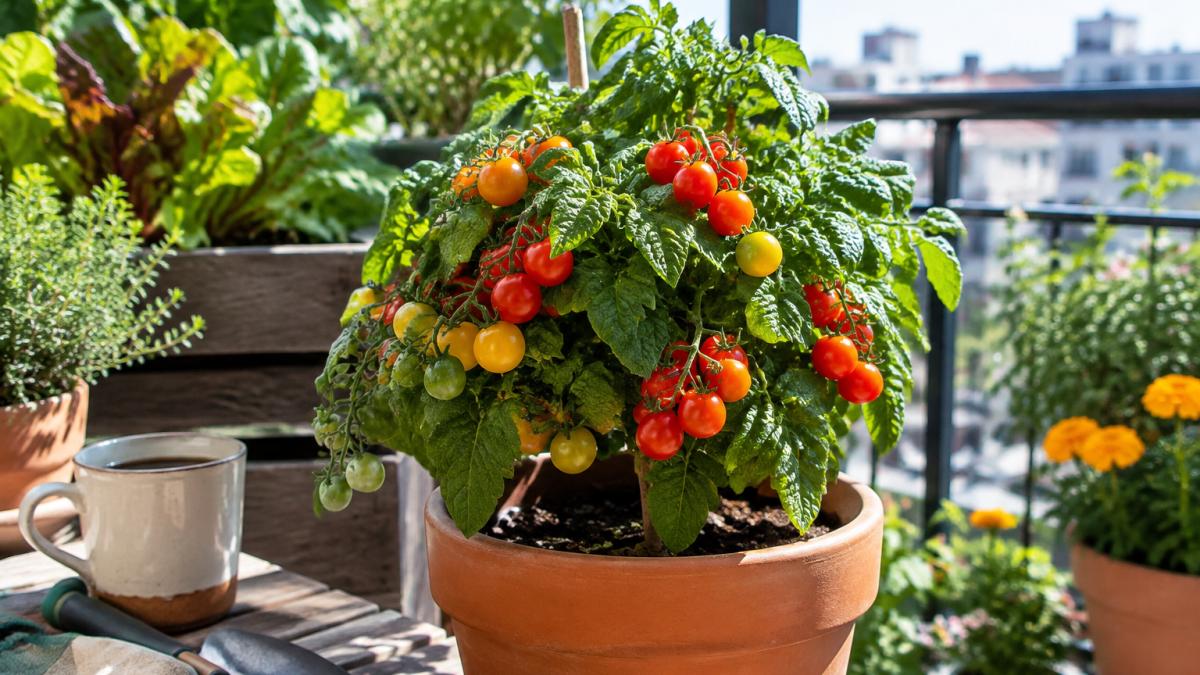
Hahm's Gelbe is a compact, space-saving plant that delivers heavy yields of small, bright yellow tomatoes with a mild, sweet, fruity flavor.
Orange Hat is a true micro-dwarf reaching just 8 to 12 inches.
Rosy Finch grows 10 to 14 inches and produces rosy-pink cherries with a balanced, sweet flavor.
Red Robin stays 8 to 12 inches and yields clusters of bright red cherries with a well-balanced taste.
Ready to pick a cherry variety? You can browse our micro and dwarf tomato seed collection to find these and other rare types.
Micro-Dwarf Varieties That Fit Any Balcony
Micro-dwarf tomatoes are the answer for the smallest spaces.
Hardin's Miniature grows just 6 to 10 inches but produces abundant clusters of bright red, cherry-sized tomatoes with classic sweet-tart flavor. It matures quickly and performs well indoors or out.
Birdie Rouge reaches 8 to 12 inches and bears red fruits 1 to 2 inches across with a balanced, classic taste.
Monetka is an early, compact plant, 8 to 12 inches tall, with bright yellow cherries.
Florida Petite grows 6 to 12 inches and produces smooth red tomatoes with a sweet-tangy flavor.
If you want to try several at once, a mixed micro tomato seed pack gives you a colorful blend of ultra-compact plants for pots, patios, and windowsills.

The Best Determinate Tomatoes for Containers
Determinate heirlooms are the practical pick for growers who want a big harvest without a tall plant. These varieties grow to a set height, set fruit in a concentrated window, and then stop, which suits a single season in a pot.
For containers, look for compact determinate types rather than sprawling field varieties. A determinate plant in a suitably sized pot will stay manageable and ripen much of its crop within a few weeks.
The trade-off is simple: you get one strong flush of fruit rather than a steady trickle. If you want tomatoes all summer, plant a determinate and an indeterminate side by side.
The Best Indeterminate Tomatoes for Containers
Indeterminate heirlooms keep growing and setting fruit until frost, which means a longer harvest window but more work. In a container, that means a sturdy cage or stake from day one and a pot large enough to anchor it.
Choose smaller-fruited indeterminate types for pots. A cherry or salad-size indeterminate handles container life far better than a giant beefsteak. Give the plant a large container and set a cage at planting time to keep growth supported.
Watch out: an indeterminate vine left unstaked will sprawl, break branches, and shade its own fruit. Set support before the plant needs it. For guidance, see our tips on staking heirloom tomato plants the right way.
The Best Large Tomatoes to Grow in Pots
You can grow large heirloom tomatoes in pots, but they demand the biggest containers and the most attention. A full-size slicing or beefsteak type needs 10 to 15 gallons per plant, deep soil, and consistent watering to avoid blossom end rot.
Large-fruited heirlooms are heavier feeders and drink more. In practice, that means a rich potting mix, regular feeding, and a pot you can actually keep evenly moist. Skip the giant varieties if you cannot commit to a big container and steady care. A medium-large type gives you slicing tomatoes with far less fuss.
Large Heirloom Varieties That Actually Perform in Pots
Not every beefsteak belongs in a container, but a handful of large-fruited heirlooms handle pot life better than the rest because they are either earlier, more compact, or more forgiving of moisture swings. These are the ones worth trying in a 10- to 15-gallon pot:
- Cherokee Purple, a classic purple slicing tomato with rich, sweet flavor. It is a large indeterminate, so give it the biggest pot you have and a strong cage. It rewards steady watering with big, dusky fruit.
- Brandywine, the benchmark pink beefsteak, famous for size and old-fashioned flavor. It is a heavy indeterminate that needs 15 gallons and consistent feeding; skip it if your patio bakes in afternoon sun.
- Arkansas Traveler, a medium-large pink slicing tomato that handles heat better than many beefsteaks, which makes it a smarter pick for a hot, sunny patio. It is indeterminate but more manageable than Brandywine.
- German Johnson, a large pink beefsteak with mild, meaty fruit. It is indeterminate and wants a big pot and a cage, but it is more forgiving of imperfect watering than some giant types.
- Rutgers, a medium-large red slicing tomato with classic flavor. It is determinate, which makes it the easiest large-fruited type to manage in a pot because it stops growing and concentrates its crop.
If you are growing large-fruited types, choose the biggest container you can accommodate and plan for consistent watering and support.
Why Large Tomatoes Struggle in Pots, and How to Fix It
The core problem is water and calcium delivery. Large fruit needs a steady supply of both, and a pot that dries out between waterings interrupts that flow.
The fix is boring but effective: a big pot, a mulch layer to slow evaporation, deep watering when the top inch feels dry, and a consistent schedule rather than a soak-and-forget approach. Feed with an organic fertilizer every couple of weeks once fruit sets.
Watch out: a dark 15-gallon pot in full sun can cook roots on a hot afternoon, and stressed roots deliver less water to big fruit. A light-colored pot or a little shade at the base keeps soil temperatures steadier.
Soil, Watering, and Feeding for Container Heirlooms
Container heirlooms need a loose, well-draining potting mix, steady moisture, and regular feeding, because a pot holds far less soil and nutrients than a garden bed. Skip garden soil in containers: it compacts, drains poorly, and can carry pests.
Use a quality potting mix, and consider adding compost for moisture retention. Mulch the surface to slow evaporation. Water deeply when the top inch feels dry, and water in the morning so foliage dries before night.
Blossom end rot, the dark sunken patch on the fruit bottom, usually signals uneven watering or a calcium uptake problem, not a disease. For a deeper look, read our guide on what soil amendments container tomatoes really need.
Micro-Climate and Container Material Matter
Where you place the pot and what it is made of change how your plant performs. A south-facing wall holds warmth and shelters plants from wind, which helps fruit set. A spot that bakes in afternoon sun can stress the plant, so a little late-day shade helps in hot regions.
Container material matters too. Terracotta breathes and dries faster, so it suits growers who tend to overwater. Plastic holds moisture longer, which is helpful in dry heat. Fabric pots air-prune roots and drain well. Match the material to your watering habits and climate, and you will spend less time fighting the pot.
Start Your Container Heirloom Garden This Season
Start small and pick varieties that match your space. Choose micro-dwarfs for windowsills and balconies, determinate types for a concentrated harvest, and smaller indeterminate vines for a long season. Give each plant the right container, steady water, and regular feeding, and your pot will reward you with real heirloom flavor.
At Heritage Cottage Seeds, we offer carefully selected, proven varieties of rare and unusual tomato and pepper seeds. Browse our full tomato seed collection to choose your varieties and order seeds for the season ahead. Get started with Heritage Cottage Seeds and explore tomato varieties suited to a small space.
Frequently Asked Questions
Do heirloom tomatoes grow well in pots?
Yes, many heirloom tomatoes grow well in containers, especially compact and dwarf types. The key is choosing varieties with a manageable growth habit and giving them enough root space. Micro-dwarf varieties stay under 14 inches tall and thrive in pots, while larger heirlooms need at least a 5-gallon container with good drainage. Full sun, consistent watering, and a loose potting mix make the difference between a struggling plant and a heavy harvest.
What size container do heirloom tomatoes need?
Small micro-dwarf varieties do fine in 1 to 2 gallon pots, but standard heirloom tomatoes need at least 5 gallons, and large slicing types do best in 10 gallons or more. Depth matters as much as width: aim for at least 12 inches of soil for compact types and 18 inches for larger plants. Always check that the container has drainage holes, because soggy roots kill tomatoes faster than dry soil.
What is the best-tasting heirloom tomato for containers?
Flavor is personal, but micro-dwarf cherry types can be a good fit for small spaces. Hahm's Gelbe produces mild, fruity yellow tomatoes, while Red Robin offers a well-balanced cherry flavor. Hardin's Miniature offers a classic sweet-tart tomato taste. Larger heirloom slicing varieties bring richer flavor but demand bigger pots and more staking, so pick based on your space and how you plan to eat them.
Can you grow large heirloom tomatoes in a pot?
You can, but it takes commitment. Large heirloom varieties need a container of at least 10 to 15 gallons, a sturdy cage or stake, and consistent feeding because they exhaust potting mix nutrients quickly. Water deeply and regularly, and mulch to hold moisture. Expect a smaller harvest than you might get in the ground. If space is tight, a compact cherry type can be a practical choice.
Are heirloom tomato seeds from containers worth saving?
Open-pollinated heirloom seeds can be saved year after year, and container-grown plants are no exception. Choose fully ripe fruit from your healthiest plant, scoop the seeds, ferment them a few days to remove the gel, then dry and store them labeled. Keep in mind that cross-pollination is possible if you grow several varieties close together on a balcony, so save from one variety at a time or isolate blooms if you want the seed to come true.