 how-to
What Soil Amendments Do Container Tomatoes Really Need?
Last Updated: November 5, 2026
Quick Summary
The best soil amendments for container tomatoes are compost, worm castings, perlite, vermiculite, and coconut coir, plus a balanced fertilizer to cover the rest. Match each amendment to what your starting mix lacks, since over-amending harms plants as much as under-amending. A rough ratio of two parts base mix, one part compost, and perlite keeps roots drained and fed.
- Use a lightweight soilless potting mix, never garden soil, which compacts and carries disease.
- Keep compost to about a third of the mix; too much stays soggy and suffocates roots.
- Wet perlite before mixing to keep the dust down.
- Container watering leaches nutrients, so top-dress with compost midseason and liquid feed every couple of weeks.
- Water deeply until it runs out the bottom, then let the top inch dry.
Table of Contents
- Why Soil Amendments Matter for Container Tomatoes
- Best Potting Soil for Tomatoes in Containers: What to Start With
- Tomato Soil Mix Ratio for Potted Tomatoes
- A Simple Tomato Soil Mix Recipe by Container Size
- The Best Soil Amendments for Container Tomatoes
- Growing Tomatoes in Pots for Beginners: Timing and Upkeep
- Pick a Container-Friendly Variety and Get Planting
- Frequently Asked Questions
Why Soil Amendments Matter for Container Tomatoes
Container tomatoes live in a closed world. Whatever you put in that pot is the whole of their pantry, and they cannot send roots sideways to find better ground. That is why the best soil amendments for container tomatoes matter more than they do in a garden bed, and why we at Heritage Cottage Seeds treat potting mix as the first real decision of the season.
A tomato in the ground can forgive a thin, sandy patch. A tomato in a pot cannot. Roots need air, water, and food in a space measured in litres of mix, not acres of soil.
Miss one of those and the plant sulks. Blossom end rot shows up. Leaves go pale. Fruit set stalls in the heat.
Here is the good news. You can build a near-perfect growing medium in a bucket on a balcony, and it costs very little. Below, we walk through what goes in, how much, and why, with recipes scaled to the size of your pot.
We will also cover the parts most guides skip: how to choose amendments based on what you already bought, when to feed during the season, and how to reuse mix without passing on disease.
Mississippi State University Extension vegetable gardening resources
Best Potting Soil for Tomatoes in Containers: What to Start With
The best potting soil for tomatoes in containers is a lightweight, well-draining mix built for pots, not a scoop of garden dirt. Garden soil compacts in a container, drains poorly, and can carry weed seed and disease.
So what should you buy? Look for a bagged potting mix, sometimes labeled soilless mix, that lists its ingredients. You want something fluffy that holds water without turning to mud.
Soilless mix is any growing medium built from materials other than field soil, such as coconut coir, peat, perlite, and composted bark. It stays light and drains well, which is exactly what container roots need.
Check the bag for these:
- Coconut coir or peat as the base
- Perlite or vermiculite for drainage and moisture retention
- Compost or worm castings for organic matter
- A stated slow-release fertilizer, or none at all
Watch out: a bag that feels heavy and smells like earth is often topsoil or "garden soil," not potting mix. Save that for beds.
Tomato Soil Mix Ratio for Potted Tomatoes
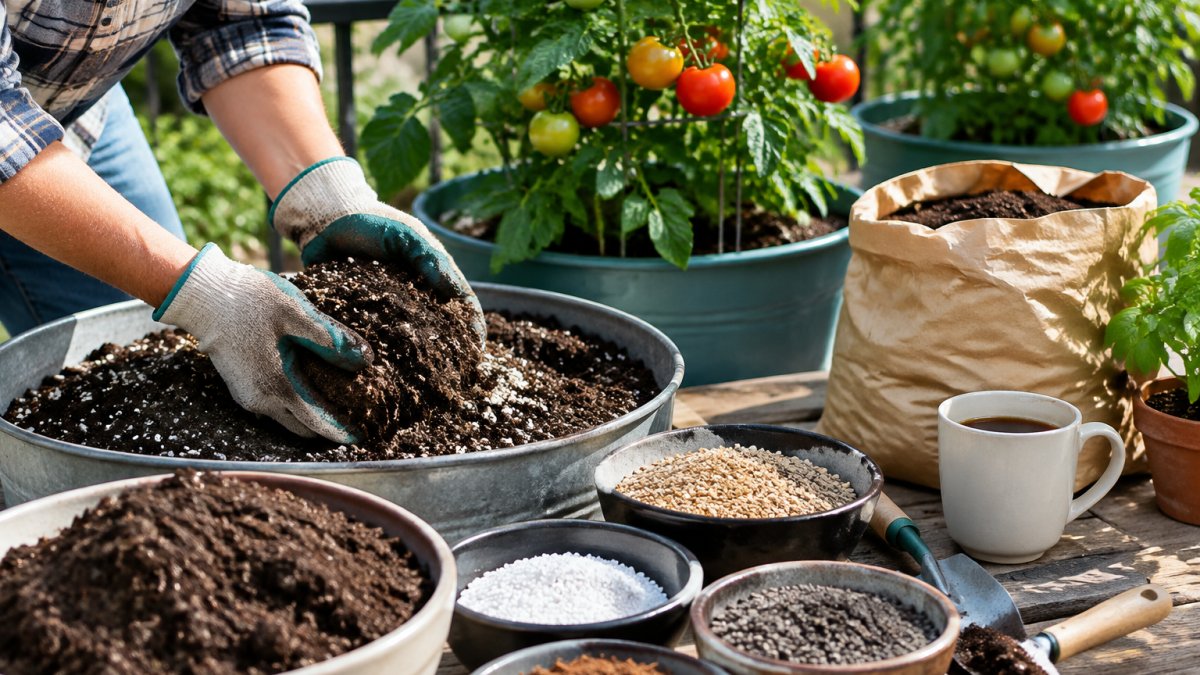
A reliable tomato soil mix ratio for potted tomatoes is roughly two parts base mix, one part compost or worm castings, and a handful of perlite per pot. That balance gives you drainage, moisture retention, and food in one go.
Think of it as a starting point, not a law. The right ratio shifts with your climate and your pot.
Here is how the three jobs split up:
| Ingredient | Job in the pot | Rough share |
|---|---|---|
| Bagged potting mix or coir | Base structure and aeration | 2 parts |
| Compost or worm castings | Organic matter and slow food | 1 part |
| Perlite | Drainage and airflow | 1 part |
| Vermiculite | Extra water-holding capacity | Small handful |
A common mistake is skipping perlite to save a few dollars. The mix then packs down by midsummer and roots suffocate.
A Simple Tomato Soil Mix Recipe by Container Size
Here is our tomato soil mix recipe, scaled to the pot you actually own. Measure with a scoop, a coffee can, or a small bucket, and keep the same scoop for every part.
For a small pot, around 5 gallons:
- 4 scoops potting mix
- 2 scoops compost or worm castings
- 1 scoop perlite
- 1 small handful of organic fertilizer
For a medium pot, around 10 gallons, double everything. For a large pot, around 20 gallons, quadruple it.
Mix it in a tub or on a tarp until the color is even. Then wet it, squeeze a fistful, and open your hand. It should hold shape for a second and crumble when you poke it. That is the texture you want.
If you are working with smaller pots, our guide to growing tomatoes in small containers covers watering and root space in more detail.
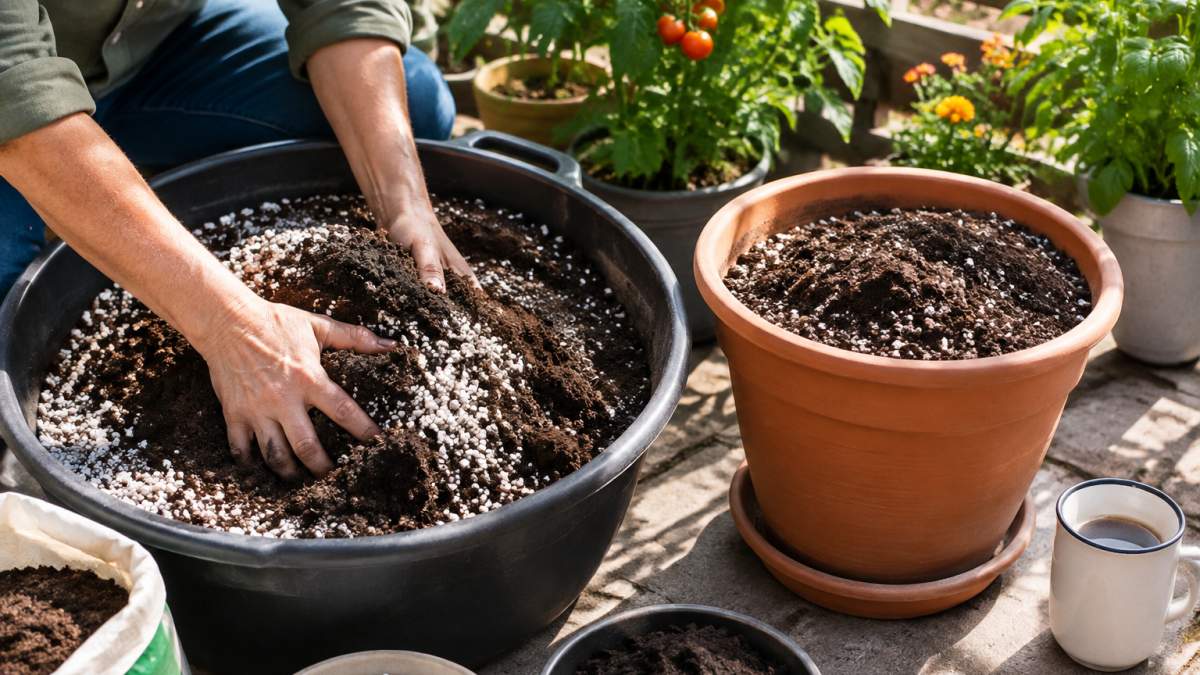
For a deeper walk-through of building better ground, see our step-by-step guide on how to amend soil for Southern vegetables.
Watch out: do not fill the pot to the brim. Leave a couple of inches of rim so you can water without washing the mix over the side.
The Best Soil Amendments for Container Tomatoes
The best soil amendments for container tomatoes are the ones that fix what your starting mix lacks. Compost, worm castings, perlite, vermiculite, and coconut coir cover most needs, and a balanced fertilizer handles the rest.
Start by reading your bag. A lightweight soilless mix that feels fluffy and lists perlite or bark is already halfway there.
Tomato - Heritage Cottage Orange →
Here is how the main amendments compare on the jobs that matter in a pot:
| Amendment | Nutrient contribution | Drainage effect | Water retention | Potential drawback |
|---|---|---|---|---|
| Compost | Moderate, slow-release | Improves structure | Good | Too much makes mix heavy and soggy |
| Worm castings | Gentle, moderate | Slight improvement | Good | Low nutrient density alone; costly in bulk |
| Perlite | None | Strong improvement | None | Dusty when dry; floats in heavy watering |
| Vermiculite | None | Slight improvement | Strong | Can keep mix too wet in humid weather |
| Coconut coir | None | Moderate improvement | Strong | Needs pre-soaking; can hold salts |
| Peat moss | None | Moderate improvement | Strong | Acidic; dries out and resists rewetting |
Compost is decayed organic matter that feeds soil life and holds moisture. Use it as your main amendment, but keep it to about a third of the mix.
Worm castings are a gentle, nutrient-rich amendment that will not burn seedlings. Because castings support the soil life that helps break down organic matter, pairing them with a balanced feed is a practical way of improving soil microbial health.
Perlite is popped volcanic rock. It looks like white styrofoam and does the quiet work of aeration and drainage.
Vermiculite holds water and nutrients. A small handful per pot helps in hot, dry weather, but in a humid climate it can keep the mix too wet.
Coconut coir is shredded coconut fiber. It holds water well and is a fine substitute for peat. It breaks down slowly, so it keeps structure for a season.
Then there is fertilizer. A balanced fertilizer supplies nitrogen for leaves, phosphorus for roots and fruit, and potassium for ripening. A slow-release fertilizer at planting plus a liquid feed later covers most of the season.
On soil pH, tomatoes generally do well in a slightly acidic range, and most bagged mixes land close to that already.
Watch out: adding lime or sulfur to adjust pH without a test can push the mix too far in either direction and lock up nutrients.
Growing Tomatoes in Pots for Beginners: Timing and Upkeep
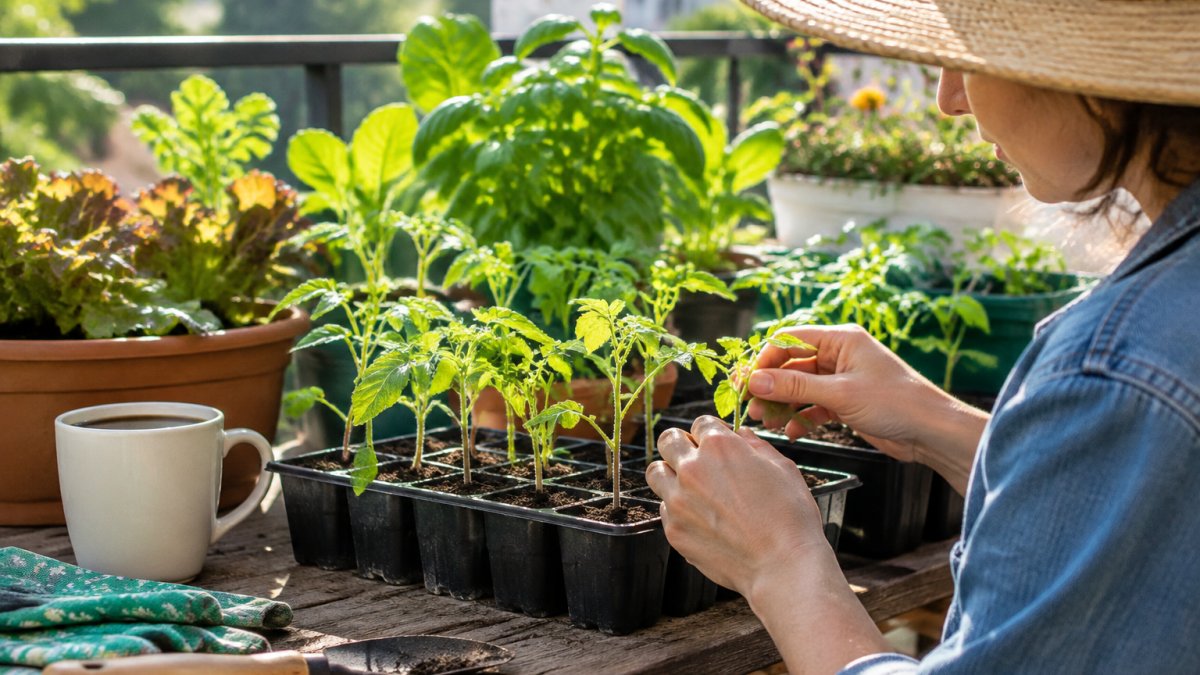
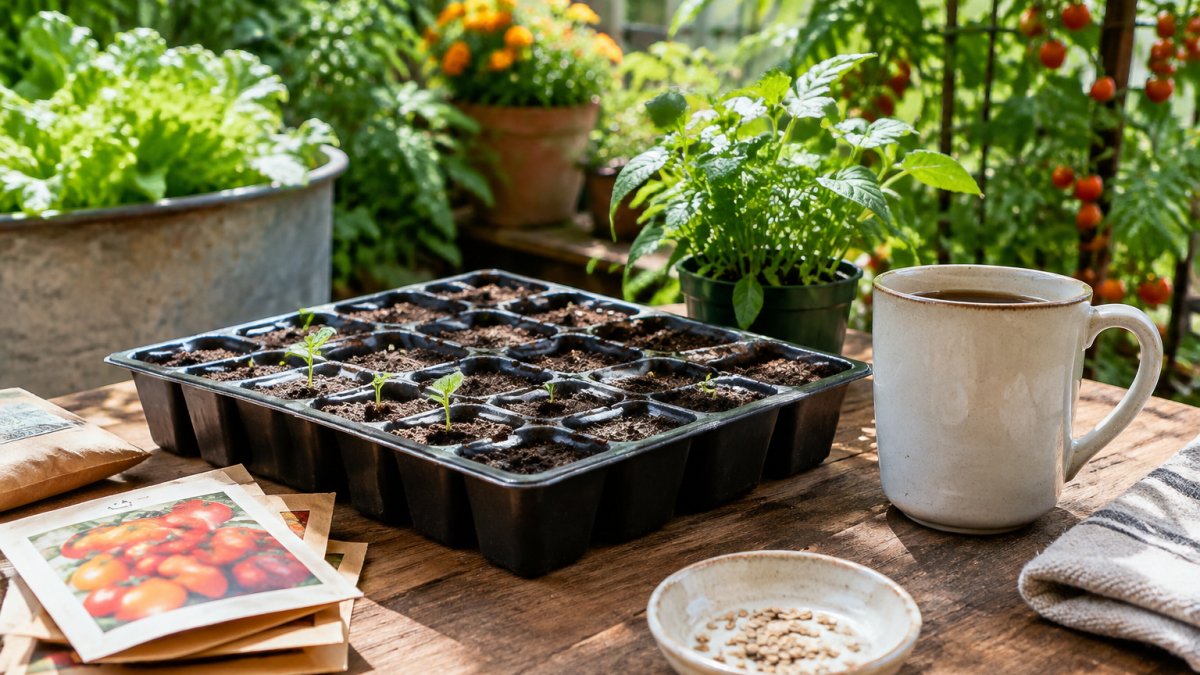
Growing tomatoes in pots for beginners comes down to timing and a light weekly routine. Start seeds indoors several weeks before your last expected frost, then move plants out once nights stay warm.
Here is a simple season checklist:
- Start seeds indoors under bright light
- Harden plants off over a week before planting out
- Set one plant per pot with a stake or cage in place
- Water when the top inch of mix feels dry
- Feed every couple of weeks once fruit sets
- Top-dress with compost midseason
- Remove lower leaves that touch the mix
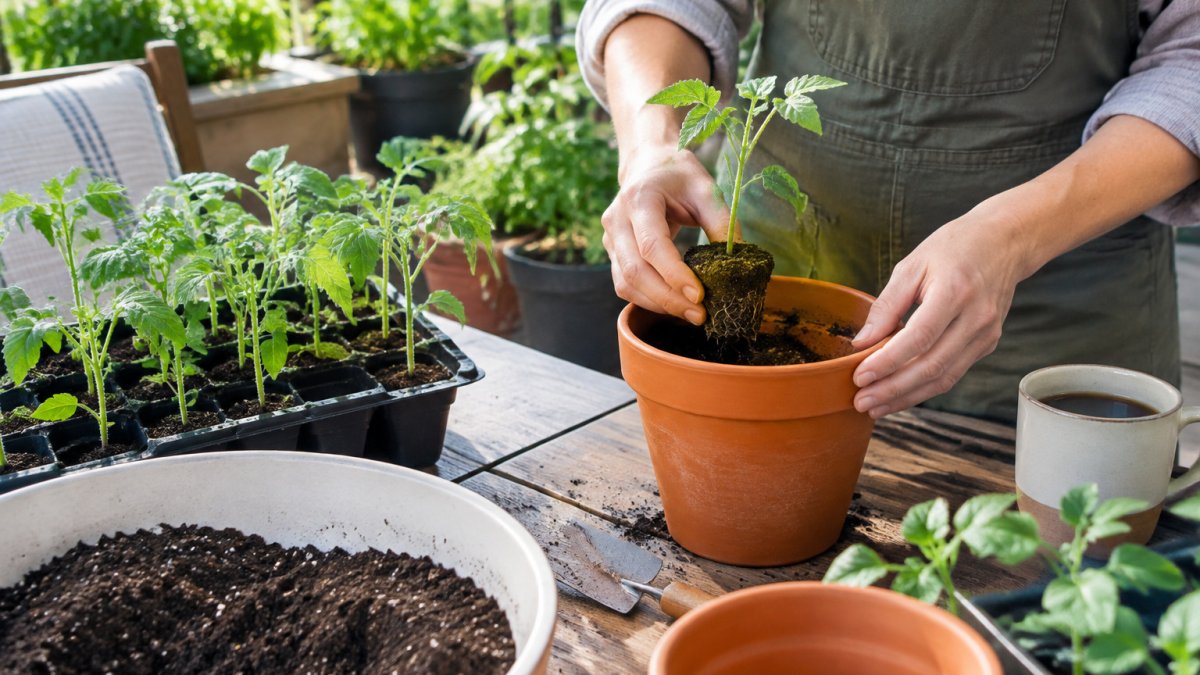
Before planting, incorporate all the slow-release amendments: compost, worm castings, perlite, and any granular fertilizer. These need to be mixed through the whole pot, not just sprinkled on top, so roots can reach them as they grow.
During the season, the routine shifts to top-dressing and liquid feeding. Container plants are watered frequently, and every watering pushes soluble nutrients out the drainage holes. That leaching is the main reason container tomatoes need more consistent feeding than garden tomatoes.
Watering frequency depends on pot size, heat, and wind. Small pots in full sun may need water daily. Large pots may go two or three days. Self-watering containers can stretch that further, but they still need checking, because the reservoir can run dry during a hot spell.
Watch out: watering a little every day keeps roots shallow and leaves the lower mix dry. Water deeply until it runs out the bottom, then let the top inch dry before watering again.
Midseason maintenance also includes refreshing the mix surface. If the mix has compacted or sunk, top it off with fresh potting mix rather than garden soil.
For a full seasonal plan, our Southern tomato growing guide walks through planting dates and upkeep step by step. Mississippi State University Extension publishes container vegetable gardening resources for Southeastern growers.
Pick a Container-Friendly Variety and Get Planting
Compact, determinate varieties make the best container tomatoes because they stay small and ripen a concentrated crop. Micro-dwarf types go even further, fruiting at windowsill size.
Our Heritage Cottage Orange is a determinate slicer that reaches 3 to 4 feet and suits containers and small-space gardens. For tighter spots, the micro-dwarfs are hard to beat.
- Orange Hat grows 8 to 12 inches tall with sweet, low-acid orange fruit
- Hardin's Miniature stays 6 to 10 inches with bright red cherries
- Rosy Finch reaches 10 to 14 inches with rosy-pink cherries
- Hahm's Gelbe gives heavy yields of mild yellow fruit
Each packet runs $4.00 and holds 20 to 25 seeds. You can browse the micro dwarf tomato varieties and pick a color you like.
If striped fruit catches your eye, this guide to growing unique striped tomatoes in pots shows how to work them into a container plan.
Frequently Asked Questions
What is the best soil mixture for growing container tomatoes?
Start with a quality bagged potting mix, not garden soil. A blend of about 60 percent potting mix, 20 percent compost, and 20 percent perlite gives you drainage, moisture retention, and nutrients in one go. For a 5-gallon pot, that works out to roughly 3 gallons of potting mix, 1 gallon of compost, and 1 gallon of perlite. Skip the garden soil, which compacts in containers and starves roots of air.
How much compost should I add to potting mix for tomatoes?
Aim for about 20 percent compost by volume. In a 5-gallon container, that is roughly 1 gallon. Compost adds organic matter and slow-release nutrients, but too much makes the mix heavy and holds excess water. If your compost is rich and dark, stay closer to 15 percent. If it is lean and woody, 25 percent is fine. Mix it evenly through the potting mix rather than layering it on top.
Can I use garden soil in a container tomato mix?
No, garden soil is a poor choice for containers. It compacts under watering, which squeezes out the air pockets roots need and slows drainage. It also can carry weed seeds and soil-borne diseases. Use a soilless potting mix as your base instead, then add compost and perlite to build structure. If you want to stretch your mix, use coconut coir rather than garden soil.
How often should I feed tomatoes growing in containers?
Start with a balanced slow-release fertilizer mixed into the potting mix at planting. Once fruit sets, switch to a liquid organic fertilizer every two to three weeks, since container plants lose nutrients to watering. Watch the leaves: pale yellow lower leaves usually mean nitrogen is running low. Top-dress with a handful of compost midseason, and water consistently so nutrients stay available.
Your mix is the foundation, but the seed decides what you actually get to eat. Start with a potting mix that drains, amend it to fit your climate, and choose a variety bred for the space you have. Heritage Cottage Seeds offers compact, container-ready tomato seeds with 20 to 25 seeds per packet, plus growing guides to help you plan the season. Search our collection and plant something worth waiting for.