 listicle
7 Science-Loving Gardening Books for Curious Kids
Last Updated: October 30, 2026
Quick Summary
The best gardening books for kids who love science are picture books and guides that explain what they see as plants grow, such as A Seed Is Sleepy and How a Seed Grows for ages 4 to 8. Choose books with clear science vocabulary, a hands-on activity in each chapter, and real plants your family can grow in containers. Pairing each book with a simple experiment, like a bean sprout in a clear cup, turns reading into observation.
- Match the book to your child's age and reading level, from picture books for ages 3 to 7 to guides for ages 5 to 9.
- Look for clear science vocabulary, a small activity in each chapter, and real vegetables and herbs.
- Soak bean seeds overnight, then cut one open to find the tiny leaves folded inside.
- Plant one bean in a clear cup with a damp paper towel so roots are visible, and keep a dry control cup.
- Bush beans sprout in about a week, and radishes mature in roughly 25 to 30 days.
Table of Contents
- Why Gardening Books Work So Well for Science-Minded Kids
- How to Choose a Gardening Book for Your Young Scientist
- Best Gardening Books About Seeds for Kids
- Plant Science Books for Kids Who Want to Know How Things Grow
- Easy Vegetables to Grow with Kids, Paired with Book Ideas
- Gardening Activities for Children That Turn Reading into Experiments
- Start Your Own Young Scientist Garden with Heritage Cottage Seeds
- Frequently Asked Questions
Growing up, my kids always wanted to know why the tomato plant leaned toward the window or where the worms went after a rain. If your child is the one asking those questions, you already know that gardening is one of the best science classes you can offer at home. The right book turns a bed of beans or a row of lettuce into a hands-on lab. Here is how to pick reading that matches a curious young scientist, with a Southeast-friendly slant and plenty of ideas for container gardens. For a broader comparison of titles, see our guide to the best gardening books for children.
Why Gardening Books Work So Well for Science-Minded Kids
Gardening is observation in motion. A seed swells, a root pushes down, a leaf unfolds, and a child can watch every step happen over days. Good gardening books name what the child is seeing and explain why it happens.
That connection matters. Children remember a fact far better when they have just seen it with their own eyes. A book that explains photosynthesis while the bean sprout is sitting on the windowsill does more than a worksheet ever could.
Extension programs are a good place to check what works. Mississippi State University Extension Service gardening resources publishes practical, research-backed guidance on growing vegetables in containers, and many of the same principles translate directly into kid-friendly reading.
How to Choose a Gardening Book for Your Young Scientist
Start with your child's age and attention span. A picture-heavy book with one idea per page suits a preschooler. An older child may want diagrams, vocabulary, and experiments they can run alone.
Look for three things:
- Clear science vocabulary. Words like germination, pollination, and chlorophyll should be explained in plain language.
- Something to do. The best books end each chapter with a small activity, like measuring how fast a sprout grows.
- Real plants. Books that feature vegetables and herbs your family can actually grow are far more useful than generic flower pictures.
Skip books that only offer pretty pictures and no explanation. A curious kid will ask "why?" within five pages, and you want the book to have an answer.
Best Gardening Books About Seeds for Kids
Seeds are the easiest starting point for a young scientist. A single bean seed holds a complete plant inside, and most children can watch one sprout within a week. Seed-focused books usually cover parts of a seed, how water and warmth trigger germination, and how seeds travel. If you are also planning a year-round harvest, browse year-round Southern vegetable growing books.
Here are solid picks, sorted by who they suit best, with the science each one supports:
- A Seed Is Sleepy by Dianna Hutts Aston, illustrated by Sylvia Long, Best for ages 4-8 and read-aloud. A lyrical picture book that introduces dormancy, germination, and seed dispersal. The painted illustrations reward close looking, and the back matter gives parents the vocabulary to answer "why?" questions. Science focus: seed structure, life cycles, dispersal.
- How a Seed Grows by Helene J. Jordan, illustrated by Loretta Krupinski, Best for ages 4-8 and early readers (Let's-Read-and-Find-Out Science, Level 1). A step-by-step account of planting a bean and watching it sprout, with simple diagrams. Science focus: germination, plant parts, observation.
- The Tiny Seed by Eric Carle, Best for ages 3-7 as a read-aloud. A storybook that follows one seed through wind, water, and seasons. It is fiction, but it seeds real questions about why some seeds survive and others do not. Science focus: dispersal, survival, seasonal change.
- From Seed to Plant by Gail Gibbons, Best for ages 5-9 and independent readers. Clear diagrams and straightforward text cover pollination, seed formation, and dispersal. Science focus: plant life cycle, pollination, seed travel.
- Planting the Wild Garden by Kathryn O. Galbraith, illustrated by Wendy Anderson Halperin, Best for ages 5-9. A quiet, detailed look at how seeds move without a gardener, wind, water, animals, and people. Science focus: dispersal mechanisms, ecology.
Pair any seed book with a simple test. Soak a few bean seeds overnight, cut one open, and look at what is inside. Kids love finding the tiny leaves folded inside. For a container-friendly version, plant one bean in a clear plastic cup with a damp paper towel against the side so roots are visible, and keep a second cup dry as a control. That single setup covers germination, variables, and record-keeping in one windowsill project.
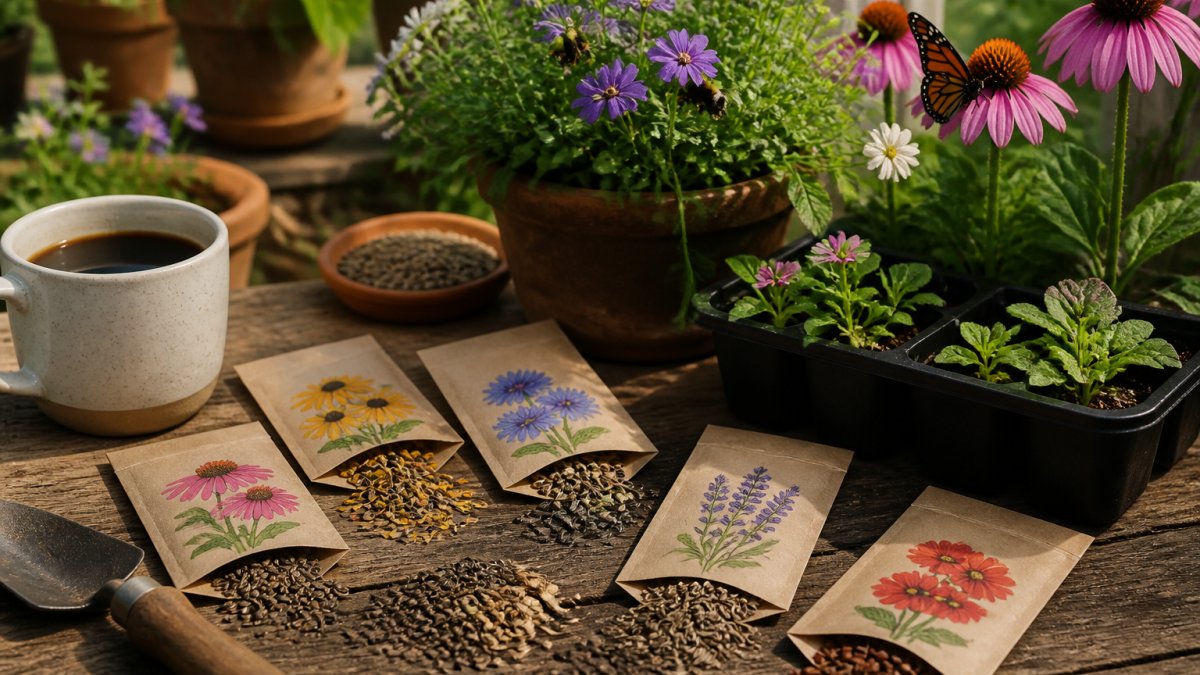
For seed selection itself, the goal is picking varieties that reward a beginner. Heritage Cottage Seeds carries a range of heirloom varieties, and many families start with large, fast-sprouting seeds like beans and sunflowers because they give quick, visible results. Once your seeds are chosen, see which grow lights help with indoor seed starting.
Here is a quick side-by-side of the seed books covered above, so you can match each one to your child's age and reading level.
| Book | Best for | Science focus |
|---|---|---|
| A Seed Is Sleepy | Ages 4-8, read-aloud | Seed structure, life cycles, dispersal |
| How a Seed Grows | Ages 4-8, early readers | Germination, plant parts, observation |
| The Tiny Seed | Ages 3-7, read-aloud | Dispersal, survival, seasonal change |
| From Seed to Plant | Ages 5-9, independent readers | Plant life cycle, pollination, seed travel |
| Planting the Wild Garden | Ages 5-9 | Dispersal mechanisms, ecology |
Plant Science Books for Kids Who Want to Know How Things Grow
Once a child understands seeds, the next questions are about roots, stems, leaves, and flowers. Plant science books for this stage explain how plants drink water, why leaves face the sun, and how flowers become fruit. This is also where life cycles come in.
Southern Gardening All Year Long →
A science-first list should tell you what each book actually teaches. Here is a short, age-sorted set with the concept each one supports:
For the parent who wants a reliable reference on the shelf, Southern Gardening All Year Long is a common-sense, month-by-month guide written for Southern growing conditions. It is conversational, more like chatting with a knowledgeable neighbor over the fence. You can find it at [Southern Gardening All Year Long | heritagecottageseeds.com], priced at $20.00. Such practical wisdom naturally extends beyond the vegetable patch to the broader ecosystem, where observing local pollinators provides a fascinating window into the intricate life cycles unfolding right in your own backyard.
For research-backed background, the Mississippi State University Extension Service gardening resources publishes practical guidance on growing vegetables in containers, and much of it translates directly into kid-friendly explanations.
Pair each book with one observation. Put a potted bean on a sunny sill and another in a dim corner, then measure height each week and record leaf color. That single light test turns a chapter on photosynthesis into something your child can see, and it works in a container garden where space is tight.
Easy Vegetables to Grow with Kids, Paired with Book Ideas
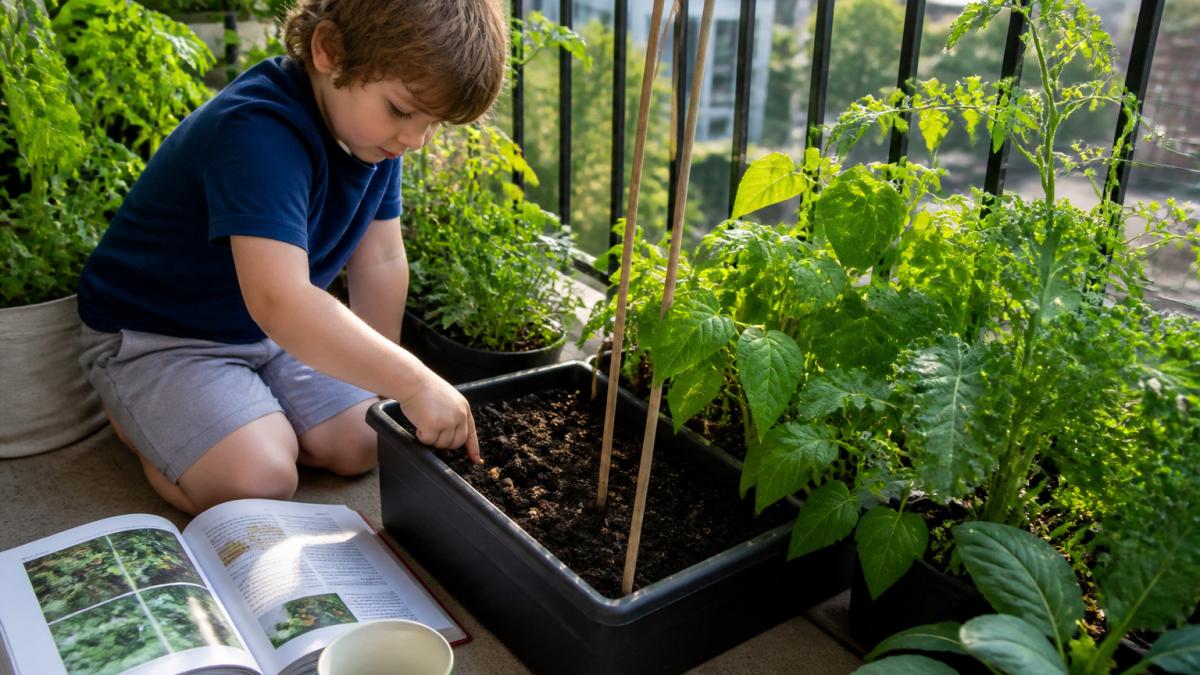
Kids are far more interested in a plant they can eat. Choose vegetables that sprout fast and grow well in containers, especially if you garden on a balcony or patio.
Good starter crops include:
- Bush beans, which sprout in about a week
- Radishes, which mature in roughly 25 to 30 days (Tips)
- Lettuce and other leafy greens, which can be picked as they grow
- Cherry tomatoes, which teach kids about flowers turning into fruit
Match each crop with a book activity. While the radishes grow, have your child draw the leaves each day and note the changes. The book's explanation of photosynthesis suddenly makes sense when the child sees the plant respond to a sunny windowsill.
Gardening Activities for Children That Turn Reading into Experiments
Reading is only half the lesson. The other half is testing what you read. Try one experiment per chapter:
- Sprout race. Plant beans in a clear cup with a damp paper towel so kids can watch roots form.
- Light test. Place one pot on a sunny sill and another in a dim spot. Measure height each week.
- Water test. Water one plant daily and another twice a week, then compare leaf color and soil moisture.
- Seed hunt. Open a dry bean or pea pod and count the seeds inside.
Keep a simple notebook. Have your child write a prediction before each step, then record what actually happened. Predicting and checking is the heart of real science, and a notebook makes the progress visible.
Start Your Own Young Scientist Garden with Heritage Cottage Seeds
You do not need a big yard. A single sunny container, a bag of potting mix, and a packet of seeds are enough to start. Heritage Cottage Seeds offers heirloom vegetable and pepper seeds for home gardeners.
Pick one book, one seed packet, and one experiment this week. Your child will tell you what to do next. Browse the seed selection at Heritage Cottage Seeds and bring home something you can both watch grow.
Frequently Asked Questions
What are the best gardening books for kids who love science?
The strongest picks for science-minded kids explain the why behind growing, not just the how. Look for books that cover seed germination, plant parts, pollination, and life cycles, and that include simple experiments or observation prompts. Pair a reading-level-appropriate book with a small hands-on project, such as sprouting beans in a clear cup or tracking how fast a seedling grows each week. This combination turns a bedtime read into a repeatable investigation, which is what keeps curious kids engaged over a full growing season.
What can children learn from gardening books?
Gardening books teach children how plants get water and light, why soil matters, how flowers become fruit, and how seeds travel to new places. They also build vocabulary like germination, roots, stems, and pollinators, and they show how to make careful observations and keep notes. For kids in the Southeast, books that mention local seasons and common crops such as tomatoes, beans, and squash make the science feel relevant to their own backyard or container garden.
How can I teach kids about gardening at home?
Start small with a container, a windowsill tray, or a single raised bed. Let your child choose one fast-growing vegetable, such as radishes or bush beans, and keep a simple journal of planting dates, watering, and weekly height measurements. Mississippi State University Extension offers practical guidance for growing vegetables in containers, which is useful for apartment and patio gardeners. Keep expectations loose and celebrate small wins, since a few seeds that fail are part of the lesson too.
Which gardening books explain how seeds grow?
Look for books with clear diagrams of a seed's parts and step-by-step illustrations of germination, from water absorption to the first leaves appearing. Picture-rich nonfiction works best for younger readers, while older elementary kids often enjoy books with more detailed explanations and simple experiments. Pair any seed book with a bean-in-a-bag activity so children can watch the sprout develop and compare what they read with what they see.