 how-to
Can You Grow Hibiscus in Southern Container Gardens?
Last Updated: October 29, 2026
Quick Summary
Growing hibiscus in southern container gardens works well because the South's long, hot summers and heavy humidity suit both tropical and hardy types. Use a pot at least 14 to 16 inches across for tropical hibiscus and 20 inches or more for hardy hibiscus or Confederate Rose. Pots let you control soil, manage afternoon sun, and move tropical plants indoors before frost.
- Choose pots with large drainage holes and skip dark pots in full sun, since black plastic gets dangerously hot.
- Water deeply until it runs from the drainage holes, and empty saucers after an hour so roots do not sit in water.
- Give hibiscus full sun of six or more hours a day, with afternoon shade in the Deep South.
- Stop fertilizing in late summer so new growth hardens off before cool weather arrives.
- Move tropical hibiscus indoors or into a cool garage before the first frost.
Table of Contents
- Why Hibiscus Belongs in a Southern Container Garden
- Choosing the Best Pot Size for Hibiscus
- How to Care for Tropical Hibiscus in Pots
- Watering Hibiscus in Containers Through Southern Heat
- Sun, Humidity, and Afternoon Shade
- Feeding for Foliage and Bigger Blooms
- Pruning, Shaping, and Seasonal Cleanup
- Overwintering Hibiscus in Pots
- Frequently Asked Questions
Why Hibiscus Belongs in a Southern Container Garden
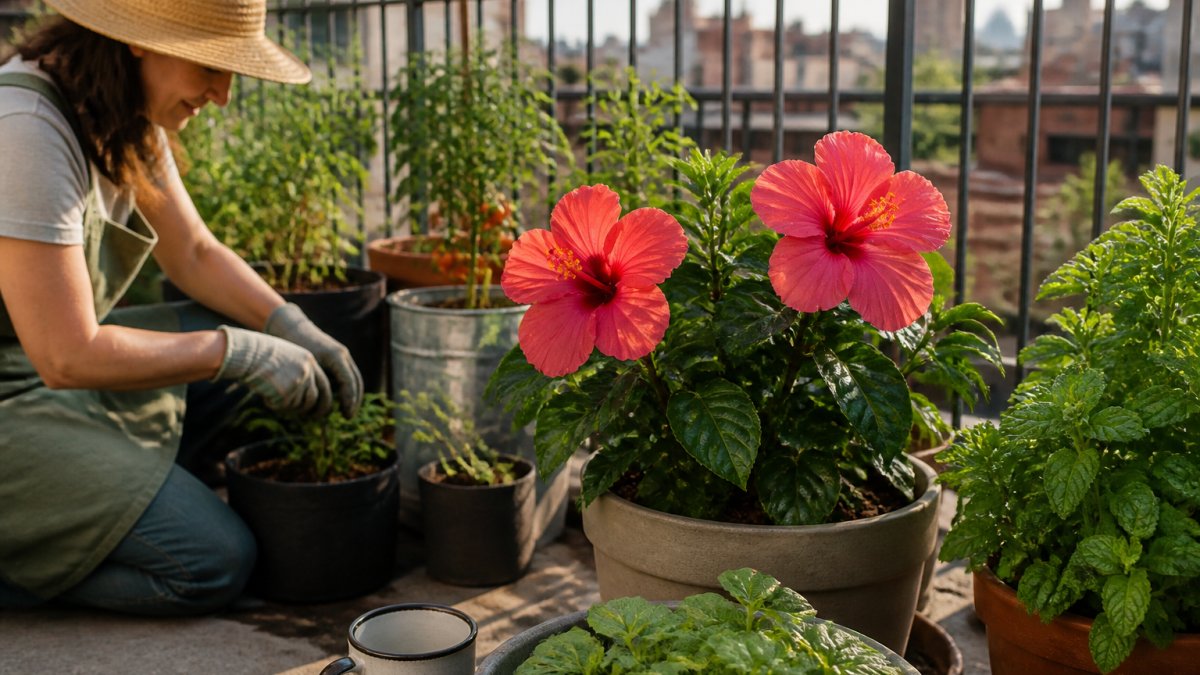
Growing hibiscus in southern container gardens works because the South gives these plants exactly what they crave: long, hot summers and heavy humidity. Both tropical and hardy hibiscus love that combination. A pot lets you control the soil, move the plant out of a harsh afternoon sun pocket, and bring it through winter without gambling on the ground freezing.
If you want to try hibiscus, our White Texas Star hibiscus has white flowers with contrasting red centers. For color-changing flowers, the Confederate Rose hibiscus opens creamy white, blushes pink, and deepens to rosy red.


One caution before you start: hibiscus in pots is thirsty, and a pot that dries out on a July afternoon can drop every bud it has. Plan for water first, everything else second.
Choosing the Best Pot Size for Hibiscus
The best pot size for hibiscus is bigger than most people expect. A tropical hibiscus needs a pot at least 14 to 16 inches across. A hardy hibiscus or a Confederate Rose, which can grow into a large shrub, wants something closer to 20 inches or more. But in the South, size is only half the story, what the pot is made of and how it handles heat matters just as much.
Why so big? Big pots hold more soil, and more soil holds more water. In Southern heat, a small pot bakes through in a day. A 14-inch pot might need watering twice daily in July, while a 20-inch pot can stretch to once a day. The difference is root-zone temperature: smaller pots heat up faster and stay hotter longer, stressing roots and inviting rot when you try to compensate with extra water.
A few rules we follow:
- Pick a pot with large drainage holes, not one tiny hole. Two or three finger-sized holes beat a single pencil hole every time.
- Skip dark pots in full sun; black plastic gets dangerously hot. Light-colored resin or glazed ceramic stays cooler.
- Set the pot on bricks or pot feet so water drains freely and air circulates underneath.
- Go one size up when repotting, not three. Jumping to a much larger pot leaves soggy soil around the roots.
Material and Drainage Choices for Hot Weather
Glazed ceramic and thick resin hold moisture best in heat. Terracotta breathes well but dries fast, so it needs more watering, sometimes twice a day in a Southern July. Whatever you choose, drainage holes matter more than material. A beautiful pot with poor drainage will drown your hibiscus.
Fabric grow bags are worth a look for beginners. They air-prune roots and dry out faster, which helps prevent root rot during rainy spells, but they also demand more frequent watering. If you tend to overwater, a fabric bag can be forgiving; if you tend to underwater, stick with glazed ceramic.
One more Southern-specific note: avoid pots that taper sharply toward the bottom. They leave a perched water table that stays soggy even when the top looks dry. Straight-sided or slightly tapered pots drain more evenly.
For more on container basics, our guide on starting a container herb garden with basil walks through the same potting principles.
How to Care for Tropical Hibiscus in Pots
Learning how to care for tropical hibiscus in pots comes down to three things: good soil, steady moisture, and sun with a break from the worst heat. Tropical hibiscus is not frost hardy, so in most of the South it lives in a pot year-round and comes indoors or into a garage for winter (Tropical hibiscus makes late summer color splash).
Potting Mix and Planting Day
Use a quality potting mix, not garden soil (Subirrigated Containers for the Mississippi Gardener). Garden soil compacts in a pot and suffocates roots. Look for a mix that drains well but still holds moisture.
On planting day:
- Fill the pot partway with mix
- Set the root ball so the top sits an inch below the rim
- Backfill and press gently, never pack hard
- Water thoroughly until it runs out the bottom
If you are new to container growing, our guide on starting a container herb garden with basil walks through the same potting basics.
Watering Hibiscus in Containers Through Southern Heat
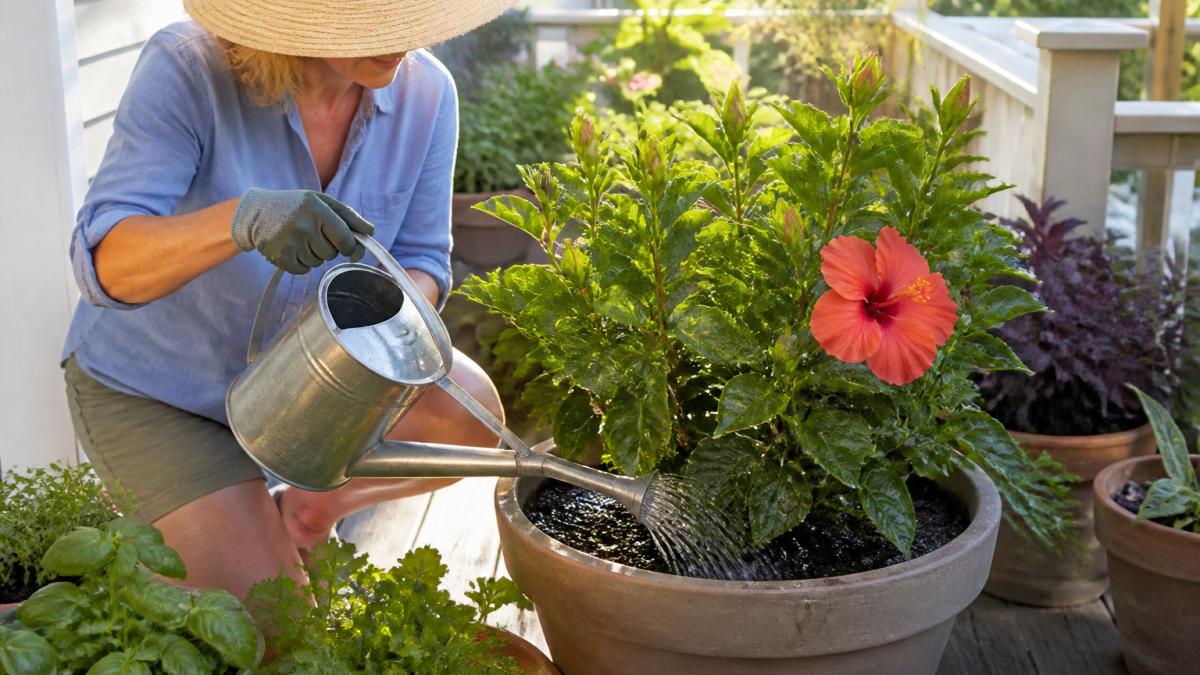
Watering hibiscus in containers is the make-or-break job. In summer, a potted hibiscus may need water every day, sometimes twice on a brutal day. Check the top inch of potting mix with your finger. Dry there means water now.
Water deeply until it runs from the drainage holes. A saucer under the pot catches runoff, but empty it after an hour so roots do not sit in water. Soggy soil invites root rot, and root rot kills faster than drought.
For more on beating the heat, read our guide on protecting plants from Southern heat.
Sun, Humidity, and Afternoon Shade
Hibiscus wants full sun, meaning six or more hours a day (Perennial hardy hibiscus bring color and charm). Morning sun is gold. Afternoon shade is a gift in the Deep South, where a west-facing wall can scorch leaves and wilt buds by mid-afternoon.
Humidity helps hibiscus rather than hurting it. The tradeoff is fungal trouble when air sits still. Space pots apart and water at the soil line, not over the leaves.
Feeding for Foliage and Bigger Blooms
Fertilizer keeps hibiscus blooming, but too much nitrogen gives you a leafy plant with no flowers. Use a balanced or bloom-focused fertilizer every few weeks through the growing season. Stop feeding in late summer so new growth hardens off before cool weather.
Watch out: overfeeding causes salt buildup in the pot. Flush the soil with plain water occasionally.
Pruning, Shaping, and Seasonal Cleanup
Pruning hibiscus keeps plants full and controls size. Trim leggy growth in early spring before new growth starts. Pinch tips through early summer for a bushier shape. Cut spent blooms to encourage more flowers.
Clean up fallen leaves and petals. They harbor pests and disease. Check the undersides of leaves for whiteflies and aphids, the two most common hibiscus pests in containers.
Overwintering Hibiscus in Pots
Overwintering hibiscus in pots depends on the type and where you garden. Hardy hibiscus can stay outside in most of the South, mulched and sheltered. Tropical hibiscus cannot take frost, so move it indoors, into a garage, or onto a protected porch before the first cold night. But the timing and the transition matter as much as the destination.
Here is a month-by-month guide for Southern container growers:
- September: Stop fertilizing to encourage hardening off. Reduce watering slightly as growth slows.
- October: Watch nighttime temperatures. When lows consistently dip below 50°F, start planning to move tropical hibiscus. Hardy types can stay out but begin tapering water.
- November: Move tropical hibiscus indoors or into a garage before the first frost. A cool garage (40-50°F) is ideal, bright enough to keep leaves on, cool enough to slow growth. Hardy hibiscus can stay outside; mulch the pot or wrap it if a hard freeze is forecast.
- December-February: Water sparingly, just enough to keep soil from bone dry. No fertilizer. Check for pests like whiteflies and aphids, which thrive indoors.
- March: Begin acclimating tropical hibiscus back outdoors. Start with a sheltered spot for a few hours a day, gradually increasing sun exposure over two weeks. Hardy hibiscus may show new growth; prune dead stems.
- April: Move tropical hibiscus to its summer spot once nights stay above 50°F. Resume regular watering and feeding.
A common pattern in the Upper South is to treat tropical hibiscus as a summer annual and let it go at season's end, while coastal and Deep South gardeners can keep plants going for years with garage or porch wintering. Either approach works, just decide early so you are not scrambling on the first frost warning.
Cut back watering in winter. The plant is resting, and wet soil in cool weather is a recipe for rot. Bring it back out gradually in spring. For year-round Southern gardening guidance, Southern Gardening All Year Long is a helpful companion.
| Hibiscus Type | Pot Size | Winter Care | Sun Needs |
|---|---|---|---|
| Tropical hibiscus | 14-16+ inches | Move indoors before frost | Full sun, afternoon shade |
| Hardy hibiscus | 20+ inches | Can stay outside, mulched | Full sun |
| Confederate Rose | 20+ inches | Shelter or move in cold snaps | Full sun |
Frequently Asked Questions
How often should you water potted hibiscus in hot weather?
In Southern summer heat, a potted hibiscus may need water once or even twice a day, especially in a small pot or full afternoon sun. Check the top inch of potting mix with your finger each morning. If it feels dry, water thoroughly until it runs out the drainage holes. Skip the saucer full of standing water, since soggy roots invite root rot. Rainfall helps, but a drenching storm does not cancel the next day's check.
What size pot is best for a hibiscus plant?
Start with a pot at least 12 to 14 inches across for a young plant, and move up to 18 to 24 inches for a mature tropical hibiscus. Bigger pots hold moisture longer, which matters in hot weather, but they also get heavy. Make sure the pot has drainage holes and use a well-drained potting mix. A container that is too small dries out fast and stresses the roots.
Can you overwinter tropical hibiscus in a pot outdoors?
Tropical hibiscus cannot survive freezing temperatures, so in most Southern zones you need to move pots indoors or into a garage before the first frost. Cut back on watering and stop fertilizing through winter. Hardy types like Texas Star hibiscus can stay outside in the ground or a pot in many areas, but tropical varieties need protection. Bring them back out gradually in spring once nights stay warm.
How much sun does a container hibiscus need?
Hibiscus wants full sun, at least six hours a day. In the South, morning sun with a little afternoon shade is often kinder during the hottest weeks, since reflected heat off pavement can scorch leaves and dry pots fast. Watch your plant: lots of foliage and few blooms usually means too much shade, while wilting by midday points to too much heat and not enough water.
Growing hibiscus in southern container gardens rewards you with months of dramatic blooms, but it asks for steady watering and smart pot choices. At Heritage Cottage Seeds, we offer rare and unusual varieties chosen for real gardens, including heat-loving hibiscus and heirloom vegetables for containers. Browse our hibiscus seeds and start your Southern container garden this season.