 how-to
7 Natural Pest Control Methods for Peppers in Home Gardens
Last Updated: October 26, 2026
Quick Summary
Natural pest control for peppers in home gardens starts with identifying the pest damaging your plants, then using the lightest method that solves it. Hand-pick caterpillars at dusk, blast aphids off with water, and apply insecticidal soap or BTK only when needed. Always test sprays on one leaf first and apply in early morning or late evening.
- Check plants in early morning or after dusk, looking under leaves and along stems.
- A strong blast of water knocks aphids off pepper plants and they rarely climb back.
- Spray BTK in the evening so caterpillars feed on treated foliage overnight.
- Test every spray on a single leaf and wait a day before treating the whole plant.
- Rotate crops and avoid planting peppers where peppers or tomatoes grew last year.
Table of Contents
- Start by Identifying the Pest Damaging Your Peppers
- Natural Pest Control for Aphids on Pepper Plants
- How to Get Rid of Caterpillars on Pepper Plants
- Neem Oil for Pepper Plants: How and When to Use It
- 3 Homemade Sprays for Natural Pest Control
- Pepper Plant Pest Prevention: Stop Pests Before They Start
- Choosing the Right Pepper Varieties to Grow
- Frequently Asked Questions
Start by Identifying the Pest Damaging Your Peppers
Something is chewing holes in your pepper leaves, and you want it to stop. Before you mix up a spray or reach for a bottle, take a breath and look closely. Natural pest control for peppers in home gardens starts with one old-fashioned skill: knowing exactly who is eating your plants.
A spray aimed at the wrong bug does nothing, and it can knock out the good bugs working for you.
So grab a flashlight and check your plants in the early morning or after dusk. For a deeper guide to identifying common pests on rare pepper plants, keep a reference handy as you inspect. Look at the undersides of leaves, along the stems, and in the new growth.
Common Pepper Pests and Their Damage Signatures
Each pest leaves a signature. Learn to read it and you'll save yourself a lot of wasted effort.
- Aphids: Tiny pear-shaped bugs clustered on new growth. Leaves curl and look sticky.
- Caterpillars: Big ragged holes in leaves and fruit. You'll often spot dark droppings nearby.
- Beetles: Chewed leaves and flowers, with damage showing up fast.
- Spider mites: Fine webbing and speckled, bronzed leaves.
Natural Pest Control for Aphids on Pepper Plants
These tiny sap-suckers cluster on tender new growth and multiply fast.
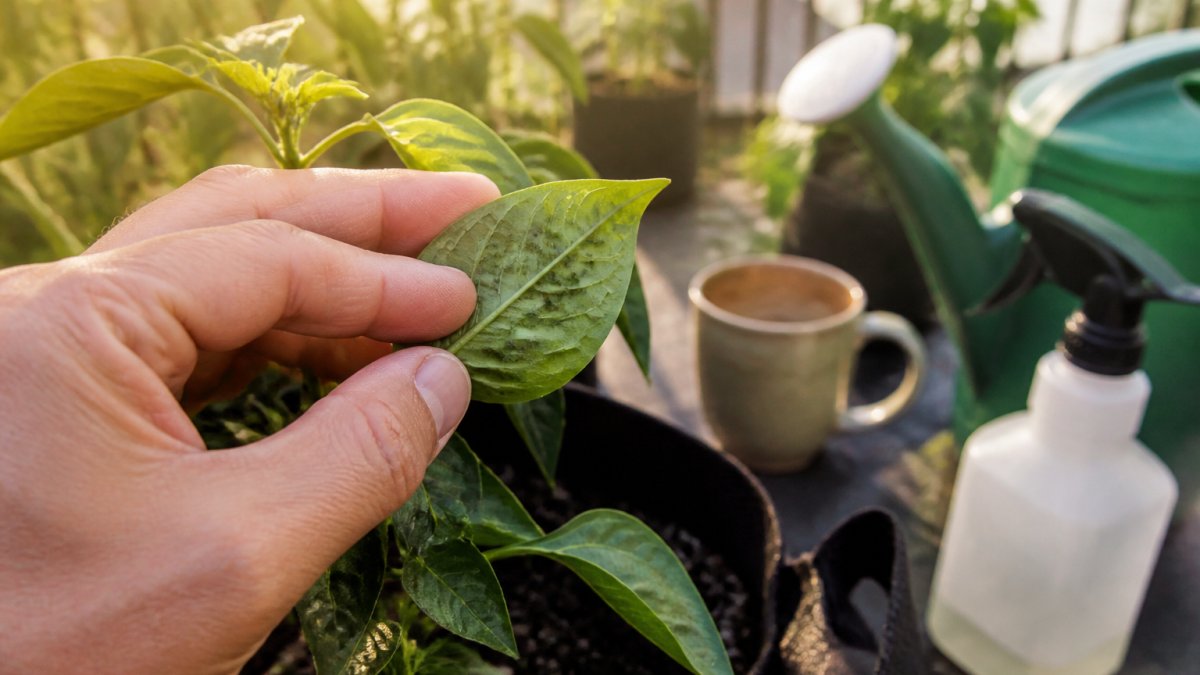
Start with a strong blast of water from the hose. This knocks many aphids off and they rarely climb back. Do it in the morning so leaves dry before evening.
Next, welcome the cleanup crew. Ladybugs and lacewing larvae eat aphids by the dozen. Plant basil, marigolds, or oregano nearby to draw them in.
If aphids persist, a dab of insecticidal soap on the cluster handles them without harsh chemicals. Repeat every few days until they're gone. Watch out: soap sprays can burn leaves in strong afternoon sun, so apply in the cool of the morning or evening.
How to Get Rid of Caterpillars on Pepper Plants
Caterpillars are the heavy chewers. They can strip a pepper plant overnight and leave you wondering what happened. On peppers, the damage usually shows up as ragged holes in leaves, bored fruit with dark droppings nearby, and sometimes missing flower buds. Check at dusk with a flashlight, many caterpillars feed at night and hide in leaf folds or at the stem during the day.
Know Which Caterpillar You Have
Before you spray, match the culprit to the damage. This is the pepper-specific diagnosis step most general guides skip.
- Hornworms (tomato and tobacco): Large, green, with a horn at the tail. They chew big holes in leaves and fruit and leave sizable dark droppings. Hand-pick these, they are easy to spot and remove.
- Armyworms and cutworms: Often found at the soil line or on lower leaves, especially in containers where the soil surface is close to the plant. Cutworms can clip seedlings at the base.
- Fruitworms (corn earworm type): Bore into the fruit near the stem, leaving a small entry hole and frass. Damage often appears right as peppers begin to color.
- Loopers: Chew irregular holes and are common on new growth in warm weather.
Match the Control to the Pest and Severity
Use the lightest touch that solves the problem. This is the decision sequence that keeps you from over-spraying edible plants.
- Light pressure: Hand-pick at dusk and drop caterpillars into a bucket of soapy water. Crush egg clusters on leaf undersides before they hatch. This alone handles most small plantings and container peppers.
- Moderate pressure: Apply Bacillus thuringiensis kurstaki (BTK), a natural bacterium that only harms caterpillars, not people, pets, or pollinators. Spray leaves in the evening so caterpillars feed on treated foliage overnight. They stop feeding within a day or two. Reapply after rain and follow the label interval.
- Heavy pressure or fruit damage: Combine BTK with hand removal and consider row cover or netting on container plants to exclude moths from laying eggs. For container peppers, a lightweight floating row cover draped over a frame works well and is easy to remove for pollination once flowering begins.
Safe Application on Edible Peppers
- Test first. Spray one leaf, wait a day, and check for burn before treating the whole plant.
- Time it right. Evening application reduces pollinator exposure and sun burn risk.
- Respect harvest intervals. Follow the product label's pre-harvest interval, and wash peppers before eating.
- Protect pollinators. BTK is selective, but avoid spraying open flowers; apply when flowers are closed or before bloom.
Pair BTK with hand-picking. Check plants at dusk with a flashlight and drop any caterpillars you find into a bucket of soapy water. It sounds old-school, but it works. Also look for eggs. Caterpillar eggs often show up in clusters on leaf undersides. Crush them before they hatch and you've solved the problem early.
Neem Oil for Pepper Plants: How and When to Use It
Neem oil is a plant-based treatment that disrupts feeding and reproduction in many soft-bodied pests. It's a solid all-rounder for aphids, mites, and whiteflies, but it's not a magic bullet.
Timing matters more than anything. Spray neem in the early morning or late evening, never in the heat of the day. Sun plus oil can scorch leaves.
Always test on a small patch first. Spray one leaf, wait a day, and check for damage before treating the whole plant. This one step saves a lot of heartache.
For a wider look at plant-based options, our guide to organic pest control for heirloom vegetables covers the full toolbox.
3 Homemade Sprays for Natural Pest Control
Homemade sprays are cheap, quick, and satisfying to mix up. But they come with real limits. They wash off in rain, they need repeat applications, and some can burn tender leaves. Test every spray on a single leaf first.
When to Reach for a Spray (and When Not To)
Sprays work best when you have identified the pest and light methods are not enough. Skip sprays when:
- You have not identified the pest, a spray aimed at the wrong bug does nothing and can knock out beneficial insects.
- Plants are in full sun or temperatures are above the mid-80s; oil and soap sprays can scorch leaves.
- Pollinators are active on open flowers; spray in early morning or late evening.
- Rain is expected within a few hours; the spray will wash off.
Garlic Spray
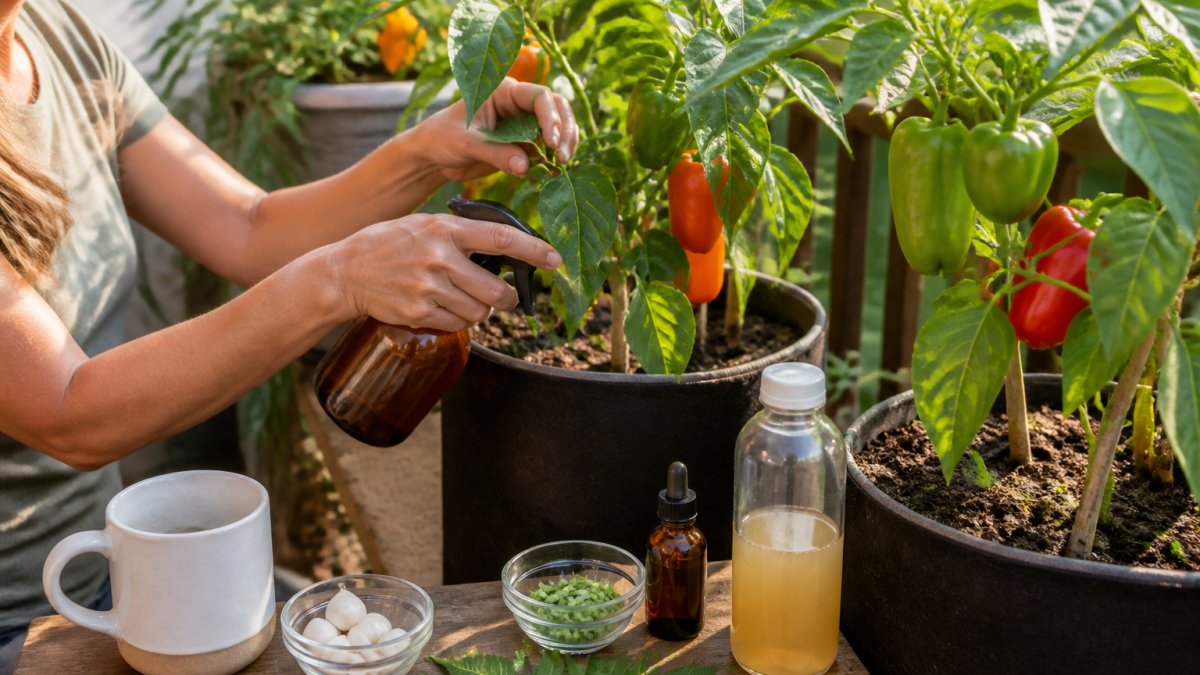
Garlic spray repels aphids and many beetles. Mince a few cloves, soak them in water overnight, strain, and dilute before spraying. The sulfur compounds do the work. Reapply after rain. Keep it away from your eyes and wash your hands after. As a repellent rather than a killer, expect to reapply often.
Hot Pepper Spray
Hot pepper spray uses chili heat to deter chewing insects. Steep chopped hot peppers in water, strain well, and spray the leaves. Keep it away from your eyes and wash your hands after. This is a repellent, not a killer, so expect to reapply often. Do not use hot pepper spray on peppers you are about to harvest, wash produce thoroughly and follow a sensible waiting period before eating.
Insecticidal Soap
Insecticidal soap is the most reliable of the three. It smothers soft-bodied pests like aphids and whiteflies on contact. Mix according to the label, spray in cool hours, and coat the undersides of leaves. It does nothing once dry, so direct contact is key. Test on a single leaf first, and avoid applying in strong afternoon sun.
Safe Application Checklist for Edible Peppers
- Dilute per label or recipe. Never apply concentrates directly to plants.
- Test spray one leaf. Wait a day and check for burn before treating the whole plant.
- Time applications. Early morning or late evening; avoid heat and full sun.
- Respect harvest intervals. Follow label directions and wash peppers before eating.
- Protect beneficial insects. Spray only the target pest area, not the whole garden.
- Stop if damage appears. If leaves yellow, curl, or burn, stop the treatment and rinse with water.
For a wider look at plant-based options, our guide to organic pest control for heirloom vegetables covers the full toolbox.
Here's how the three homemade sprays compare at a glance.
| Spray | Best for | Key difference |
|---|---|---|
| Garlic spray | Repels aphids and many beetles | Repellent, not a killer; reapply after rain |
| Hot pepper spray | Deters chewing insects | Repellent, not a killer; avoid near harvest |
| Insecticidal soap | Smothers soft-bodied pests like aphids and whiteflies | Most reliable of the three; contact only |
Pepper Plant Pest Prevention: Stop Pests Before They Start
The best pest control is the kind you never have to spray. Prevention starts with healthy plants and good garden habits.
- Rotate crops. Don't plant peppers where peppers or tomatoes grew last year.
- Space plants well. Good airflow makes plants less inviting to pests.
- Mulch the soil. It keeps moisture even and hides pests.
- Water at the base. Wet leaves invite problems.
- Check weekly. A five-minute walk beats an outbreak.
Companion planting helps too. This is the heart of integrated pest management for a home garden: work with nature instead of fighting it.
Choosing the Right Pepper Varieties to Grow
At Heritage Cottage Seeds, we offer rare varieties that perform well for home growers. Our Calabrian pepper is vigorous and well-suited to containers or garden beds. The Aleppo pepper is productive and adaptable. For small spaces, the Dwarf Tabasco stays compact at about 2 feet by 2 feet, perfect for a patio pot.
Frequently Asked Questions
What kills aphids on pepper plants without harming the plant?
A strong blast of water from a hose knocks aphids off and often kills them before they can climb back. For heavier infestations, mix a few drops of mild liquid soap with water and spray the undersides of leaves. Neem oil also works by smothering and disrupting their feeding. Always test any spray on a single leaf first and apply in the evening to avoid harming pollinators.
Can neem oil be used on pepper plants?
Yes, neem oil is safe for pepper plants when diluted and applied correctly. Mix it according to the label, spray in the early morning or evening, and coat both sides of the leaves. Avoid applying during the heat of the day or when plants are flowering heavily, as it can affect pollinators. Repeat every seven to fourteen days until the infestation clears.
Are homemade garlic or chili sprays safe for pepper plants?
They can be, but they carry risks. Garlic and chili sprays may burn leaves if mixed too strong, especially on young seedlings or in hot weather. Always dilute properly, test on a small leaf area first, and avoid spraying open flowers. These sprays deter many pests but need frequent reapplication after rain, and they should never replace basic garden hygiene like removing infested leaves.
What can I plant near peppers to help deter pests?
Companion planting helps but won't stop an infestation alone. Basil, marigolds, and oregano are commonly planted near peppers because their strong scent can confuse pests and attract beneficial insects. Mississippi State University Extension recommends a mix of trap crops, beneficial insect habitat, and regular monitoring as part of an integrated approach for home vegetable gardens, including container-grown peppers.
The real test of any pest plan is whether your peppers stay healthy and productive through the season. Start with identification, match your method to the pest, and lean on prevention first. When you're ready to grow peppers worth protecting, browse the rare and unusual varieties at Heritage Cottage Seeds. Search our seed catalog and find the pepper that fits your garden, your climate, and your kitchen.