 how-to
Growing Basil in Containers: A Beginner's Guide
Last Updated: November 3, 2026
Quick Summary
Growing basil in containers gives you control over soil, water, and warmth, which is exactly what this tender herb needs. Choose a pot at least 8 to 10 inches across with unblocked drainage holes, use well-drained potting mix rather than garden soil, and give the plant at least six hours of direct sun a day.
- A 10-inch pot suits one basil plant; three or four plants need a 14- to 16-inch pot or half-barrel.
- Sow seeds a quarter inch deep indoors 6 to 8 weeks before your last expected frost.
- Keep potting mix between 65°F and 75°F for germination, which usually takes 5 to 10 days.
- Water when the top inch of soil feels dry, and empty the saucer after watering.
- Harvest by cutting just above a leaf pair, taking no more than a third of the plant at once.
Table of Contents
- Why Containers Make Basil Easier for Beginners
- The Minimum Container Size for Basil (and Why Depth Matters)
- Choosing Potting Mix and Planting Your Basil
- Sunlight, Warmth, and Watering by Observable Cues
- How to Keep a Basil Plant Alive Indoors
- Harvesting Basil to Encourage Growth
- Common Beginner Mistakes and How to Fix Them
- Pick Your Basil Seeds and Start Planting
- Frequently Asked Questions
Why Containers Make Basil Easier for Beginners
Growing basil in containers is the simplest way to keep fresh leaves within arm's reach, even if you have nothing more than a sunny balcony.
Basil is a tender herb. It hates cold soil, soggy roots, and dry air. In the ground, you fight whatever your yard happens to offer. In a pot, you build the right conditions from scratch.
Here at Heritage Cottage Seeds, we hear from a lot of first-time growers who tried a garden bed and gave up. The ones who switch to containers usually stick with it.
Why? Three reasons:
- You can move the pot to chase the sun.
- You can bring it inside when nights turn cold.
- You never step on it, forget it, or lose it in the weeds.
The Mississippi State University Extension vegetable gardening guidance makes the same point: containers let you match the plant to the space you actually have. That matters for apartment growers and backyard gardeners alike.
The Minimum Container Size for Basil (and Why Depth Matters)
A container about 8 to 10 inches across gives basil a reasonable start. Smaller pots dry out quickly and crowd the roots.
Basil has a shallow root system, but shallow does not mean tiny. Those roots spread wide. A cramped pot stalls growth and forces you to water twice a day in summer. For a single plant, a 10-inch pot is a comfortable minimum; for three or four plants, step up to a 14- to 16-inch pot or a half-barrel. Container-grown vegetables need adequate root volume, and basil is no exception.
Pot Material and Drainage: What to Check Before You Plant
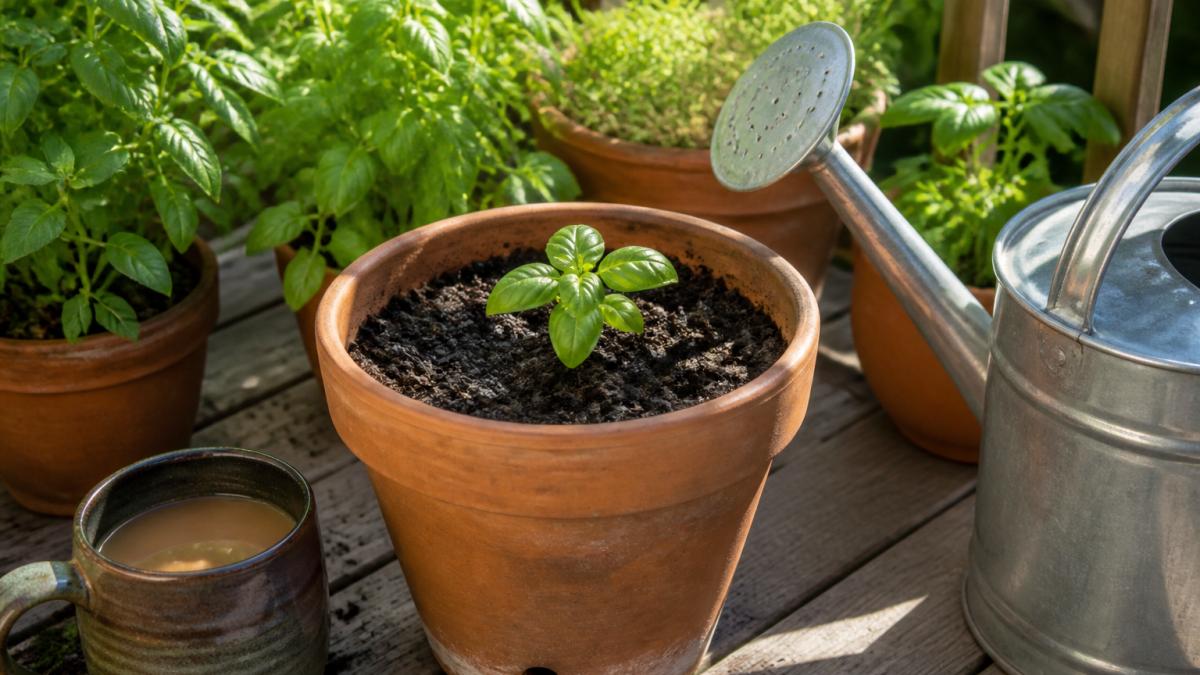
Drainage holes are non-negotiable. One blocked hole can drown a basil plant in a week.
Check these before you fill the pot:
- Drainage holes at the bottom, at least three, unblocked.
- A saucer underneath to catch runoff, emptied after watering.
- Terracotta breathes and dries faster, good for humid spots.
- Plastic holds moisture longer, good for dry, windy balconies.
- Fabric grow bags air-prune roots and drain freely, a good choice for beginners who tend to overwater.
- Self-watering containers with a reservoir suit busy growers, but fill the reservoir only after the top inch of soil dries to avoid constant moisture.
Skip pots with no holes, no matter how pretty they look. If you love the look, drop a nursery pot with holes inside it.
Whichever container you choose, set the pot on pot feet or bricks so water can escape freely and air can circulate under the base.
Wondering which tools are actually worth buying before you pot up? Our guide to container vegetable gardening tools covers the short list.
Choosing Potting Mix and Planting Your Basil
Use a well-drained potting mix, not garden soil. Garden soil compacts in pots, drains poorly, and can carry weed seeds. A bagged potting mix holds moisture while still letting water pass through. Look for a mix that drains well while still holding some moisture. A soilless potting mix is a good choice for container vegetables.
Fill the pot to an inch below the rim. Water it first, let it settle, then plant.
Starting From Seed vs. Buying Seedlings
Seeds cost less and give you far more variety. Seedlings give you a head start of several weeks.
| Approach | Time to First Harvest | Best For | Watch Out For |
|---|---|---|---|
| Start from seed indoors | Roughly 8-10 weeks | Patient growers, rare varieties | Leggy stems from weak light |
| Buy seedlings | Roughly 4-6 weeks | Fast starts, small spaces | Root-bound pots at purchase |
| Transplant supermarket basil | A few weeks to recover | Instant plants, low cost | Crowded roots, weak stems |
For a full walkthrough, see our beginner's guide to starting heirloom vegetable seeds.
A Beginner-Friendly Seed-Starting Timeline
If you start basil from seed, here is a clear timeline to follow:
- Sow indoors 6 to 8 weeks before your last expected frost. Count back from your local last frost date to find your sowing window.
- Plant seeds a quarter inch deep in moist potting mix. Sow three or four seeds per pot, then thin to the strongest seedling once they are an inch tall.
- Keep the mix warm, 65°F to 75°F is ideal. Germination usually takes 5 to 10 days. A warm windowsill or a seedling heat mat helps.
- Provide bright light immediately after sprouts appear. Weak light causes leggy stems, so move seedlings to a sunny south-facing window or place them 2 to 4 inches below a grow light for 12 to 16 hours a day.
- Transplant into the final container when seedlings have two sets of true leaves and nighttime temperatures stay above 50°F. Harden them off over a week by setting them outside for a few hours each day, increasing the time gradually.
Watch out: starting seeds too early indoors without enough light produces spindly plants that never catch up. Match your sowing date to your light setup, not just the calendar.
Supermarket Basil Recovery Plan
Potted basil from the grocery store often has several seedlings crammed into one small pot. You can often rescue it with a step-by-step approach:
- Separate the stems gently. Water the plant first, then tip it out and tease the root ball apart with your fingers. Each stem with roots can become its own plant.
- Choose a pot sized for one plant. A 6- to 8-inch pot per stem is a good start; a 10-inch pot can hold two or three stems.
- Use fresh, well-drained potting mix. Discard the original soil, which is often exhausted and may harbor pests.
- Reduce transplant shock. Keep the newly potted stems in bright, indirect light for a few days, then move them to full sun gradually. Water thoroughly at planting and then let the top inch of soil dry before watering again.
- Pinch the tips after a week to encourage branching, and remove any yellowing lower leaves.
Recovery times vary, but supermarket basil often bounces back with careful handling. The key is giving each stem room and avoiding overwatering during recovery.
Sunlight, Warmth, and Watering by Observable Cues
Basil wants at least six hours of direct sun a day and warm air. Below roughly 50°F, growth slows to a crawl. Bring pots in when nights turn chilly.
Watering is where beginners slip. Forget the calendar and read the plant instead:
- Top inch of soil feels dry to your finger: water.
- Leaves droop at midday: water, then check again in an hour.
- Soil stays wet for days: your pot is too big or the mix holds too much water.
- Yellow lower leaves: usually too much water, not too little.
Water at the base until it runs out the drainage holes. Try bottom watering by setting the pot in a saucer of water for a few minutes. The mix pulls up what it needs.
How to Keep a Basil Plant Alive Indoors
Indoor basil lives or dies by light. A sunny south-facing window is the best spot in the house. Six hours of weak winter light will not cut it, so plan for a supplement.
Keep these in mind:
- Rotate the pot every few days so stems grow evenly.
- Keep basil away from cold drafts and heating vents.
- Water less often indoors. Cool rooms and low light slow drying.
- Feed lightly every few weeks with a balanced fertilizer once plants are established.
Troubleshooting Indoor Light and Leggy Stems
Leggy stems mean the plant is stretching toward light. Long gaps between leaf pairs are your signal. Move the pot closer to the window or add a grow light.
Our guide to the best grow lights for indoor seed starting walks through what to look for.
Watch out: pinching a leggy stem once will not fix weak light. The plant will just stretch again. Fix the light first, then prune.
Harvesting Basil to Encourage Growth
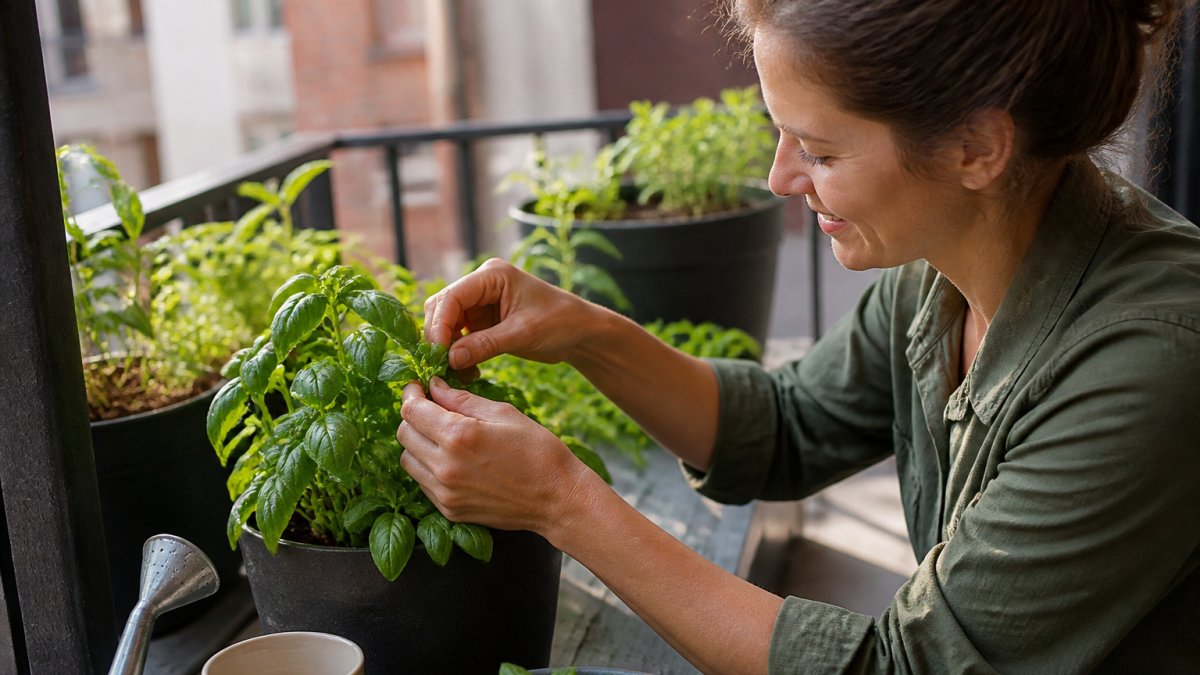
Harvesting basil to encourage growth means cutting stems, not plucking single leaves. Every cut tells the plant to branch.
Here is the routine:
- Wait until the plant has at least three sets of leaves.
- Pinch or snip just above a leaf pair.
- Remove flower buds the moment you see them.
- Harvest from the top, never strip the bottom bare.
- Take no more than a third of the plant at once.
Flowering changes the flavor and slows leaf growth. Pinch buds early and often.
Common Beginner Mistakes and How to Fix Them
The biggest mistake is overwatering. Basil likes moist soil, not swampy soil. Soggy roots turn leaves yellow and drop them fast.
Other frequent slips:
- Too-small pots. Roots run out of room and plants stall.
- Garden soil in pots. It compacts and drains badly.
- No drainage holes. Water pools and roots rot.
- Cold windowsills. Chilly glass stalls growth overnight.
- Harvesting only single leaves. The plant stays spindly instead of bushy.
Fix one thing at a time. Most struggling basil recovers fast once light, water, and drainage are right.
Pick Your Basil Seeds and Start Planting
Ready to plant? Start with a variety worth growing. Our Mrs. Burns Lemon Basil brings a bold citrus flavor and a full, bushy habit that suits containers beautifully. It reaches 24 to 30 inches tall and loves warm weather.

You can also browse our full flower and herb seed collection for more container-friendly picks.
A pot, a sunny spot, and a little attention are all it takes. Get started with Heritage Cottage Seeds and grow basil you will actually use, one snip at a time.
Frequently Asked Questions
Does basil grow better in pots or in the ground?
For beginners, pots usually win. Containers give you control over drainage, soil mix, and where the plant sits, so you can chase sunlight across a patio or windowsill. Basil also hates cold, wet feet, and a pot with drainage holes lets excess water escape fast. In the ground, heavy clay or soggy spring soil can stall growth. The trade-off is that pots dry out faster, so plan on checking soil moisture more often, especially in the heat of summer.
How many basil plants should I put in one container?
One plant per pot is the safe rule for a standard 8- to 10-inch container. Basil spreads into a bushy plant, and crowding two or three together limits airflow, encourages disease, and makes watering uneven. If you have a larger planter, space plants about 8 to 10 inches apart so each has room to branch. For a windowsill pot, one healthy plant gives you plenty of leaves for pesto and salads through the season.
What is the best soil mix for container-grown basil?
Use a well-drained potting mix, not garden soil dug from the yard. Garden soil compacts in pots and drains poorly, which invites root rot. A quality potting mix holds moisture while letting excess water flow through, and it is light enough for roots to push through. Look for a mix labeled for containers or herbs. If you want extra insurance, add a handful of perlite to improve drainage, and skip heavy, moisture-retaining blends that stay soggy.
How long will a potted basil plant last?
With steady watering, good light, and regular pinching, a potted basil plant can keep producing for several months. The key is to remove flower buds as soon as they appear, because flowering signals the plant to stop making leaves and start setting seed. Indoors, basil can carry on through winter on a bright windowsill, though growth slows in low light. Once stems turn woody and leaf production drops, start fresh seeds or a new seedling.